Your drag-and-drive project vehicle needs an aftermarket ECU to control your rowdy fuel-injected turbo combination. You’ve never tackled anything like this, and there seems to be an endless list of parts required. Where do you start?
Well, that’s what we’re going to address in this article: planning and wiring a high-level EFI drag-and-drive project.
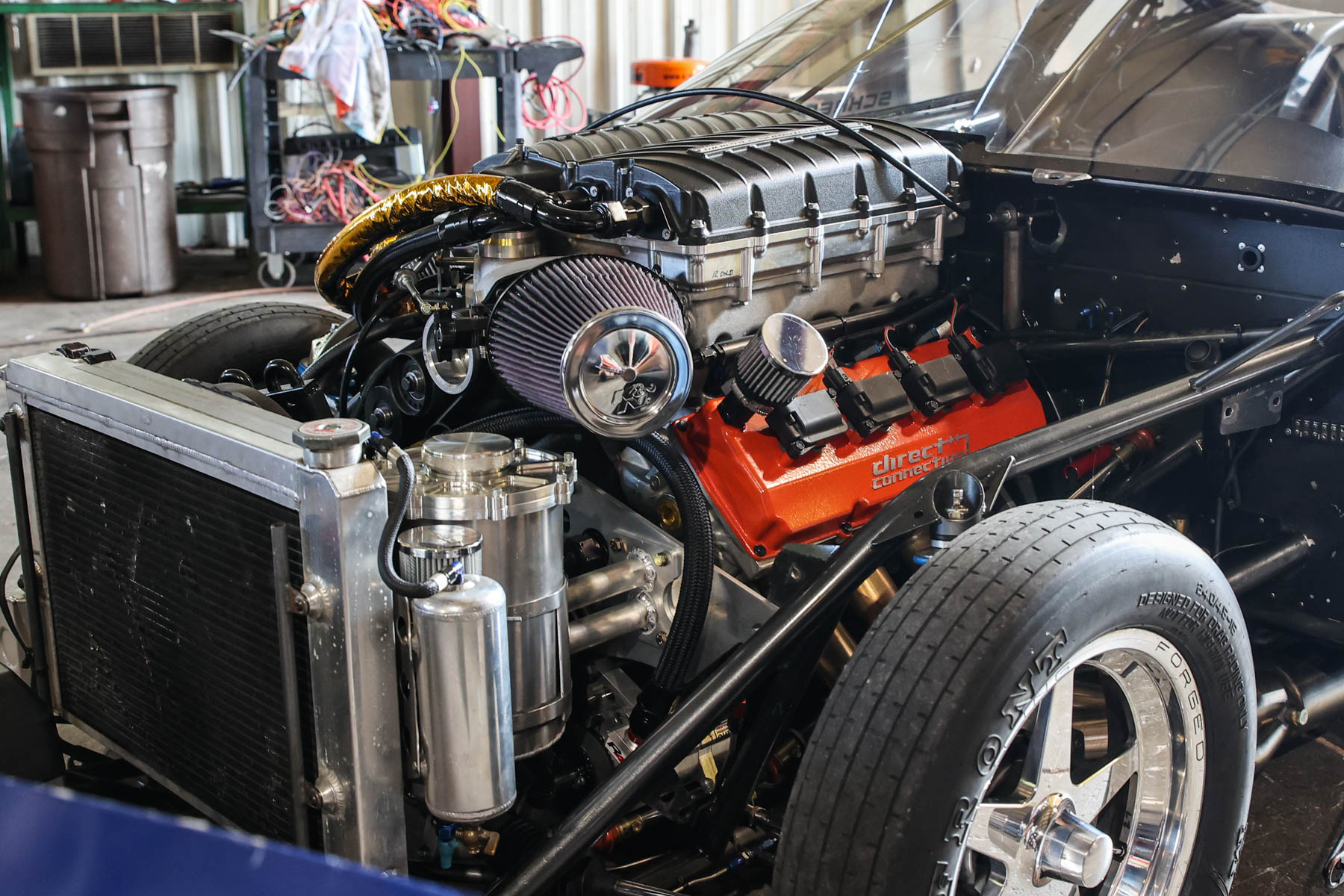
Project Hustler was purchased as the classic “basket case” vehicle. The Blackbird Performance Gen-III HEMI that’s going to power the Dodge will need a full EFI system. We decided to use a Holley Dominator ECU as the brains of the operation, but that’s just one small part of the puzzle.
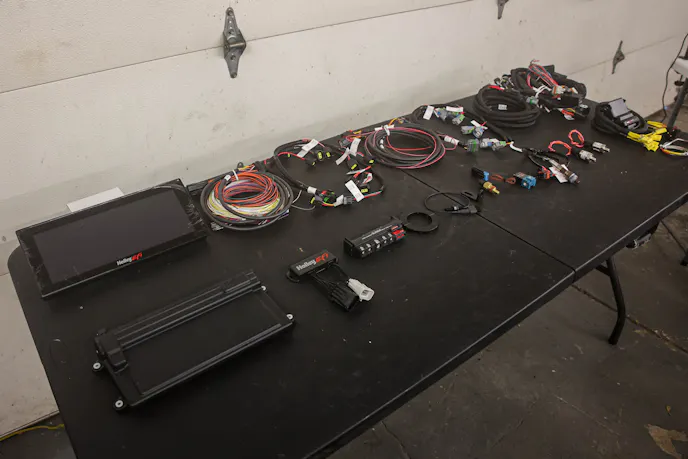
Beyond the ECU, we had to figure out our wiring situation, sensors, and everything else that’s required to run the engine side of the car. Thankfully, Harrison Alford from Holley helped guide us through what we needed, and we’re going to share what we learned so you can select the right parts for your project.
What Are You Going To Build And What Are You Going To Do With It?
There is one absolute truth when it comes to building a project vehicle: you must have a plan before you begin. The type of racing you’re going to be doing, how competitive you want to be, and what your budget is all need to be set in stone before you start.
“How much power your engine package is going to make is going to play into what ECU and sensors you will need. The more power, the more sensors you’ll typically want for data acquisition to help with tuning and to aid potential troubleshooting. You’ll also need a more robust ECU to control everything. Another thing to think about is if you plan on doing the tuning yourself, or if you’re going to pay someone to tune for you. It’s a good idea to stick with a system that you, or someone who can help you, has experience with,” Alford explains.
For Project Hustler, a basic EFI system like Holley’s Terminator X wouldn’t work since it does have some limitations. The capability of a Dominator made it a more sensible choice for our build. We needed an ECU that has plenty of inputs, outputs, and flexibility with how we use the system.
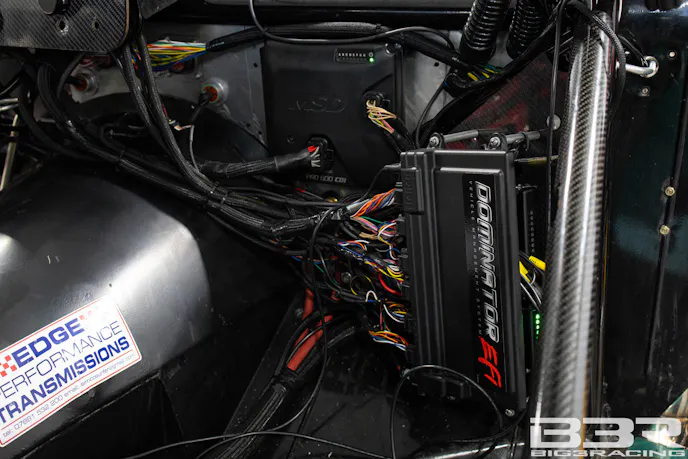
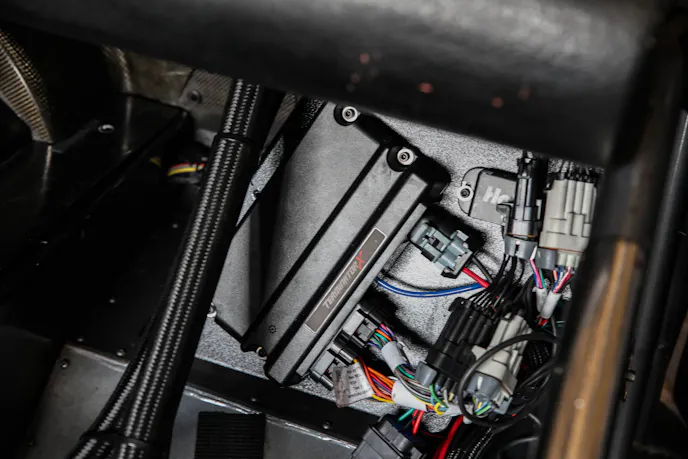
It’s also helpful to plan for the future when you’re selecting an ECU. Those inputs and outputs are going to become valuable real estate when you need to add sensors. Running out of inputs or outputs can limit what data you can log or what you can control, and that could impact vehicle performance.
“You can’t just throw things together haphazardly. A lot of times, guys do that because they’re gung-ho and they want to get the car up and running as quickly as possible. But in that rush, they can forget things or cut corners. When you don’t have a plan, or deviate from your plan there’s a possibly for problems,” Alford says.
Pre-Terminated Harness Versus A Custom Harness
You’ve got a plan, you’ve picked out an ECU, and now it’s time to start doing some wiring. This is the part that can be a real challenge for your average DIY racer. Depending on the application, you might have the option to go with a pre-terminated harness. If you want full control and have the skills, you can build your own custom harness.
If you don’t have a lot of wiring experience, a pre-terminated engine harness can be a big help. These are going to be plug-and-play, with all the sensor connectors wired up and ready. They’re going to include connections for all the sensors needed to run the engine you’re using, and the harness will be long enough to give you some freedom on where you mount the ECU.
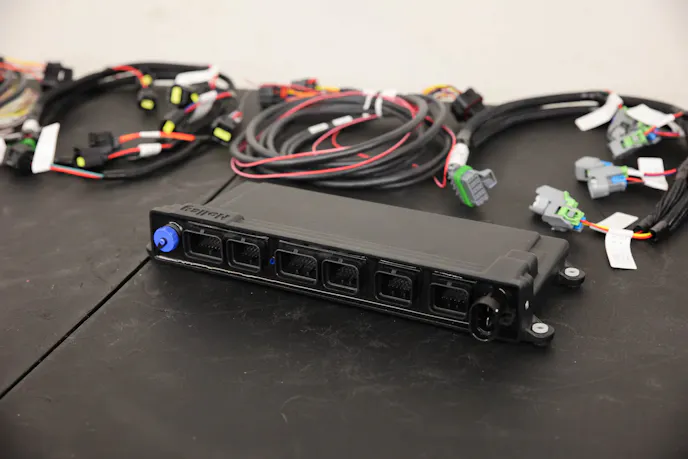
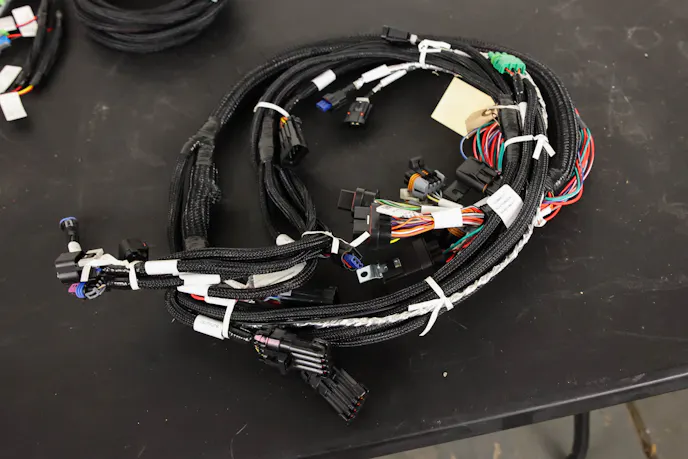
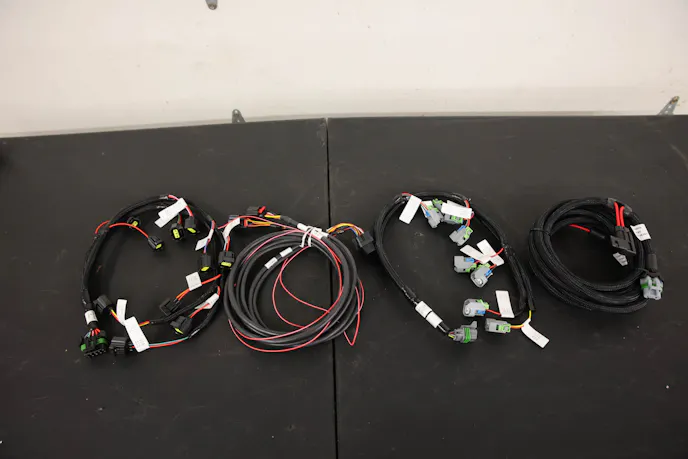
“For somebody without a significant amount of wiring experience, if changes need to be made or you’re not using exactly everything the factory was using, the best approach is generally to start with one of the pre-terminated harnesses and make small modifications as necessary for your specific application.
“That way, you’re only modifying a few things rather than doing everything. There’s less likelihood of creating an issue that you’ll have to track down later,” Alford explains.
For those who have experience with wiring, a custom harness could be a more attractive option. An unterminated harness, meaning a harness with no connectors on the non-ECU end, gives you the freedom to integrate whatever you want into the main engine harness, including more sensors.
“If you start with a pre-terminated harness, you’re adding that custom or extra stuff on top of the existing harness. Some guys want a specific appearance or want to hide and tuck things. A custom harness allows them to run everything together seamlessly.
In some instances, a more robust custom harness may also be required. Certain applications may need a sealed harness using molded boots and DR-25-type sleeving, which is a type of heat shrink that’s resistant to aggressive fluids, and protects against damage. Methanol applications are one example where that may be desirable. That type of harness is generally more resistant to abrasion and more robust when it comes to heat and chemicals,” Alford says.
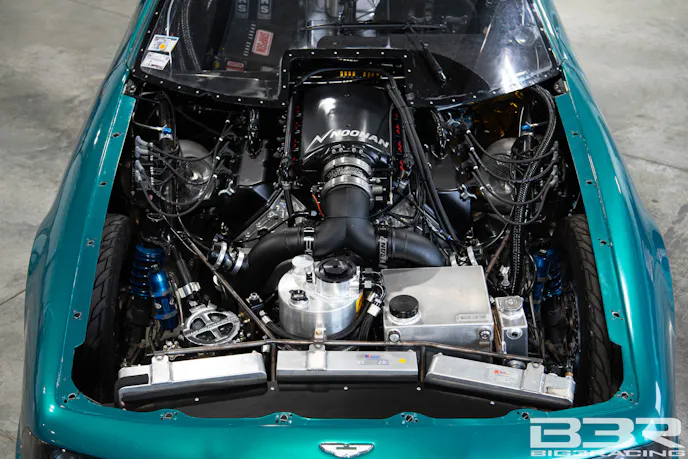
We’ve got a rough idea of a timeline for Project Hustler and when we want to debut the car in 2027. That date and the author’s experience have created a need for a hybrid approach. We’re going to use Holley’s pre-terminated Gen-III HEMI engine harness, but plan on making a few changes to it and then doing custom wiring for all the additional sensors and items we’re going to run on the car. This harness comes with all the correct sensor connectors for a Gen-III HEMI on the main harness, plus we got a coil, fuel injector, main power harness, and additional input/output harness for everything we’re going to add.
According to Alford, that’s actually a popular choice for many who build project vehicles like this.
“What you’re doing with Project Hustler is probably what I’d say 80 to 90 percent or more of our customers are doing.
“They’re going to start with a pre-terminated harness and make modifications as needed. They’ll tweak it. Maybe they want to route certain things differently, so they pull certain connections out of the loom and route them another direction.
“Then they’re adding additional sensors or whatever other inputs and outputs they need and running those alongside the existing harness. Some guys will spend a little more time and effort integrating some of that stuff, similar to the flexibility you get from a completely custom harness.”
Tools To Have On Hand
The right tools are going to make any wiring job a lot easier. You’ll also want to make sure you are using high-quality materials.
A good pair of wire strippers is a must-have item on your bench for a big wiring job. You’re going to be creating a lot of connectors from scratch, so using a basic pair of squeeze-and-yank wire strippers will get old.
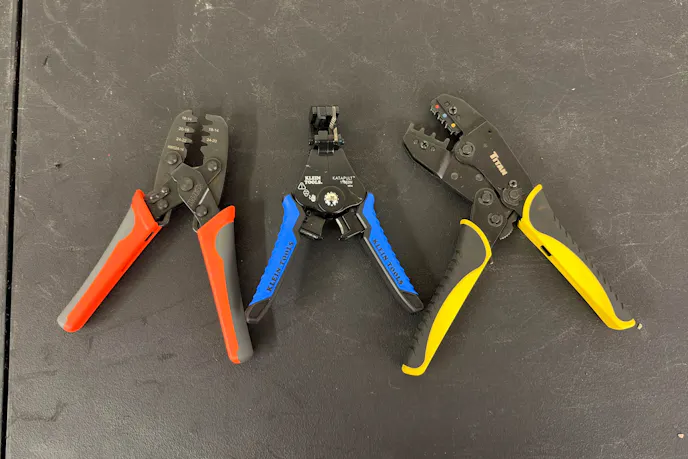
You’ll also want to make sure you have a nice pair of crimpers for the common connectors you need to make. If you’re going to use Deutsch connectors or another type of specialty connector, you’ll need a crimping tool for that specific connector. It’s also a good idea to have a hydraulic crimping tool for battery lugs and cable terminals.
Sensor Selection
Outside of wiring, figuring out what sensors you need can be the second most intimidating part of building the ECU system for your project vehicle. There are certain sensors that are must-have items for the vehicle to run; that’s a given.
For a basic EFI installation, important sensors include:
- MAP sensor
- Coolant/engine temperature sensor
- Throttle-position sensor
- Intake air-temperature sensor
- Crank position sensor
- Cam position sensor (required for Sequential injection)
- Wideband O2 sensor
- Fuel-pressure
- Oil-pressure sensor
“These are the critical sensors you need to run the engine. You’ll be able to tell if the engine is healthy with these sensors too. The fuel pressure sensor is very important because it lets you know if you’re maintaining proper fuel pressure for the general operation of the EFI system, fuel system, and engine,” Alford says.
Where things can get tricky is when you introduce a power adder to the mix and how you’ll use the car. A straight-up race car is going to have different sensor needs than a street/strip car or complex drag-and-drive build. There is a whole new set of sensors you’ll need to add to the system to make sure you’re getting good data and controlling systems correctly. A straight-up race car is going to have different sensor needs than a street/strip car or complex drag-and-drive build. There is a whole new set of sensors you’ll need to add to the system to make sure you’re getting good data and controlling systems correctly.
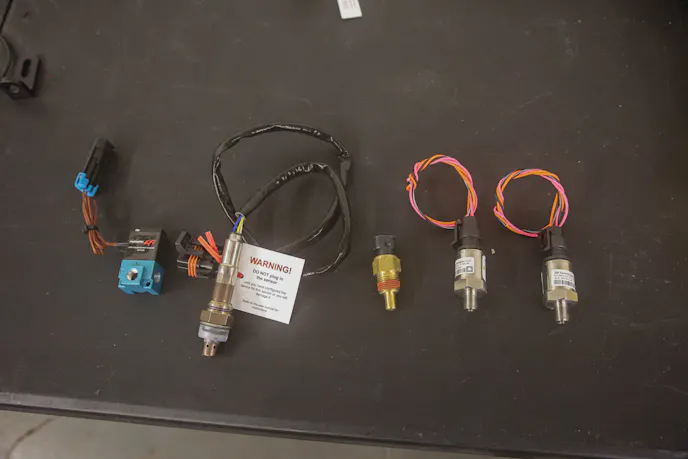
To help with boost control, you’ll need a dome-pressure sensor for the wastegate. This is one of the most consistent methods to control boost, and you’ll need that for a high-horsepower application. A sensor to measure exhaust backpressure is another good sensor to have for a turbocharged application. You’ll be able to use this for tuning decisions and monitor the efficiency of your turbo.
“EGT sensors are another big one, not just for tuning, but for troubleshooting. If you’ve got a dead hole or one cylinder starts getting out of whack compared with the others, that could indicate an injector problem, ignition issue, or something related to that particular cylinder’s health,” Alford states.
Another important sensor that helps monitor an engine’s health is a coolant-pressure sensor.
“The coolant pressure sensor really should almost be considered a must-have sensor for a high-horsepower water-jacketed application. If you start lifting a cylinder head or pushing a gasket and the cooling system becomes pressurized beyond its normal level, you can have the ECU basically depower the car,” Alford says.
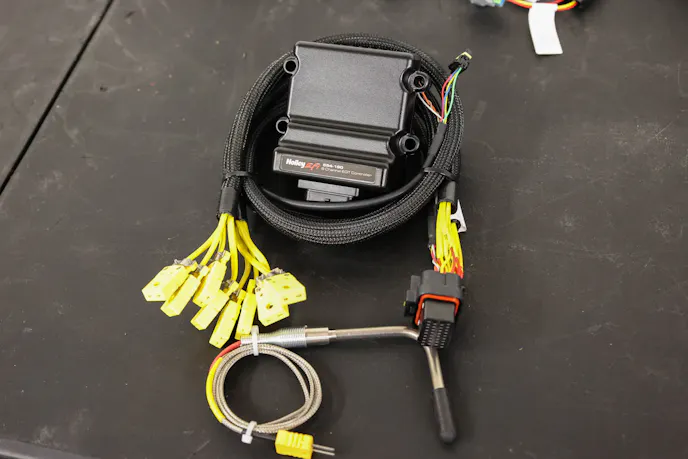
Behind the engine, you’ll want to look at transmission temperature, transmission pressure, and torque converter pressure sensors. These will be used to monitor the health of these parts and help with tune adjustments based on track conditions.
A basic g-meter is another sensor you’ll want to implement in a serious drag racing build. This is going to provide great data that will assist you with tuning.
“Beyond a basic two-axis g-meter, Davis Technologies equipment is really popular, whether you’re using their Profiler or especially the VPS system. For some guys it’s outside the budget, but racers running at the front of many of these classes are using that equipment as part of their traction-control or power-management strategy,” Alford explains.
Gen III HEMI Specific Considerations
Most of the basic EFI system components are going to be the same across different engine platforms. You’ll always want to make sure you’re using the correct connectors if you’re building a custom harness. Where the sensors are located will be different on different engine platforms, so you’ll need to account for that when determining harness length if you’re building your own engine harness.
The biggest difference between a Gen-III HEMI and the popular LS engine is how the ignition coils are used. This will require some extra parts if you’re using OEM Gen-III HEMI ignition coils.
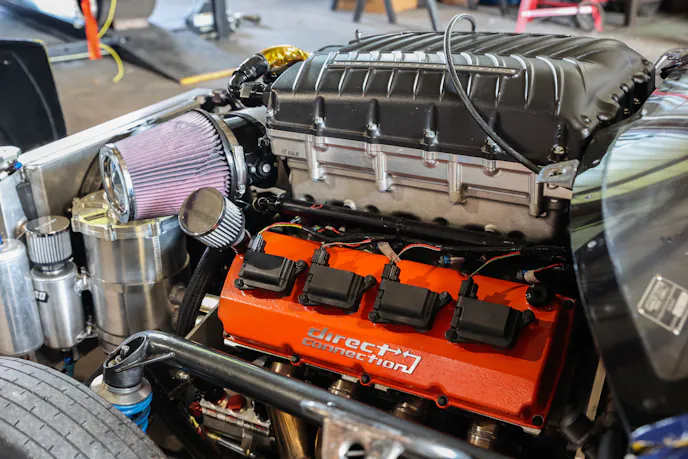
“You need an ignition-coil driver module. An LS engine from the factory has what’s called a “smart coil,” so it can be directly triggered by the ECU.
“You need an ignition-coil driver module. An LS engine from the factory has what’s called a ‘smart coil,’ so it can be directly triggered by the ECU. A Gen-III Hemi or Coyote, from the factory, has what are commonly called ‘dumb coils.’ They require an ignition-coil driver or coil-driver module between the ECU and coils. The ECU triggers the driver, and then the driver fires the coil,” Alford says.
Building the ECU and wiring side of your first big EFI project doesn’t need to be scary. You need to have a plan laid out, know what your vehicle goals are, have the right tools, and ask the right questions up front. By following this blueprint, you’ll be able to collect the right parts and build an EFI system that will suit your needs.
You might also like
Paige Coughlin Unhurt in MWDRS Pro Mod Crash
The third-generation racer lost control of her JEGS Camaro after the parachute tangled in the wheelie bars at the close of a 3.59-second lap.