Traction is a key component of a successful pass at the track. It doesn’t matter if the surface is as sticky as flypaper or as slick as ice, if your car doesn’t hook, you’re not going to win. Long-travel suspensions, shocks, and struts were designed to help vehicles get maximum traction on less-than-ideal surfaces.
Weight transfer is the name of the game when it comes to getting maximum traction. When a vehicle launches, you need to find that sweet spot where there’s enough suspension travel to move the correct amount of weight to the rear tires. This is what plants those tires and allows the car to rocket down the track quicker.
Eric Saffell from AFCO Racing Products provides more details on how long-travel shocks and struts help on slick tracks.
“When we’ve got a strut that offers a little bit more travel, it allows more weight to move when we first launch the car to get traction back to the rear tires on a surface where there is virtually no grip available. When you get the engine crank centerline heights up that much higher before the strut tops out, there’s a substantial difference in how much pitch rotation takes place with the chassis and how much weight has moved.”
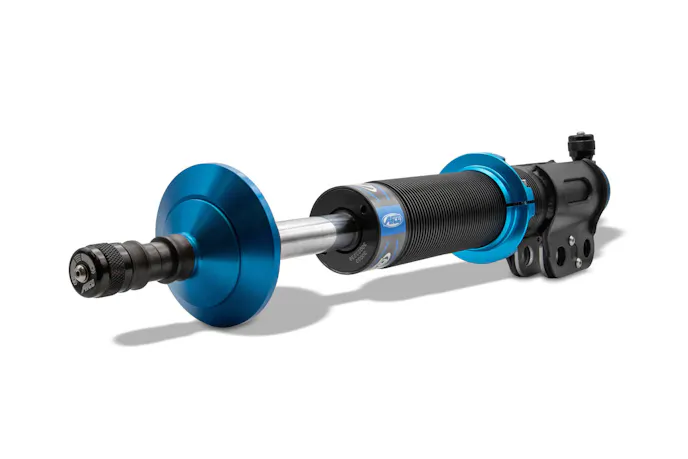
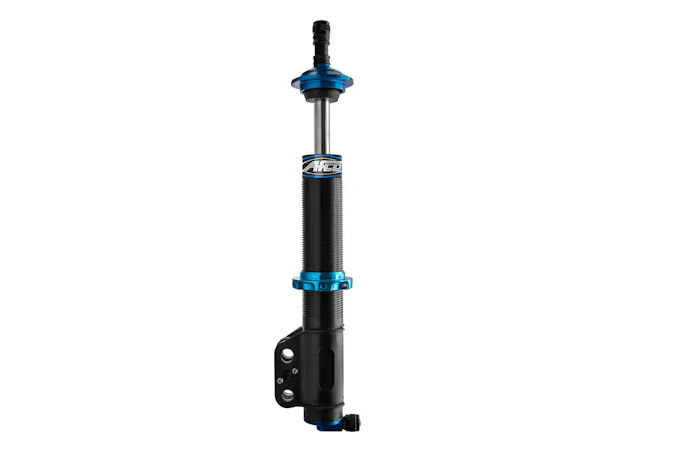
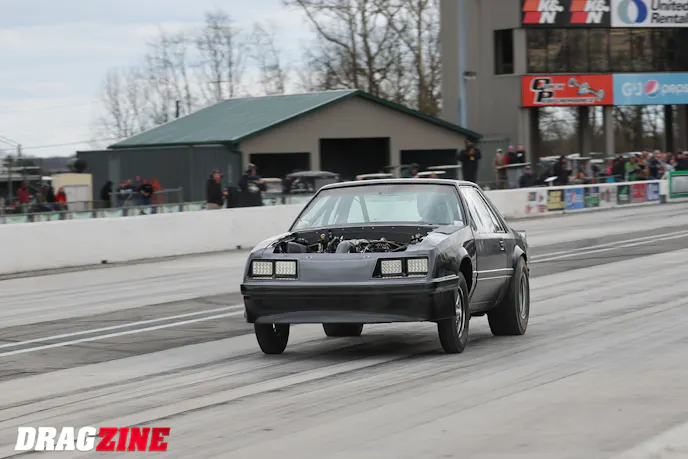
Understanding there was a need for long-travel struts, especially for the popular Ford Mustang Fox Body and Ford Mustang SN95 Mustangs, AFCO developed a product to help these racers. The long-travel strut that AFCO created has eight inches of total travel, versus the six inches of travel a standard strut offers.
Traditionally, increasing shock or strut stroke requires a longer body to accommodate the extra shaft travel. That can force racers to change ride height or adjust their chassis setup. AFCO engineered its long-travel strut differently.
“With the new AFCO long-travel strut, we did not increase body length,” Saffell said. “That means you don’t have to run a higher ride height like you would if we had used a longer body.”
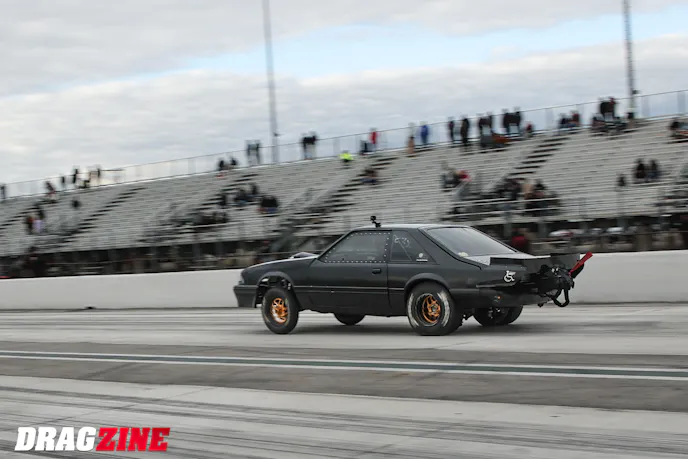
The benefit is versatility. Racers can run the same chassis height they’re used to on a prepped track while still having the additional suspension movement available for low-traction situations.
“So, if you have the same body length in the long-travel strut as you do in the standard-travel AFCO strut, you can still maintain the same chassis height for a front-side or prep surface without bottoming out,” Saffell states.
For racers who regularly bounce between back-of-the-track no-prep events and traditional front-of-the-track races, that flexibility can be a major advantage.
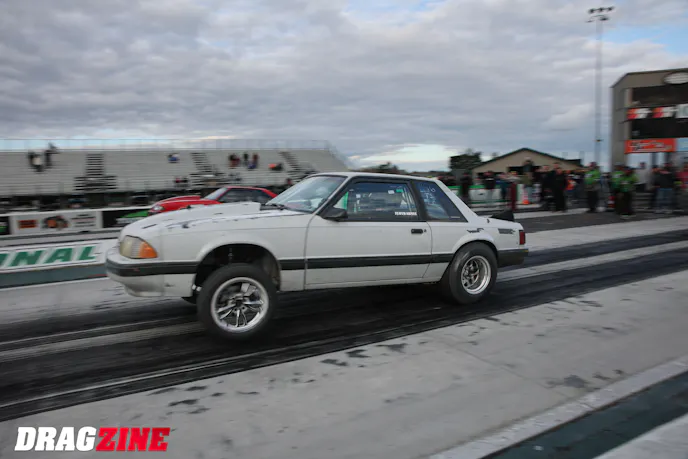
“Adjust the limiters for the surface you’re on, the amount of grip, and how much power you’re applying,” Saffell explained. “If you’ve got something with big power and maybe you’re coming off a brake with some grip on the surface, that car is going to rotate.”
Long-travel struts are more than a one-trick pony. If you’re a Mustang racer who participates in all kinds of no-prep or low-prep events, you might want to give these struts from AFCO a look.
You might also like
Dayco Joins The NHRA Contingency Program
Dayco officially enters the NHRA Contingency Program to reward drivers. Top drag racers earn major cash payouts for reaching the finals.