One of the best parts about the Gen 3 HEMI platform is how well it accepts boost. You can pick up a vehicle off the showroom floor from Dodge with a blower, and there are plenty of aftermarket options for superchargers as well, so you’ve got choices. If you want to maximize the potential and reliability of your supercharged Gen 3 HEMI, an upgraded belt tensioner should be on your shopping list.
A positive displacement supercharger, like the OEM Hellcat unit or a Whipple Superchargers system, is belt-driven. That belt relies on a tensioner to remain in place and do its job. The OEM belt tensioner does a good job keeping belt slip under control at factory power levels, but once you start increasing horsepower, it will begin to struggle.
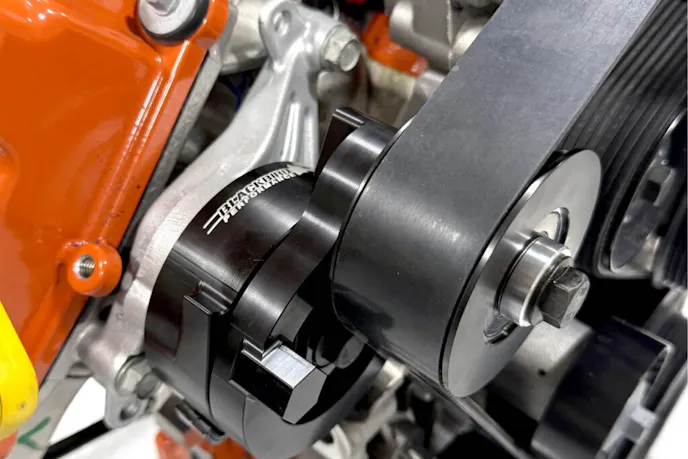
Belt slippage and movement are the mortal enemies of a belt-driven supercharger system. When the belt slips, it creates two major problems. First, it robs the system of horsepower because the supercharger isn’t spinning consistently. Second, belt slippage can damage the belt and increase the chances of it coming off entirely.
The belt tensioner’s job is to maintain proper belt control by keeping everything in place. An aftermarket belt tensioner for a belt-driven supercharger is specifically designed to handle elevated horsepower levels by providing smooth and consistent belt control. These tensioners typically have a reduced range of motion and increased stiffness compared to OEM units, which helps keep the belt planted and operating correctly.
In this video, Geoff Turk from Blackbird Performance explains how a belt tensioner works. You’ll also learn why an aftermarket belt tensioner is a must-have upgrade for any Gen 3 HEMI-powered vehicle equipped with a positive displacement supercharger.
You might also like
All Gas, No Easy Rounds: Grudge On The Gate 2 Delivers
Grudge on the Gate 2 brought out 114 cars in a full-on street brawl. Check out all the action from the streets of Memphis.