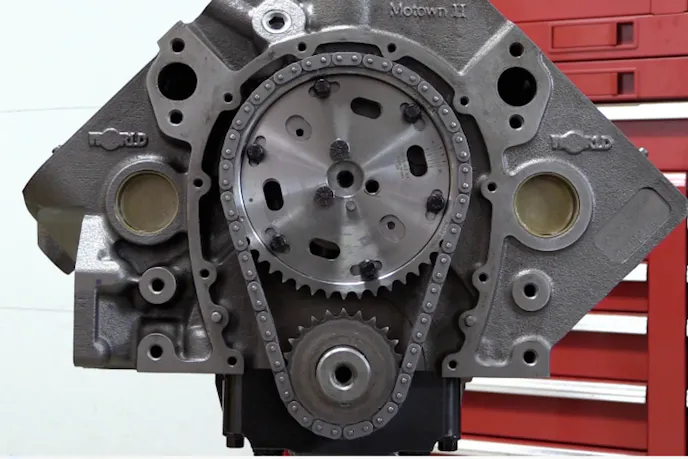
An engine’s timing set isn’t something that gets a lot of attention, but it plays a critical role in keeping everything running smoothly. An adjustable timing set allows for fine-tuning of the camshaft position relative to the crankshaft. Let’s take a look at how to properly set up and adjust an adjustable timing set.
How An Adjustable Timing Set Works
Adjustable timing sets allow you to either advance or retard cam timing without removing the entire timing set. Most sets are adjusted by loosening the cam gear bolts and using a tool to make the desired adjustment. This allows for changes to the engine’s power curve and precise adjustments to camshaft timing.
To get the most out of an adjustable timing set, it needs to be installed correctly. That process starts by making sure the engine is at top dead center (TDC), with the timing dots on the crankshaft and camshaft aligned correctly.
Verify True Top Dead Center
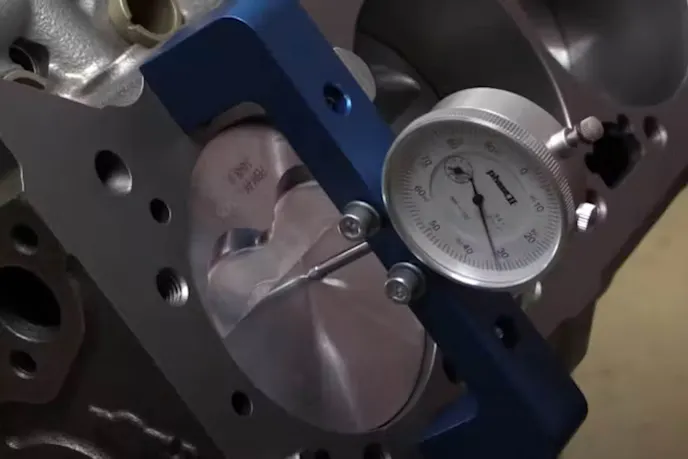
Before continuing, you need to verify that the engine is at true TDC. This requires using a degree wheel along with a dial indicator on the number-one piston.
You will measure the piston at the same distance below its maximum height before and after TDC. The degree wheel pointer must then be adjusted until both readings are equal. This establishes true TDC and provides an accurate reference point for degreeing the camshaft.
How To Degree The Camshaft
Next, it’s time to degree the camshaft. Move the dial indicator to the number-one intake lifter and find maximum intake lift.
Next, record the degree wheel readings at .050 inch below maximum lift on each side of peak lift. Add both readings together and divide by two to determine the intake centerline.
For example:
(96° + 124°) ÷ 2 = 110° intake centerline
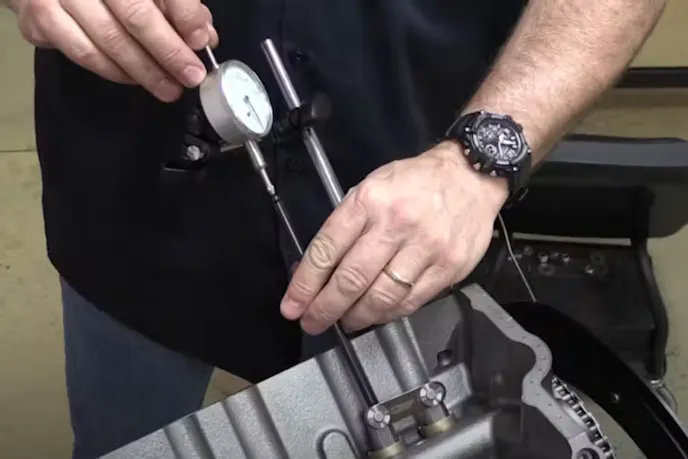
Once you have this information, compare the measured intake centerline with the camshaft manufacturer’s specification on the cam card. For example, if the cam card calls for a 106° intake centerline and you measure 110°, the camshaft needs to be advanced 4°.
Keep these basic camshaft timing rules in mind:
- Smaller intake-centerline number = advanced
- Larger intake-centerline number = retarded
Adjust The Camshaft Timing
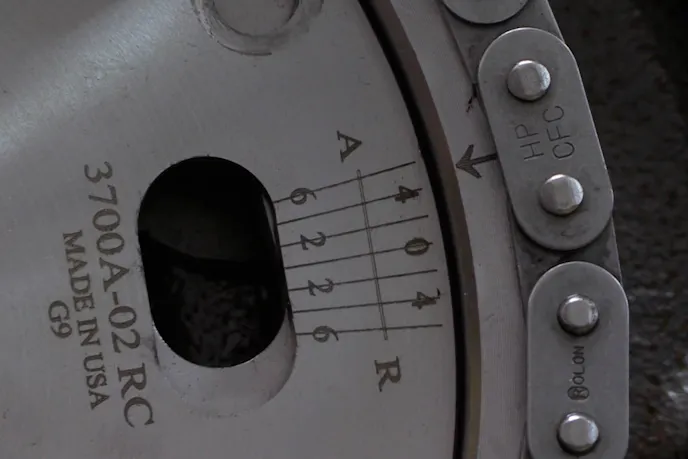
If adjustments need to be made, this is the time to do it. With most adjustable timing sets, this can be accomplished by loosening the cam gear bolts just enough to allow the gear to be moved as needed.
The amount of camshaft advance or retard will be dictated by the specific engine application and the desired tuning window.
Recheck The Cam Timing
The final step is to recheck the cam timing. Rotate the engine by hand and degree the camshaft again.
The adjustment and rechecking process should be repeated until the measured intake centerline matches the specification on the cam card. It’s important to use a degree wheel and dial indicator to verify the final camshaft timing settings before completing final assembly.
Thanks to our friends at PBM Performance Products for providing these tips on how to properly set up an adjustable timing set.
You might also like
Ron Capps And Maddi Gordon Bring Matching NAPA Colors To St. Louis
Ron Capps returns to St. Louis chasing a win and points in the Countdown. Maddi Gordon debuts a historic NAPA Auto Parts Top Fuel scheme.