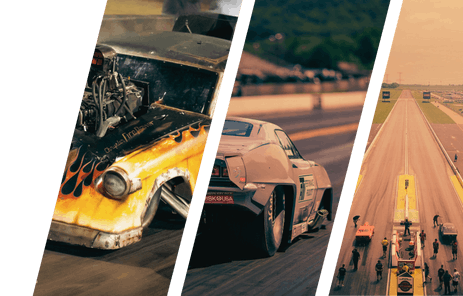
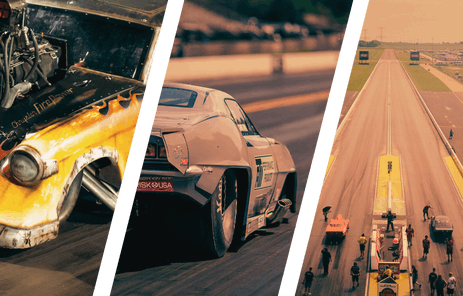
There was a time when a race crew couldn’t strap, mount, stick or suction cup a tiny, incredibly powerful video camera literally ANYWHERE in, on and under their car. Thankfully, today we have that technology to record almost any component or function with excellent resolution and a plethora of mounting options, so that we are able to share videos like this!
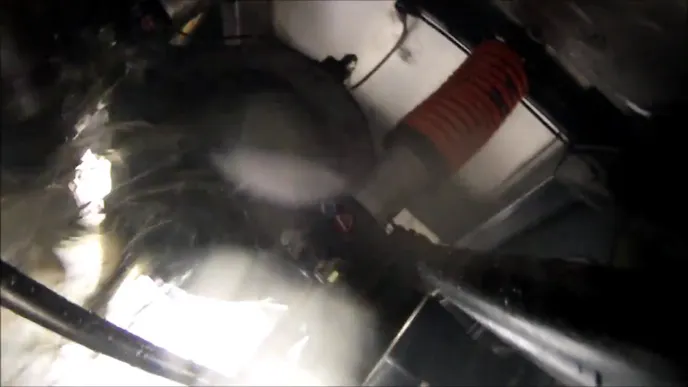 There’s not a great amount of information available about this clip as far as car, class or driver info, but that doesn’t matter, because what IS available is a fairly uncommon camera mounting location that provides us a perfect view of a catastrophic third member failure and the ensuing carnage caused as the now-flailing driveshaft causes as it whips spectacularly around the bottom of the wounded ride.
Speculating, because why not, it seems safe to assume the car may be a fairly fast bracket doorslammer based on the car not backing up after a relatively long, high-revving burnout — many tracks mandate door cars not cross the starting line during the burnout — and the healthy tone of the powerplant.
The rear end doesn’t explode immediately upon transfer of power from the engine rearward, it actually makes it a split-second into the pass before letting go in a shower of fluid, sparks and metal chunks. Immediately upon being released from its bonds, the driveshaft begins a violent attack on everything within its reach under the car, bending bars and battering the bottom side of the floor pan until the engine and transmission finally grind to a halt a few painful seconds later.
Today’s uber-versatile digital cameras provide race teams with a wealth of knowledge and information used to tune components that would have never before been observable as the car sped down the track. They also provide fans hours of up-close-and-personal footage of both clean passes down the track and, in cases like this, insane parts failure!
You might also like
John Force Racing Has Championship Points On The Line At Brainerd
JFR has plenty to race for at Brainerd. Each of the team drivers are pushing towards titles and good starting spots in the Countdown.