If you’re serious about drag racing, you already understand what 632 cubic inches means. Torque everywhere. Airflow demands that separate real parts from pretenders. And the kind of naturally aspirated power that makes boost look optional.
The EngineLabs big-block Chevy giveaway, presented by Summit Racing, isn’t a dressed-up crate engine. It’s a professionally planned, fully matched, four-digit-capable EFI 632, and one Dragzine reader could win it by entering here.
Let’s talk about what makes this engine different.
A Bottom End Built For War
Everything starts with the foundation. The tall-deck 632 short-block was assembled by Bullet Racing Engines around a forged rotating assembly from SCAT and 2618 forged slugs from RaceTec Pistons, all housed in a rugged iron block from JLine Performance.
But it’s the supporting details that make this combination live at 1,000-plus horsepower.
Bearing clearances are supported by race-proven pieces from King Engine Bearings. Ring seal is handled by file-fit performance rings from Total Seal, critical in a big-inch naturally aspirated engine where cylinder pressure and efficiency determine whether you’re knocking on 1,000 horsepower or just talking about it.
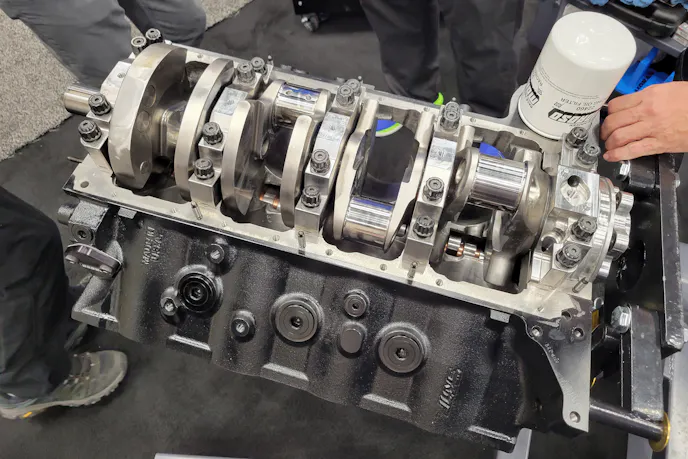
Oil control is equally serious. A high-volume pump from Melling feeds a race-ready pan from Moroso, ensuring stable pressure under hard acceleration. Up front, a damper from ATI Performance Products manages crankshaft harmonics, a non-negotiable in a 4.600-inch-stroke big-block spinning serious RPM.
Even the details matter. A starter from Powermaster handles compression without complaint, and premium lubricants from Klotz Synthetics protect the investment during break-in and dyno time.
Sealing And Airflow: Where Power Is Made
To hold serious cylinder pressure, the short-block is capped with MLS head gaskets from Cometic Gaskets and secured with Pro Series studs from ARP. Clamp load and sealing integrity are what separate dyno glory pulls from engines that live a season.
Up top is where this 632 really flexes.
Brand-new DR-17 cylinder heads from Edelbrock bring 17-degree valve angles and massive 425cc intake runners to the table. The chambers measure just over 100cc, resulting in a pump-gas-friendly 10.7:1 compression ratio, serious but streetable.
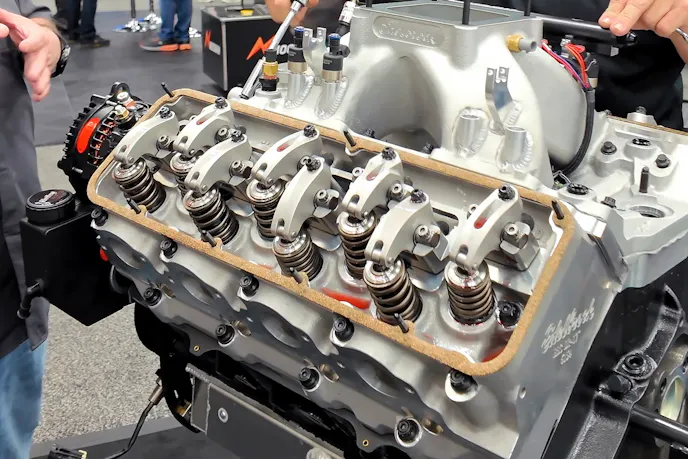
The CNC port program, finalized by Pat Musi, delivers the airflow necessary to make four-digit power naturally aspirated. And because the castings ship bare, the valvetrain was tailored specifically for this combination.
Titanium 2.450-inch intake valves and Inconel 1.850-inch exhaust valves from Ferrea Racing Components strike the right balance between weight and heat resistance. Lightweight on the intake side, durable on the exhaust, exactly what a high-output N/A engine demands.
Camshaft Strategy: Big Inches, Smart Timing
A 632 doesn’t need a gimmick cam. It needs intelligent lobe selection.
Cam Motion supplied a custom hydraulic roller on a 55mm core, delivering .729/.708-inch lift and 264/278 degrees duration at .050 with a 113 LSA. In a smaller engine, those numbers would look radical. In 632 cubic inches, they’re calculated.
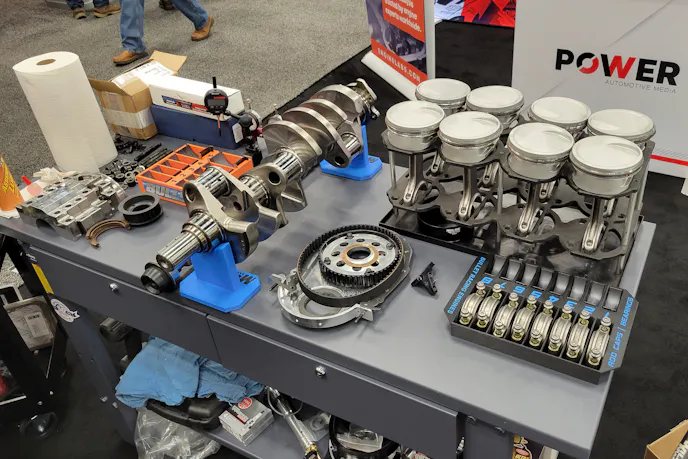
Valve control comes from Elite Race dual springs by COMP Cams, short-travel hydraulic rollers from Johnson Lifters, and custom tapered pushrods from Manton Pushrods.
Everything is actuated through Pro Series shaft rockers and a belt drive from Jesel, allowing precise cam timing adjustments and minimizing harmonics. Stability at RPM is what keeps power repeatable, especially for drag racers chasing consistency.
EFI Induction: Modern Control, Old-School Cubes
Naturally aspirated combinations don’t have boost to mask airflow mistakes. The intake path has to be right.
The team started with a Super Victor II tall-deck manifold and handed it to Wilson Manifolds for full port matching and EFI conversion. Injector bungs were welded in, ports reshaped to match the DR-17 heads, and fuel rails integrated cleanly.
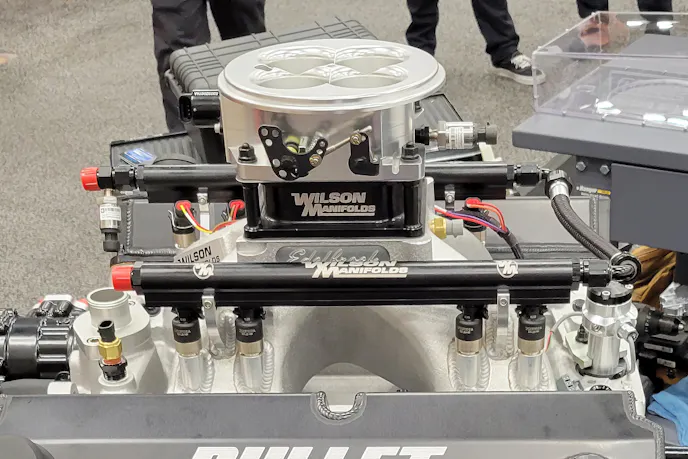
Air enters through a 2,000-cfm 4500-flange throttle body from Holley, sitting atop a Wilson spacer for added plenum volume. Fuel is delivered by 83 lb/hr injectors and controlled by a Dominator ECU from Holley EFI, paired with a coil-near-plug Smart Coil ignition system.
The result? Big-inch carb-style airflow with modern EFI precision. Self-learning for the street. Deep tunability for the track.
Exhaust And Final Assembly
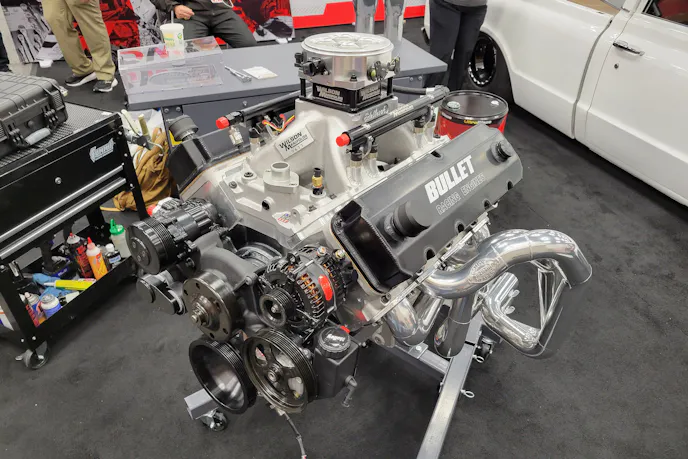
Spent gases exit through massive 2-3/8-inch primary headers from Lemons Headers, feeding 4-inch collectors. They’re designed to fit a ’68–’72 Chevelle chassis, meaning this isn’t just a dyno queen. It’s ready for a real car.
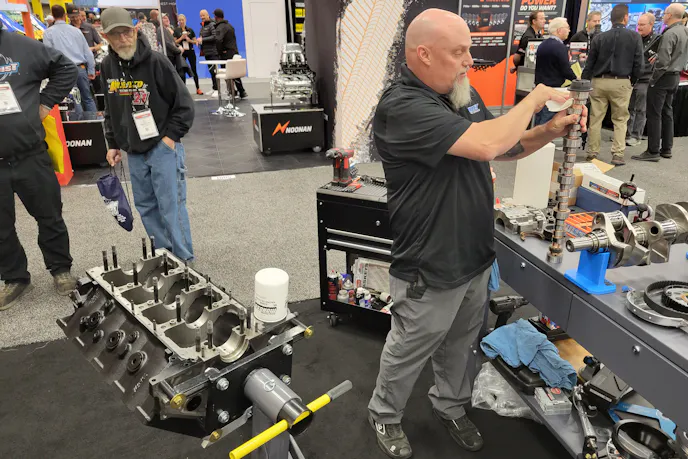
After assembly on the PRI Show floor, the engine was transported to the University of Northwestern Ohio for dyno testing. This wasn’t a back-room build. It was transparent, collaborative, and executed with industry-leading partners, all presented by Summit Racing Equipment.
Why Drag Racers Should Care
A 632-inch EFI big-block making 1,000-plus horsepower naturally aspirated is a serious weapon. For bracket racers, it’s torque and repeatability. For street/strip builds, it’s the ultimate intimidation piece. And for drag n drives, it’s a great foundation to potentially win an all-motor class.
And someone is going to win it.
If you’ve ever wanted to drop four-digit naturally aspirated power between the frame rails without writing the checks, this is your shot. Throw your name in the hat, because 632 cubic inches of professionally built big-block Chevy violence is about to belong to one racer. It might as well be you.
Enter here for your chance to win.
The 2026 EngineLabs’ Engine Giveaway is presented by Summit Racing and made possible thanks to partnerships with Bullet Racing Engines, University of Northwestern Ohio, Automotive Racing Products, ATI Performance Parts, Bendpak, Cam Motion, Cometic Gaskets, Edelbrock, ETS Racing Fuels, Ferrea Racing Components, Holley, Jesel, JLine Performance, King Bearings, Klotz, Lemons Headers, Manton, Melling, Moroso, Powermaster, RaceTec Pistons, Total Seal, Williams Performance Products, and Wilson Manifolds.
You might also like
Ultimate Road Trip: The Story Behind Brandon Doller's Mega Drag-And-Drive Adventure
Drag and drive events will test both man and machine. Brandon Doller drove his twin-turbo Nova from Indiana to Florida.