When you first see the word “lapping,” most gearheads think of the age-old process of lapping intake and exhaust valves to improve sealing on the cylinder head valve seats. Though machining technology has arguably antiquated the valve lapping process for engines, there is an innovative process by Koul Tools to help improve the seal at other points on your project car.
Fabricating a flared fitting for your various hard lines like fuel, brake, wastegate, and cooler lines establishes the connecting point between tube and fitting. This process of properly shaping a precise flare now features an additional tool. The Surseat flare lapping tool was invented by Dick Raczuk, owner of Koul Tools. This lapping tool refines the tubing flare surface for a better seal.
Even with the high-quality flaring tool that we’re using to create a new brake line system of our project Camaro, the application of creating the venerable brake line double flare is as much an art as a science. With our 3/16-inch steel brake lines custom bent and routed throughout the chassis, it’s time to flare each end.
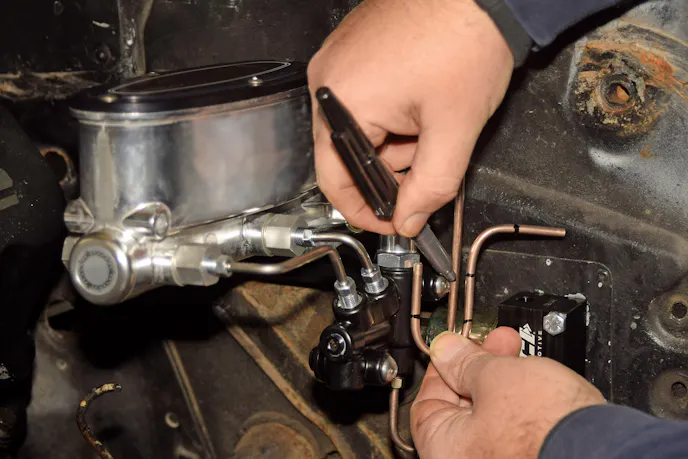
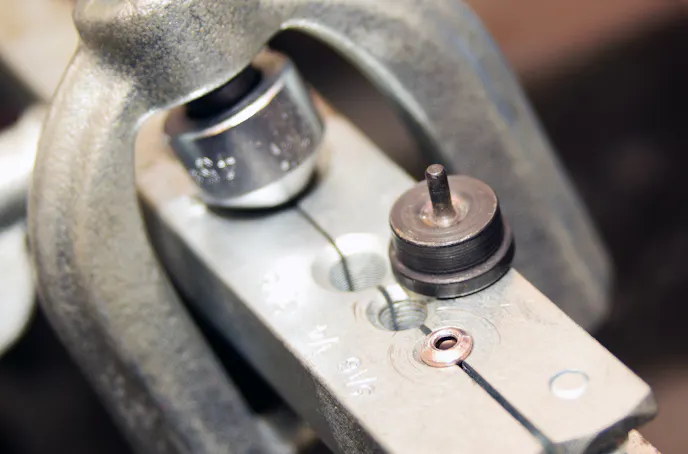
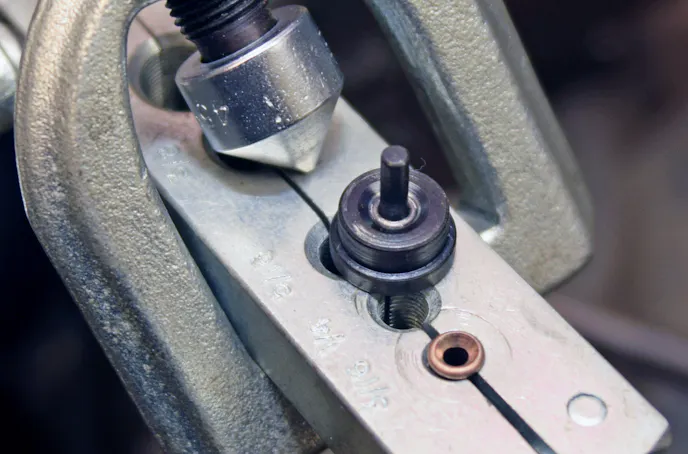
The typical brake line double flare is a two-step process that “folds” your initial flare inward, creating a double wall at the fitting end. The double flare is a prime example of how tubing flares can lead to burrs and indents that can be prone to leaks immediately or over time. This brake line scenario is also a great representation of how this flare lapping process can eliminate these imperfections.
Before the Surseat flare lapping tool, many fabricators (including myself), would attempt to clean up a flare with a sharp pocket knife and hope for the best. To seat a flare fitting typically meant cranking down excessively on the fitting nut. This force could easily result in the tubing flare cracking or damaging the threads of the flare coupler.
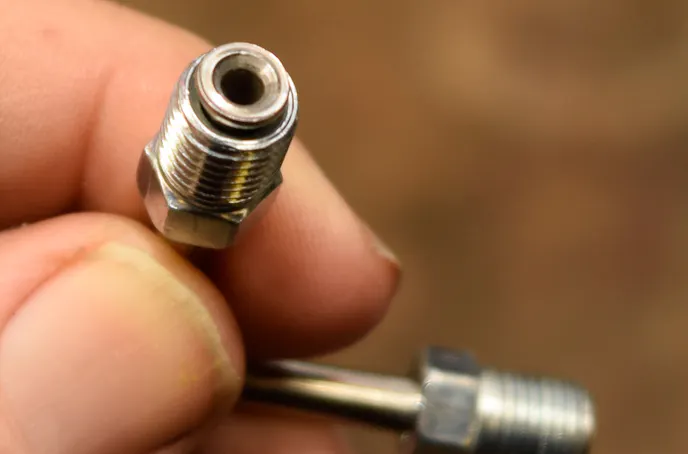
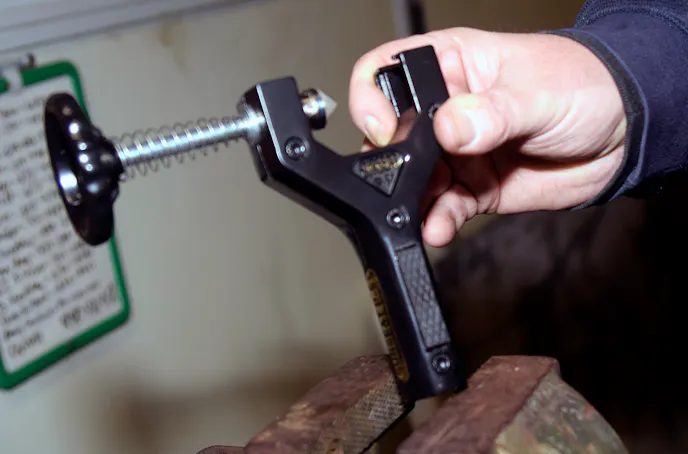
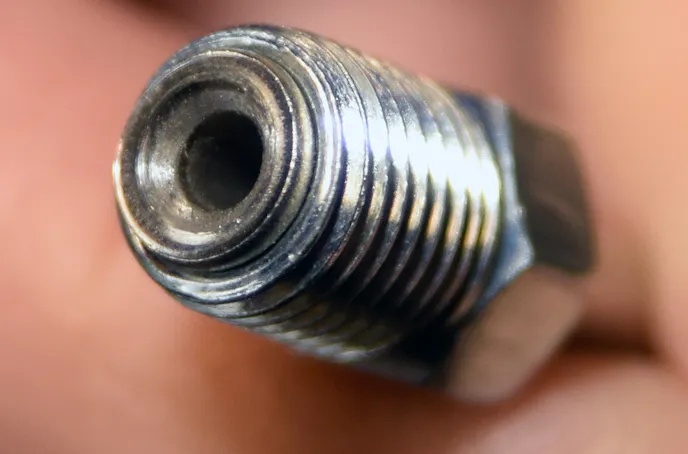
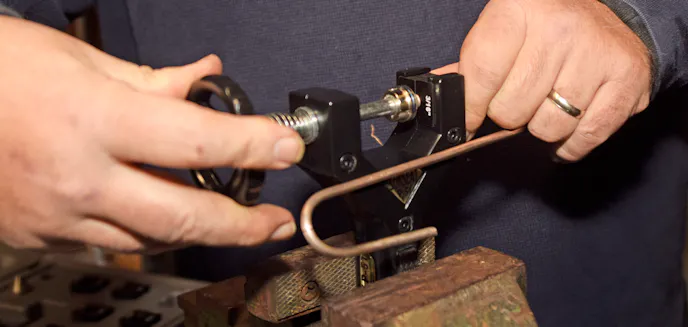
The new Koul Tools Surseat flare lapping tool allows you to lap the face of a flared tube similar to the age-old engine valve lapping process. Once the flare has been created, the Surseat tool is clamped to the tube end, and the flare face can be precision honed with a smooth face for a proper seal.
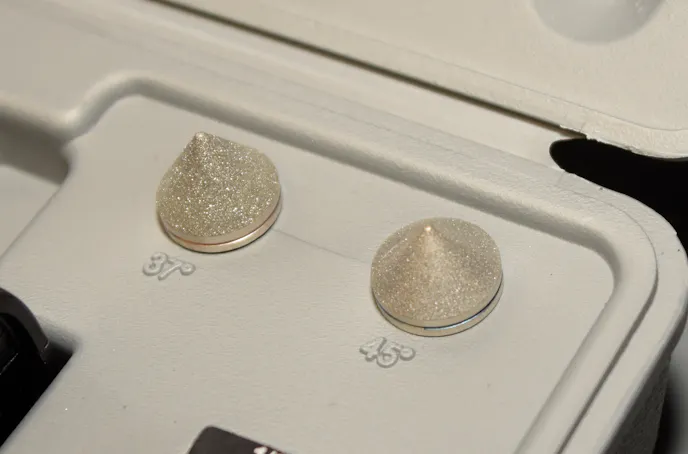
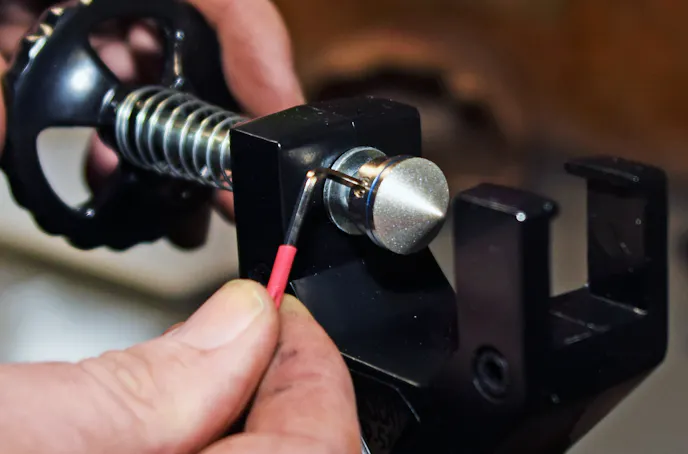
Instead of using an abrasive lapping compound as used in the valve surfacing days, a precision lapping head on the Surseat tool is coated with a diamond dust as the abrasive medium. With the tube end properly placed into the fixture, the lapping head is pressed by hand using light pressure onto the flare, and a twisting motion gently polishes the flare to a smooth finish.
Many of the tools we have developed at Koul Tools were created when we saw a problem that needed a remedy. – Dick Raczuk
“We have a shop filled with everything from racing to restorations,” explains Raczuk. In this case, we were doing a meticulous restoration on a Packard Coupe that had a leaking brake line at the fitting.”
Like any rare restoration, if Raczuk could repair the brake line instead of replacing, it’s that much better to keep the original components. The first version of the honing process was created, and the conception of the flare lapping tool blossomed, in theory, to perfect all tubular flares from restorations, hot rods, OEM, and motorsports.
As illustrated by the restoration application that created the Surseat surfacing concept, the tool is not only useful for perfecting new flares but can be a savior when repairing a brake leak that developed on existing tubular lines with time.
The Surseat Kits
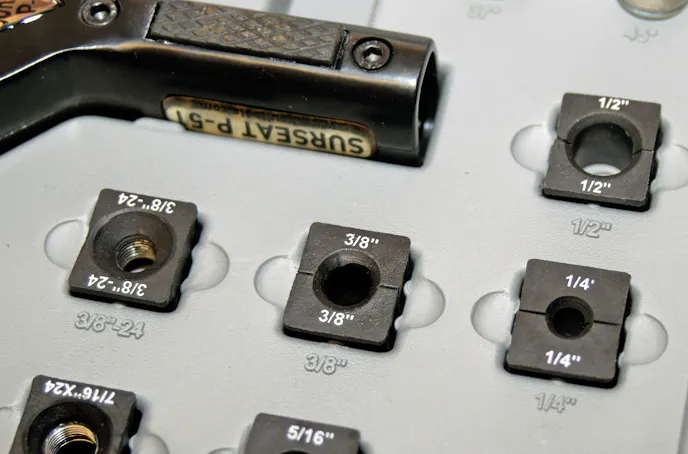
The Surseat system is available in three kits: the Surseat P-37 kit is used for 3/16-inch and 1/4-inch stainless steel brake lines with a 37-degree flare; the Surseat P-45 kit is used for popular OEM and performance steel brake lines with 3/16-inch and 1/4-inch diameter with a 45-degree double flare; the Surseat P-51 model is a “master kit” that includes clearly marked flare collets ranging from 3/16-, 1/4-, 5/16-, 3/8-, and 1/2-inch tubing.
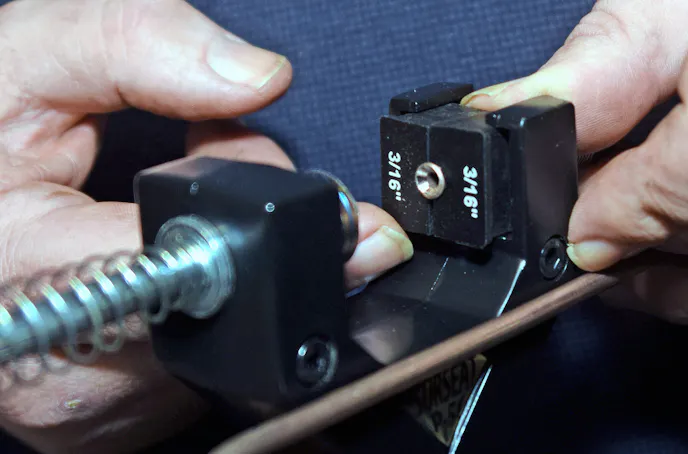
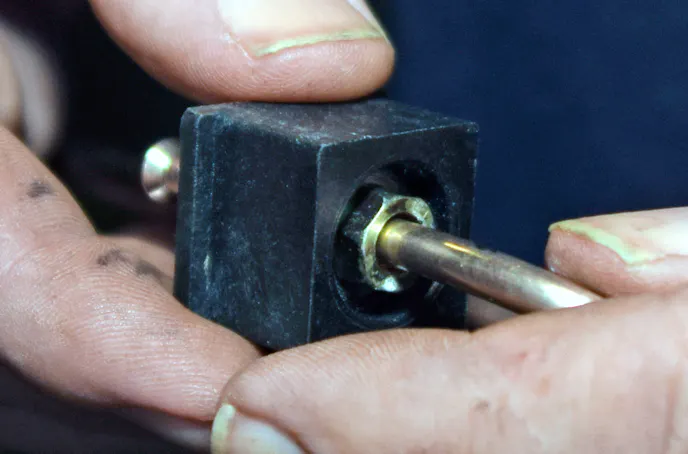
In the Koul Tools Surseat P-51 master kit, there are also threaded collets that allow you to fixture your 1/4- and 3/16-inch brake lines with the inverted flare tube nut fittings installed on the brake lines. These additional collets are very handy if you have bends in the tubing near the flare that limit pulling the nut back just far enough to clamp the line.
Going Hands-On
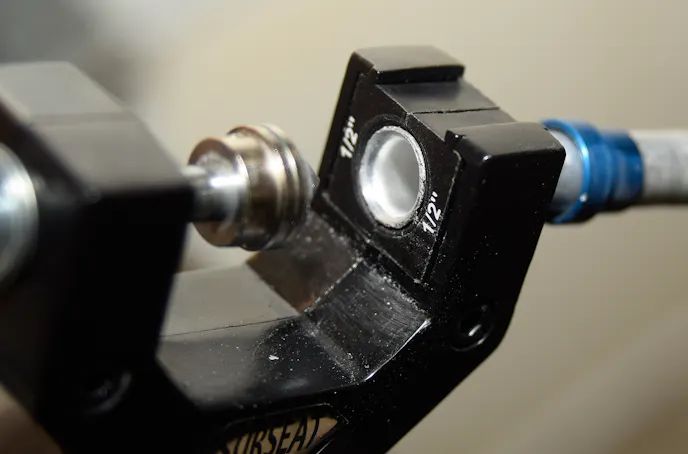
With your flared line clamped with the mating collet, it is mounted onto the yoke fixture. These yokes on the “mini” Surseat P-37 and P-45 kits are a smaller handheld unit that can easily hone fittings in tight places without removing your tubing from your car. The P-51 yoke features a large padded handle which can be easily mounted in a bench vise or easily gripped by hand.
The diamond coated lapping head is sprayed with a light lubricant such as penetrating oil and is then lightly pressed onto the flare and lapped with a twisting motion by the circular handle. Use caution not to remove too much material or “animal” the lapping process with excessive force.
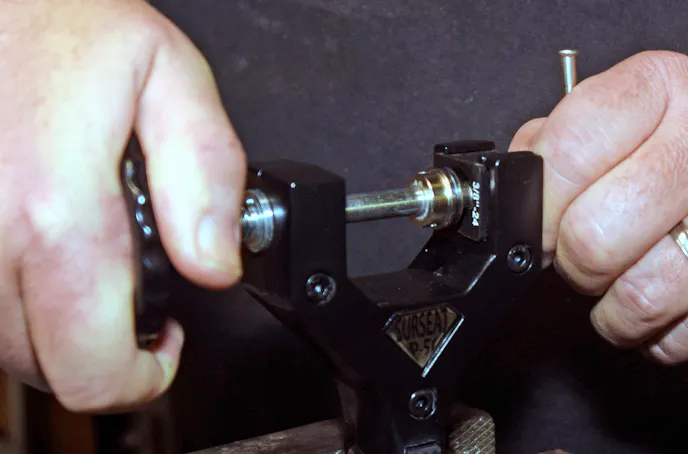
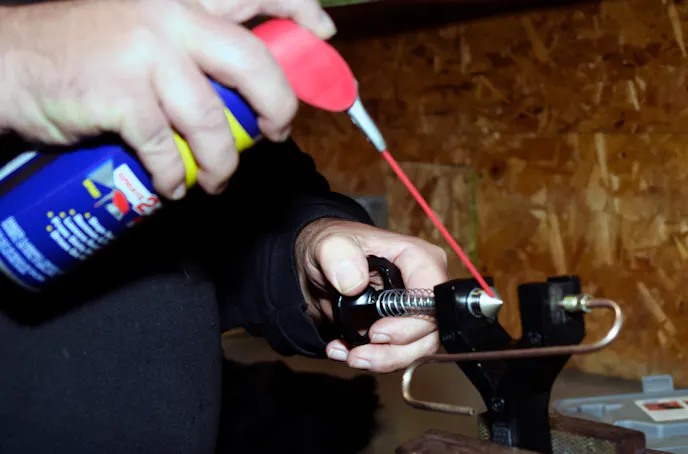
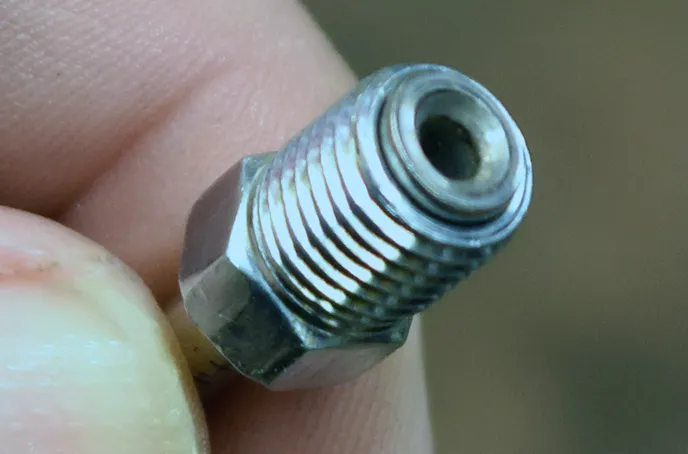
With every few lapping motions completed, inspect the flare face for a clean and even surface void of high and low points or nicks and imperfections. The process of lubricating, lapping and inspecting is repeated until the result of an even and smooth surface appears. Typically, you can achieve a proper surface with just a few lubricating and lapping steps.
Most of the material removed from our flares was retained on the diamond surface of the lapping head and sprayed away with the penetrating oil. Raczuk recommends using cotton swabs to clean the tubing flares. Since our brake lines are a new fabrication, we sprayed brake cleaner through the lines as an additional cleaning process.
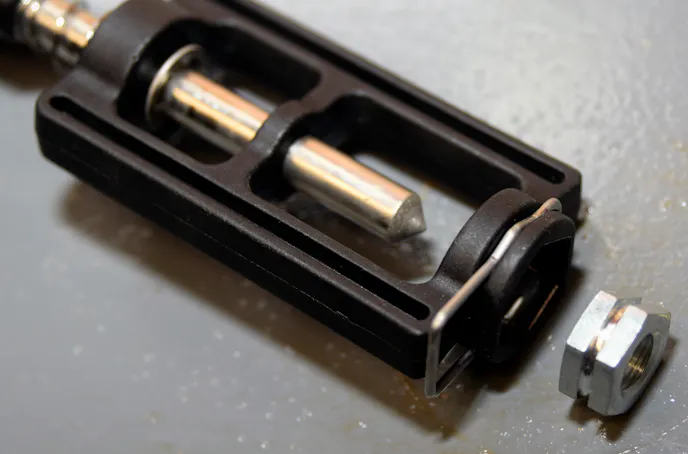
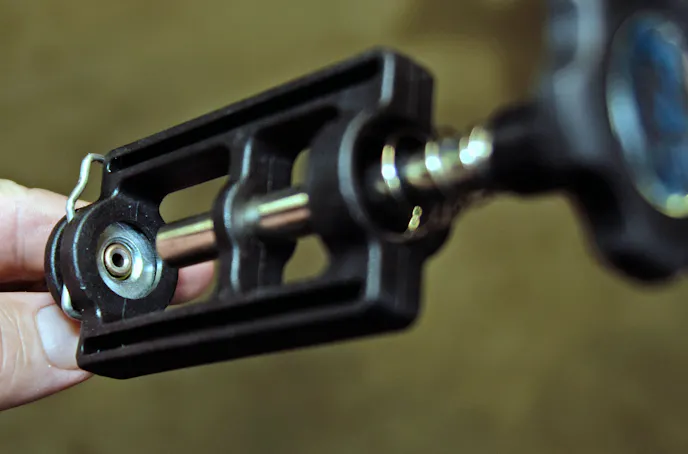
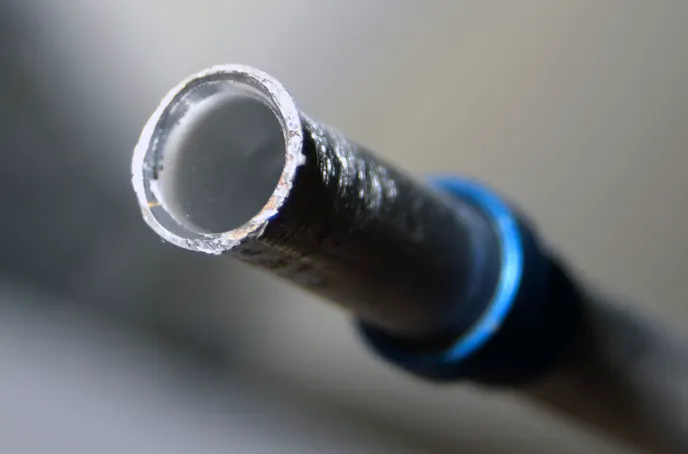
With the master kit, we decided to touch up the flares on our previously installed 1/2-inch aluminum fuel line. As we began the lapping process, an indent in our flare closest to the engine became evident. This lapping process more than likely prevented a future fuel line leak that could have stopped us during a round of competition.
Conclusion
Dick Raczuk is no stranger to the axiomatic “light bulb” going off above his head when it comes to developing innovative tools. Raczuk was the owner of Kerker Exhausts and Kendick Engineering — both were leading suppliers of not only aftermarket racing exhaust systems, but also supplied Honda corporation with specialized tools for its motorcycles and cars.
The Surseat flare lapping tool is just one of the ideas the Koul Tools company has developed to fill a sorely need “fix” when it comes to fabricating your project car.
The AN Hose Assembly Tool was created to make the installation of braided, stainless steel hose into AN fittings far easier. Their Fitting Fixer tools are of similar design theory to the Surseat flare lapping tool. These fixtures use a diamond-dust coated lapping head and can resurface damaged AN-fittings.
Whether you’re a tool geek like me or just looking for the right equipment to build your projects correctly, the Koul Tool innovators have developed some innovative products to fill that bill.


You might also like
Tony Schumacher Joins Tony Stewart Racing For 2027 NHRA Top Fuel Season
Tony Stewart Racing kicked off the 2027 silly season early. It was announced that Tony Schumacher will join TSR in 2027.