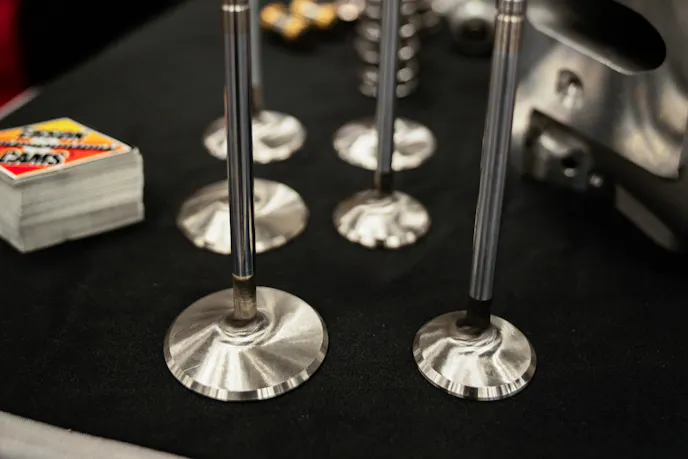
When you’re chasing RPM on the ragged edge, every gram matters, especially in the valvetrain. That’s where PBM’s newest performance offering comes into play. The company has added titanium valves to its lineup, aimed squarely at serious racing applications where high engine speed and valvetrain stability are non-negotiable.
We caught up with PBM’s Jack MacInnis to dig into what these new valves bring to the table and why titanium still makes sense in an era of massive horsepower and increasingly refined engine combinations.
“The biggest advantage is simple, they’re very light,” MacInnis explained. “And that weight savings is critical in high-RPM engines.”
That reduction in mass pays dividends where racers feel it most. Lighter valves mean less reciprocating weight in the valvetrain, which helps engines rev quicker, stay more stable at high RPM, and reduce the risk of valve float. Stainless-steel valves do an excellent job in a wide range of applications, but once RPM climbs into extreme territory, the added weight can become a limiting factor.
PBM’s titanium valves are not intended for street engines or endurance-style applications where long-term wear under daily use is the priority. These valves are purpose-built for competition engines and designed specifically to work with PBM’s race-oriented cylinder heads. That includes select small-block and big-block Chevy offerings, along with certain Ford platforms.
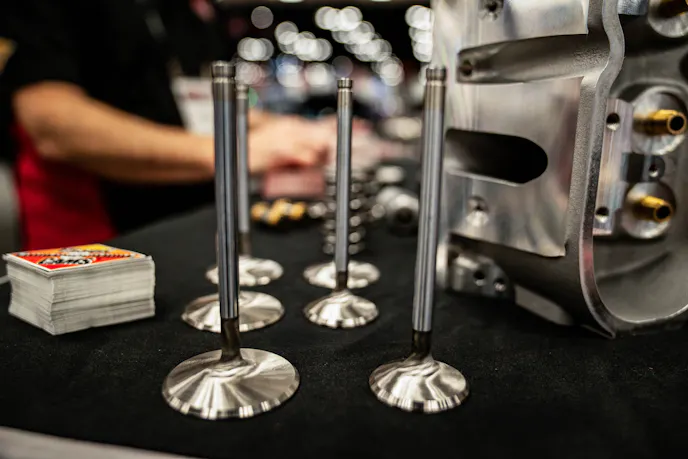
MacInnis pointed out that PBM’s stainless valve lineup still covers the majority of engines and use cases, but the titanium program is intentionally focused.
“We’re still relatively new to manufacturing titanium valves, but the goal is clear,” he said. “We want to give racers a lightweight, reliable option that complements our cylinder heads and performs where it really counts.”
Reducing valvetrain weight doesn’t just help RPM, it also reduces stress on other components. Large, heavy valves can be hard on valve seats and springs, especially in aggressive race combinations. Cutting mass helps improve component life while maintaining control at speed, which is a win-win for engine builders trying to push limits without sacrificing consistency.
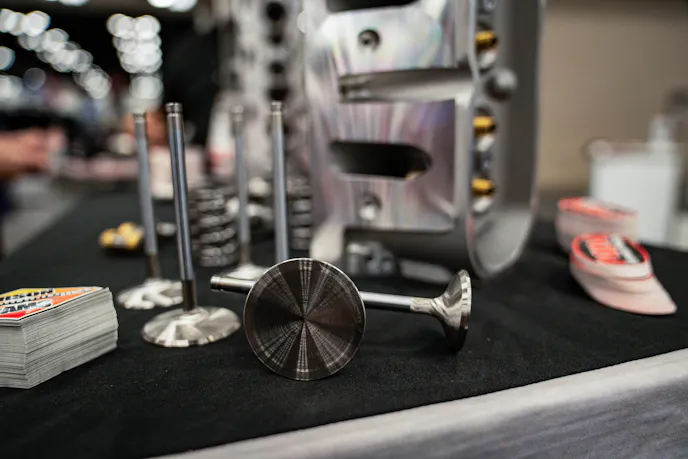
Rather than offering a massive catalog of titanium valves, PBM is taking a targeted approach, focusing on quality, fitment, and compatibility with specific high-performance heads. That strategy ensures racers get the benefits of titanium—lighter weight, quicker response, and improved stability, without compromising precision or reliability.
For engine builders and racers who are already deep into high-RPM territory and looking for every possible advantage, PBM’s titanium valves are a logical next step. In a sport where small gains add up quickly, sometimes the smartest move is simply making things lighter.
You might also like
Nitro Chaos Ups The Ante With $10,000-To-Win ‘A’ Field In 2027
Nitro Chaos racers will race for bigger payouts in 2027. The series will now pay $10,000 to the A-Field winners at every event.