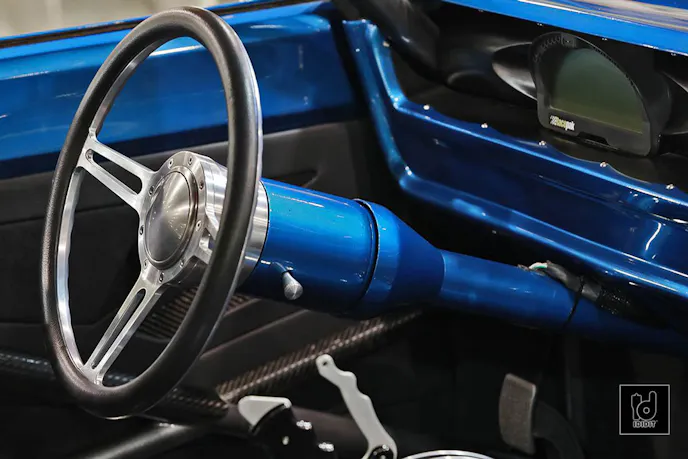
Before a build ever fires up, the steering column sets the tone for the entire vehicle. How you’re positioned in the driver’s seat and how the wheel feels in your hands can mean something different to each of us. What works for a custom builder may not be what’s important to a restorer, and it may be even further from what a drag and drive competitor needs. Understanding those differences is where companies like IDIDIT have earned their reputation.
IDIDIT was founded out of a small garage in 1986. Nearly 40 years later, its spirit of American entrepreneurship, and its mission to make the finest quality steering columns hasn’t changed. Located in Tecumseh, Michigan, the company has grown to offer high-quality steering columns for a wide range of applications. IDIDIT builds with purpose in mind, and in this article, Trevor Cornwell, President, and Eddie Mohr, Sales Manager, offer guidance, practical tips, and common mistakes to help steer you toward the perfect fit and function when ordering and installing a steering column.
Choosing a Steering Column to Match Your Purpose
Purpose means something different for everyone, but we can all relate to the needs of a custom builder, restorer, or racer. Sometimes those lines blur, especially when it comes to the rigors and unique challenges of drag and drive competition.
Flexibility is a must for any custom builder. Column length, mounting options, and shifter configuration all come into play. For builders starting from scratch, IDIDIT offers the Universal Series. “The Universal Series is built for applications such as street rods, kit cars, and one-off projects that don’t have an original column fitment,” Mohr explains.
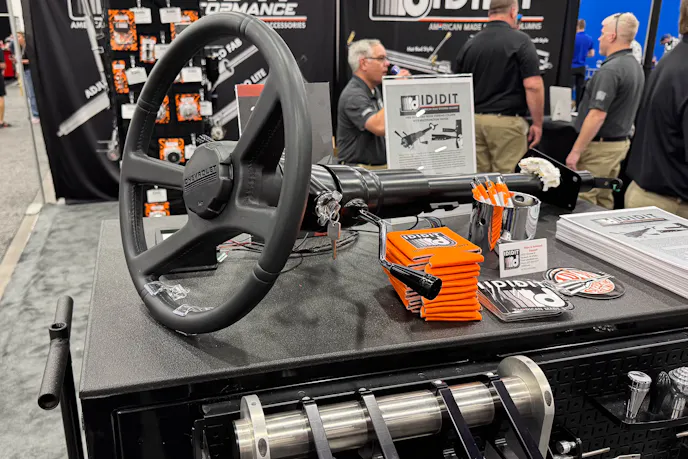
Authenticity and quality are critical for restorers and restomod builders. IDIDIT’s Retrofit Series excels here, offering direct-replacement columns for specific makes and models, such as a 1967–1969 Camaro or a 1955–1957 Chevy. According to Mohr and Cornwell, IDIDIT offers more retrofit models than any other manufacturer. “Retrofit columns exist to make restoration and restomod projects easier, safer, and more authentic in appearance,” Mohr says. “Each column is designed to bolt directly into the factory mounting points and often plugs into the existing wiring harness.”
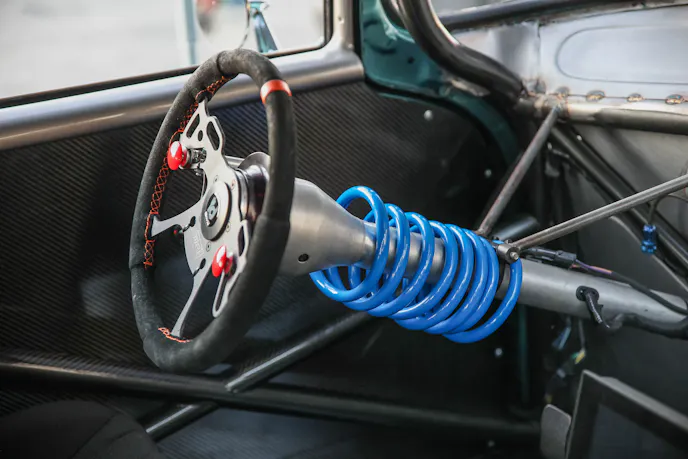
Racers, on the other hand, require a lightweight and precise steering column. “The Performance Series steering columns cater to racing and high-performance builds where weight reduction is important,” Cornwell explains. These columns are constructed from lightweight aluminum, use precision bearings, and can be ordered with an optional quick-release hub. That hub complies with SFI 42.1 safety standards for rapid driver egress while enhancing control and safety.
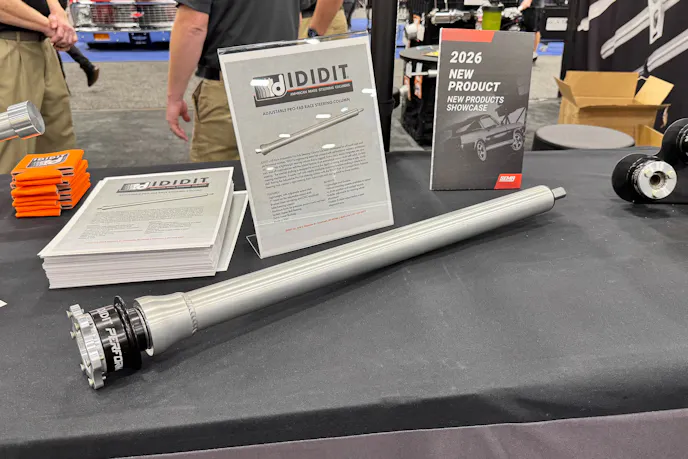
Whether a project falls into the Universal, Retrofit, or Performance Series, IDIDIT’s engineering team has incorporated, or is actively developing, features that enhance modern convenience and safety.
“IDIDIT steering columns are highly customizable, offering a wide range of features to suit different builds and driving needs,” Mohr says. Most columns include built-in wiring for self-canceling turn signals, four-way flashers, and horn circuits. Many models feature collapsible shafts for impact safety, as well as tilt and telescoping options that allow drivers to fine-tune comfort and control. Depending on the series, builders can also choose between floor-shift or column-shift configurations. “Together, these features make IDIDIT columns versatile, functional, and adaptable for everything from classic restorations to custom hot rods and race cars,” Mohr adds.
IDIDIT also places a strong emphasis on fit and finish. “Every IDIDIT column is proudly made in the USA using new and updated components that are more durable than older designs found elsewhere,” Cornwell says. “The company’s commitment to high-quality materials, including polished aluminum and powder-coated finishes, ensures long-lasting performance and show-quality aesthetics.”
What You Need to Know Before Ordering and Installing
When ordering and installing a steering column, builders must know several key details about their project to ensure proper fit, safe operation, and a smooth installation. “You need to know the vehicle’s make, model, and year, along with the firewall and floor setup, steering box or rack-and-pinion configuration, and whether the dash or firewall has been modified,” Mohr explains. These details help determine whether a Universal Series, Retrofit Series, or fully custom column is required.
To determine proper column length, measure from the driver’s seating position to the dash mount, then to the floor or firewall mounting point. “The column must be securely mounted both under the dash and at the floor or firewall to avoid flex or failure,” Cornwell emphasizes. “The installation manual stresses that both supports are required for a safe installation.”
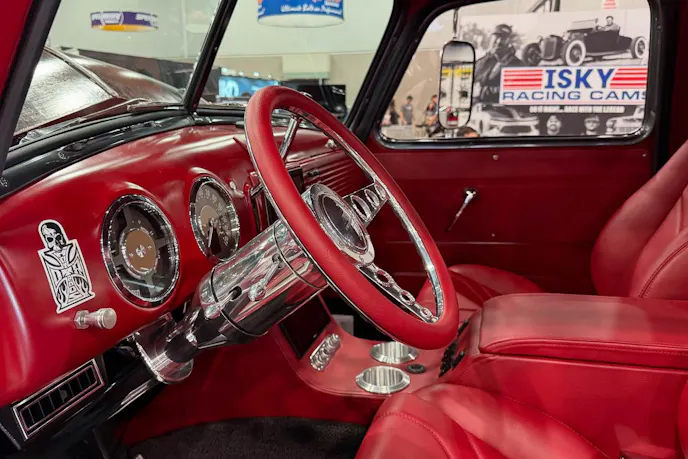
Next, determine whether a floor-shift or column-shift configuration is needed. Proper linkage geometry is critical for column-shift applications, and incorrect column length can lead to improper gear engagement.
Steering wheel and wiring compatibility must also be considered. Depending on the vehicle’s use, a quick-release steering wheel hub may be required to meet racing safety standards. For custom builds and restorations, ensure the steering wheel spline size and bolt pattern are correct. Common bolt patterns include five-bolt, six-bolt, and nine-bolt designs.
Electrical connectivity and grounding are equally important. IDIDIT columns typically use GM-style wiring plugs, with Ford applications also available. Verify that the column has a proper ground path to the chassis or add a dedicated ground wire. Poor grounding can lead to electrical faults or safety hazards.
Adequate clearance around the steering column is essential to prevent heat damage. “Keep sufficient clearance, ideally six to seven inches, from headers and exhaust components,” Mohr advises. “Avoid wrapping the column itself with heat wrap, as it can damage internal components. Instead, use heat shields or insulation if necessary.”
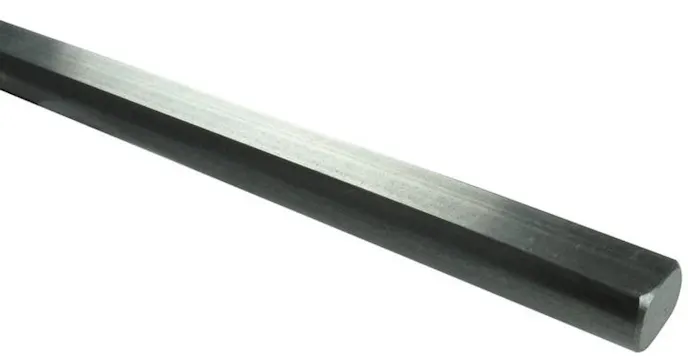
Before final assembly, align the horn cam so the turn signals self-cancel properly and the horn functions correctly. “Ensure the U-joints or couplers are installed correctly on the DD or splined output shaft, with full engagement and proper locking hardware,” Cornwell explains. A DD steering shaft features two flat sides opposite two curved sides, providing a secure, non-rotating connection with matching U-joints or couplers.
After installation, test turn signals, hazard flashers, the horn, the neutral safety switch, and the shift linkage, if applicable. Confirm that the steering wheel is centered, there is no excessive play, and the column mounting is tight and stable.
Builders should also consider add-on features when ordering, such as cruise-control wiring, dimmer or wiper kits, special finishes, or custom column lengths.
Avoid These Common Mistakes
Even with careful planning, mistakes can happen. Cornwell and Mohr have seen recurring issues that can compromise safety and performance. “Improper mounting is a frequent problem,” Cornwell says. “Failing to secure both the dash and floor or firewall mounts can lead to flex, misalignment, or catastrophic failure during driving. Another common issue is incorrect U-joint or shaft installation, which can cause binding or excessive play. Always ensure full engagement and correct torque on all hardware.”
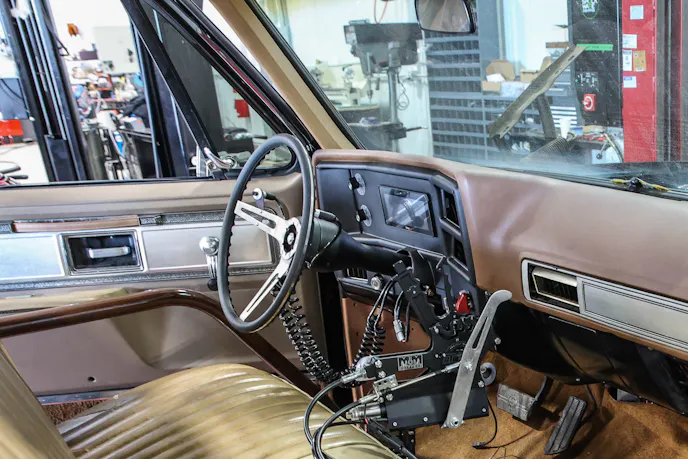
Mohr adds that heat management is often overlooked. “Neglecting clearance and heat considerations is risky. Columns placed too close to headers, exhaust, or engine components can overheat and damage internal bushings.”
Do Your Part for Safety
Safety is paramount in the design and installation of a steering column. IDIDIT emphasizes that its products are engineered to meet federal safety guidelines, including Federal Motor Vehicle Safety Standards (FMVSS). Many IDIDIT columns feature collapsible shafts designed to absorb energy in a frontal impact (unlike your classic mucle car). A dual-mounting system, at the dash and at the floor or firewall, ensures rigidity during normal use while allowing controlled collapse under extreme loads.
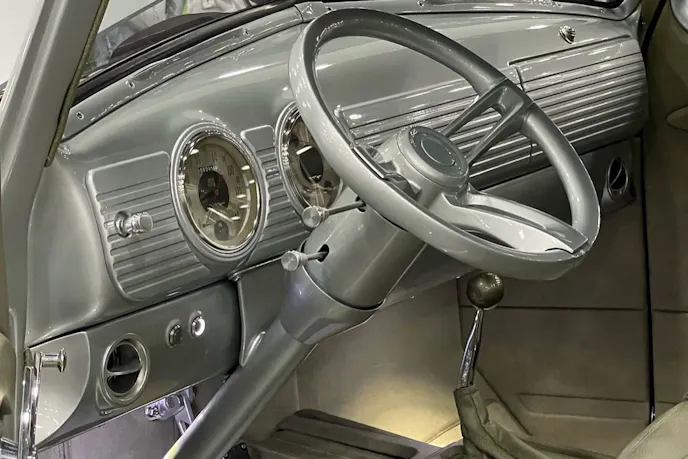
Some Retrofit Series columns incorporate precision-machined safety release blocks in conjunction with collapsible tubes and shafts to further absorb energy. “While the columns are engineered to meet these standards, proper installation is the builder’s responsibility,” Cornwell says. “Correct column length, adequate heat clearance, and proper shift-linkage geometry are all critical to maintaining safety and functionality.”
Race-Proven Conclusions
Choosing the right steering column requires research and planning. No matter the purpose, custom hot rod, restoration, or race application, IDIDIT has a solution designed to deliver proper fit, smooth performance, and a timeless finish.
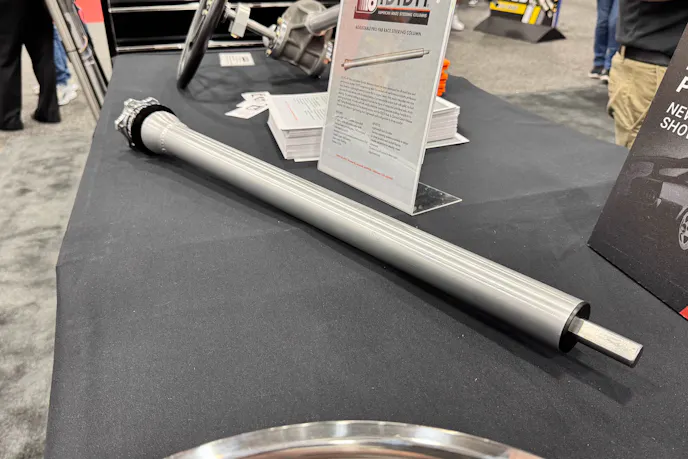
IDIDIT’s reputation is reinforced by its drag and drive customer base. “Alex Taylor’s ’55 Chevy drag and drive car uses an IDIDIT Performance Series Pro-Lite column with an IDIDIT Quick Release,” Mohr says. “The column weighs just six pounds and features self-canceling turn signals and a collapsible shaft for safety. Alex’s car uses a fabricated upper mount and a firewall bushing to support the lower end of the column.”
Mohr also notes, “Joe Barry has used an IDIDIT Universal Series steering column in his drag and drive 1956 Chevy Two Ten sedan for many years. He integrated the column into the chassis by welding directly to the steel housing and fabricating custom supports.”
IDIDIT steering columns deliver a level of safety, fit, and finish that sets them apart in the market, and the company notes that both of these setups have held up over several years and countless drag and drive competitions.
You might also like
How An Oil Priming System Extends The Life Of Your Race Engine
Engine start up wear is a real thing. An oil priming system fights wear by lubricating all of the engine's critical parts before it fires up.