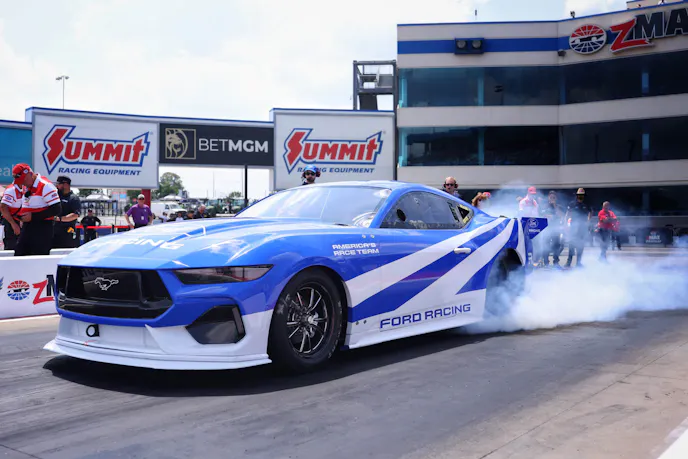
Drag racing has long played a critical role in OEM automotive development. During the muscle car wars, the “Big Three” automakers poured significant resources into the sport, not just to win, but to drive innovation and technological breakthroughs. Today, Ford is continuing that tradition with a modern twist, introducing its record-setting electric vehicle: the Mustang Cobra Jet 2200.
The Ford Mustang Cobra Jet 2200 is a 2,200-horsepower EV drag car developed by Ford Performance. Built as a high-performance electric “science project,” the Cobra Jet 2200 takes everything Ford learned from its previous electric Mustang programs and pushes it to the next level. Think of it as a Pro Mod-style drag car with a cutting-edge EV drivetrain.
Power comes from a pair of electric motors capable of producing a combined 2,200 horsepower. To manage that power, Ford paired the motors with one of Liberty’s Gears Equalizer transmissions and a specially developed Reverse-Acting Centrifugal Clutch (RACC). This unique setup allows the Cobra Jet 2200 to launch in direct drive, then introduce controlled slip during gear changes, keeping the car planted and maximizing traction throughout the run.
The results speak for themselves. The Cobra Jet 2200 has recorded a blistering 6.76-second quarter-mile pass at 222 mph, setting an EV car record, and creating a new benchmark for electric drag racing performance.
Weight Reduction in EV Drag Racing
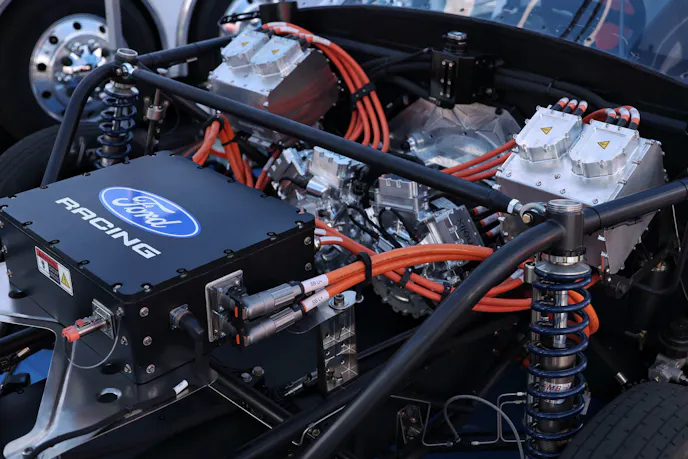
One of the biggest challenges with EV drag cars is weight. Batteries and supporting electrical systems add significant mass, which can hinder performance. Ford addressed this issue by aggressively optimizing every aspect of the Cobra Jet 2200.
The team focused on reducing weight across the chassis, carbon fiber body, and even the vehicle wrap. In fact, the NASCAR-style vinyl wrap used on the Cobra Jet 2200 is 20 pounds lighter than a standard wrap. These efforts resulted in a car that is approximately 900 pounds lighter than its predecessor, the Super Cobra Jet 1800.
EV Safety Innovations at the Drag Strip
Safety has become a major concern as electric vehicles enter the drag racing world, with some tracks even banning EVs all together. Ford took a proactive approach by working closely with the NHRA to develop safer electric drag racing technology.
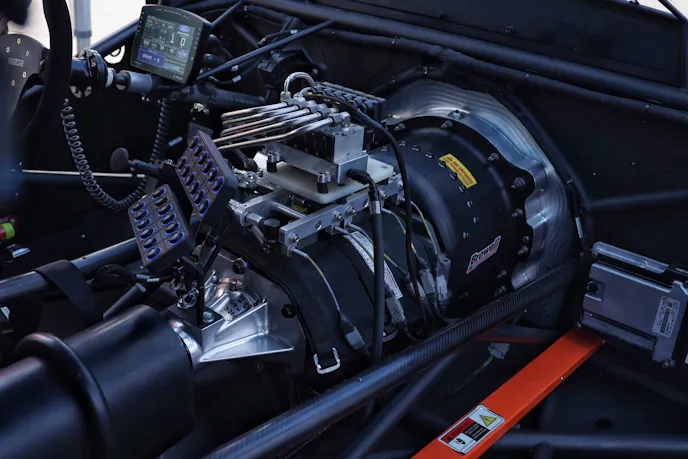
One key innovation is the use of a pyrotechnic circuit breaker, commonly referred to as a pyrofuse. This device can instantly isolate the high-voltage system by breaking the circuit through a small controlled detonation. Compared to traditional melting fuses, pyrofuses are lighter and respond much faster.
In addition, the Cobra Jet 2200 is equipped with an external cut-loop system. This allows first responders to activate the pyrofuse from outside the vehicle in the event of an emergency, adding a critical layer of safety for track personnel.
The Future of EV Drag Racing Performance
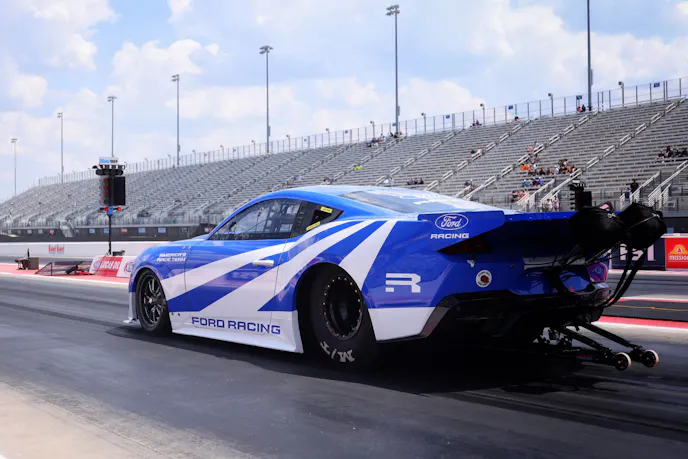
While nothing can fully replace the sensory experience of internal combustion engines at the drag strip, the Ford Mustang Cobra Jet 2200 demands respect. It represents a forward-thinking approach to performance, blending cutting-edge EV technology with traditional drag racing engineering.
Ford’s work with the Cobra Jet 2200 is helping shape the future of electric drag racing and high-performance EVs. The innovations developed through this program will likely influence the next generation of electric vehicles, both on and off the track.
You might also like
Tony Stewart Racing Brings Dodge Home-State Push To NHRA Great Lakes Nationals
Leah Pruett and Matt Hagan are ready to wave the Dodge flag at U.S. 131 Motorsports Park. Both drivers are pushing for NHRA championships.