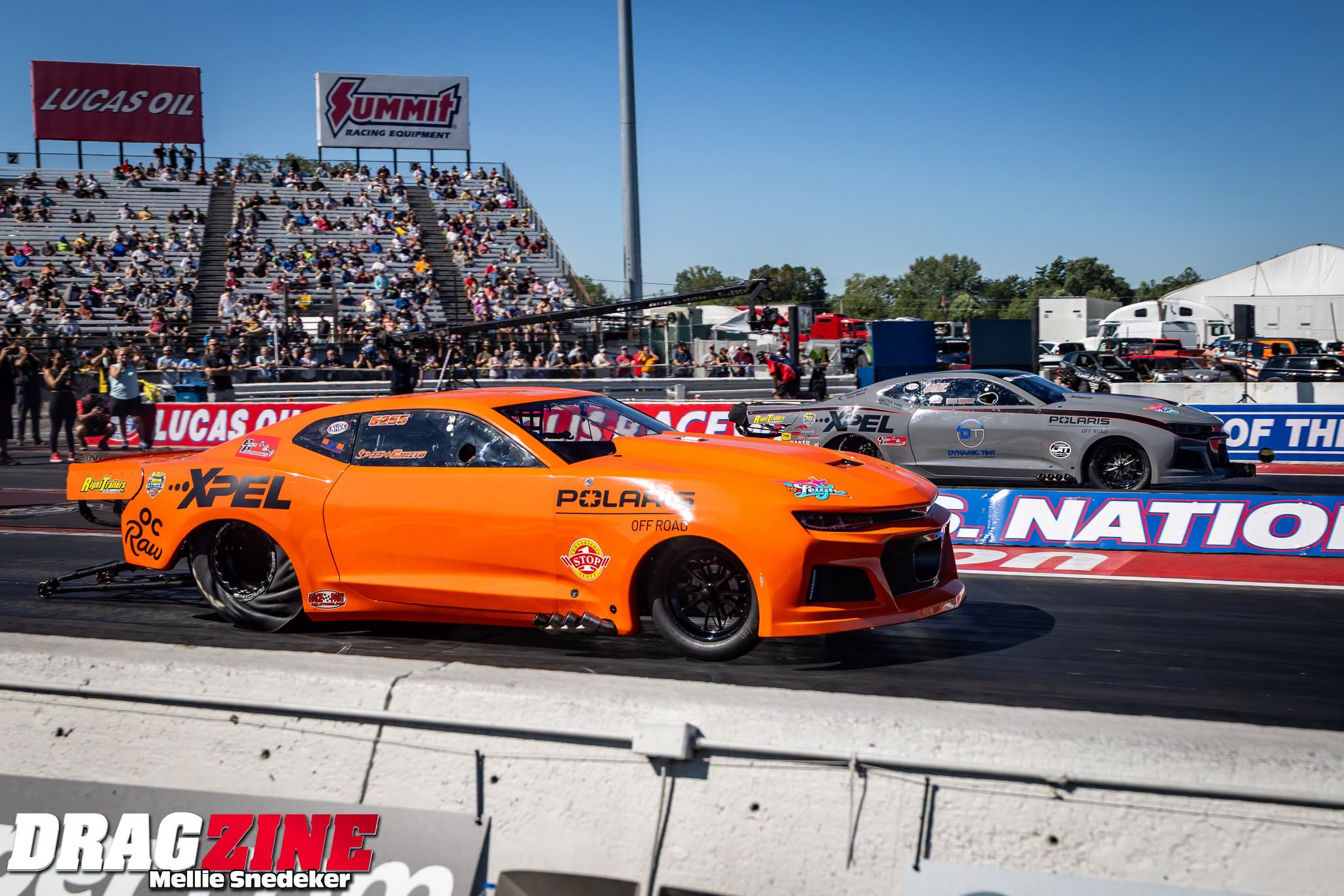
A controversy erupted on social media after rumors began circulating that the NHRA had placed an index cap on the Outlaw Street class at the Texas FallNationals. The truth is far less salacious, and it all boils down to perfect atmospheric conditions allowing the cars to show their teeth.
For years, there was a rather large misunderstanding of just how quick and fast the cars on Street Outlaws: No Prep Kings were actually running. Racers were running deep into the low 3.80s, and the fastest of the fast were living in the 3.70s. When the NHRA created the Outlaw Street class, those performances became common knowledge, with the scoreboards telling the truth.
At the start of the 2026 season, the Outlaw Street racers knew they had a hard 3.66-second elapsed-time limit, but it was in place for a good reason. The limit was established because most of the drivers don’t have an NHRA Pro Mod license or NHRA Pro Mod chassis certification. This presents a challenge because these cars are true steel-roof-and-quarter cars, not Pro Mods.
The problem is that Mother Nature dropped some Disney World conditions on the teams in Dallas, and the cars responded better than anyone expected. Kyle Canion ripped off a 3.63-second pass, and Carson Baker laid down a 3.65. According to Ryan Martin, the teams estimated that the conditions allowed the cars to pick up approximately 200–300 horsepower.
So, contrary to what has been reported on social media, the NHRA has not turned Outlaw Street into an index class. The racers are aware that they’ll need to make upgrades to their cars and obtain the correct licenses if they want to run below the 3.66-second ET limit in 2027.
You might also like
Take A Tour Inside One Of John Force Racing’s Nitro Funny Car Trailers
Nitro teams bring an incredible amount of gear to the track. We take a look at what you'll find inside one of John Force Racing's trailers.