As a certified Ford man with a series of blue-oval machines in his collection, both past and present, a Buick Grand National is a bit out of character for Ohioan John Evans. For most of his life, he was firmly entrenched in the Ford ecosystem, a longtime NMRA racer who had tinkered with everything from modern S550 Mustangs to classic Fairlanes.
If you had asked him in the mid-2000s whether he’d ever own a turbocharged Buick, he probably would have laughed. What happened instead is the kind of twist only a hardcore car guy with a knack for making deals would find himself in: a casual trade that turned into a 19-year commitment to something world’s apart from what he knew.
“I was down in Bowling Green for the NMRA World Finals in 2007, and I had a for sale sign on my orange Mustang that we had slowed down to race in Open Comp. This guy, Eric, saw the sign and came up and asked me if I’d be interested in doing some trading. I said, possibly, what do you have?’ And he said, ‘a Grand National.’ ”
Evans’ 1990 Fox-body had a 385-inch small-block with two kits of nitrous. “It was basically an Outlaw 10.5 car, but we ran some Open Comp with it because that’s where it fit in NMRA. Back then, you could run like 8.50, so we ran it on one kit,” he explains. The car was traded as a roller, and the engine and transmission were sold off separately.
When he made the deal, Evans assumed the Buick would be an ordinary flip. It was a turnkey Grand National, its V6 combination slightly modified, but the entire package was still very much a good, honest street car. He had no intention of keeping it, but first impressions were impactful. The Buick was quiet, smooth, and far more civilized on the street than anything Evans had owned in years.
“I worked with a guy who had bought one in 1987, and he took me for a ride in it. I liked the cars, but I wouldn’t say I would have ever bought one. I never realized how streetable these cars are, though… they’re just crazy. I mean, all the stuff you can do to them and still drive them,” he explains.
His first passes were fun, but nothing spectacular by his standards. Stock or close-to-stock turbo Buicks aren’t fast by today’s numbers, but they have a charm that grows on you quickly. “We put some C16 in it and turned the boost up and played with it a little bit. The first time I took the car out, it went like 12.22. Then we went back with a drag radial and got it to run something like 11.50, and then I decided I was going to keep it,” Evans says.
Instead of selling the car, he turned his attention to making it a fun project. At first, it was mild upgrades, but over the course of many years, it became gradually more serious as he upped the game with the chassis, engine, driveline, all of it.
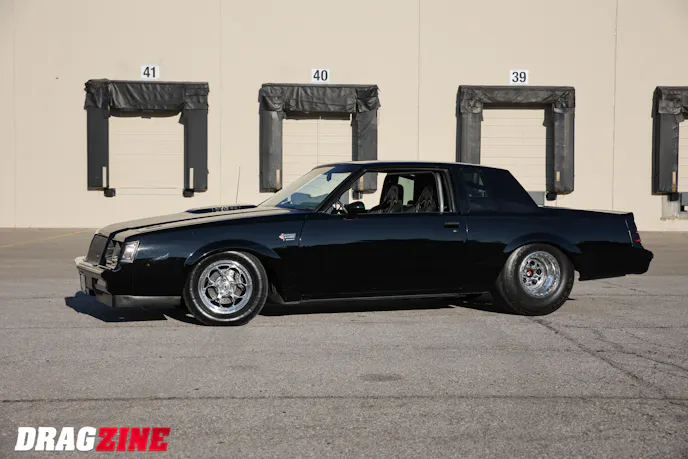
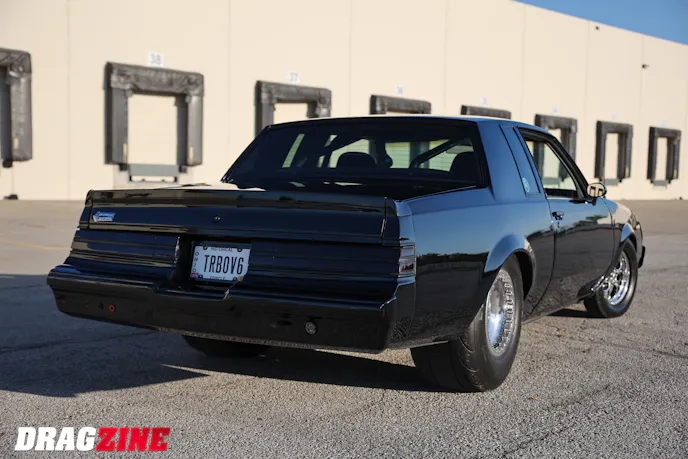
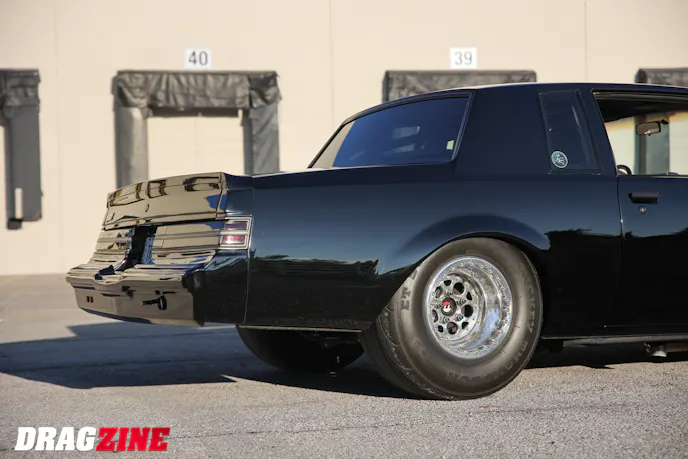
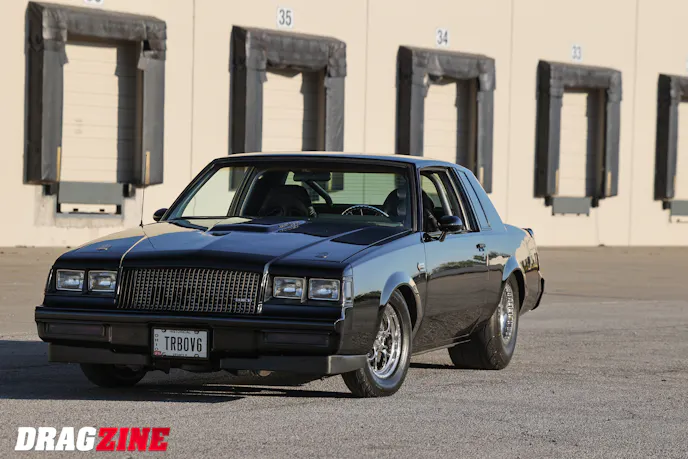
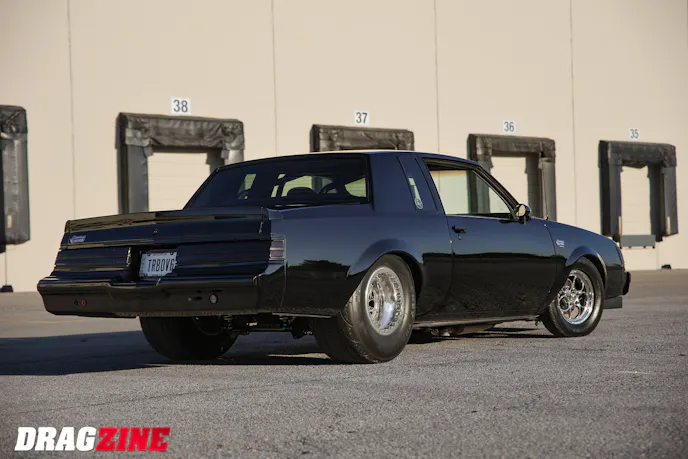
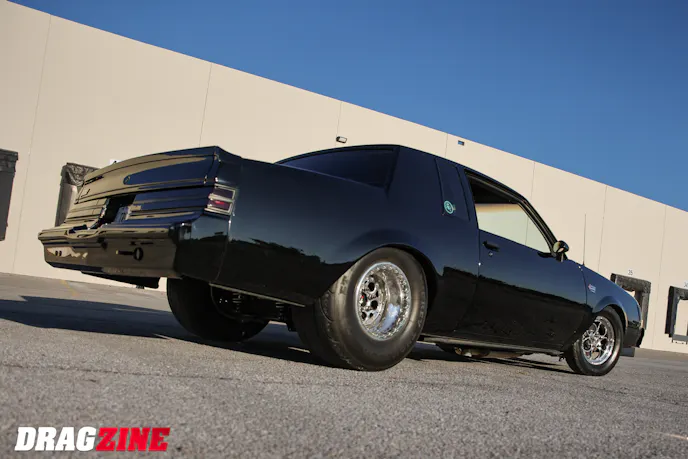
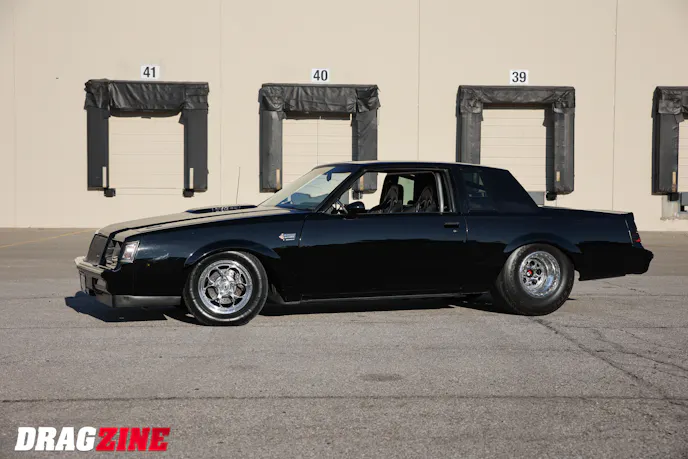
“I always like to start with chassis; I’ll do wheels, tires, the stance, all of that stuff before the engine,” Evans shares. The Buick got fresh wheels, a set of Mickey Thompson 275 radial tires, and AFCO double adjustable shocks, and that signature Grand National stance and rake as a result.
The turning point was when he went to bolt on a larger 315 drag radial, and it didn’t fit in the factory wheel tubs the way he wanted. “We could get the tire underneath it, but we couldn’t get the car sitting down,” Evans explains. “I said, it’s a 130,000-mile car, it’s a good candidate to back-half. So that’s when it all started.”
ARK Hot Rods in Ohio took over from there, building a custom 9-inch rearend with a Wavetrac and 35-spline axles, fabricating a roll cage, ladder bars, coilovers, a custom anti-roll bar, and a fully boxed and reinforced frame. The back-half transformed the Buick into a legitimate drag-and-drive style chassis before that term even became mainstream.
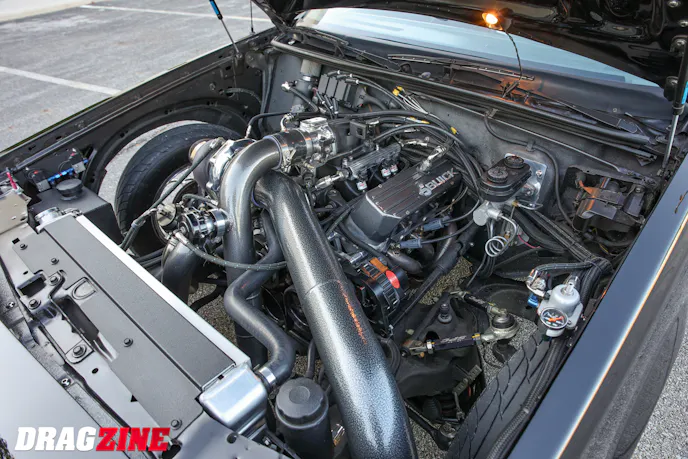
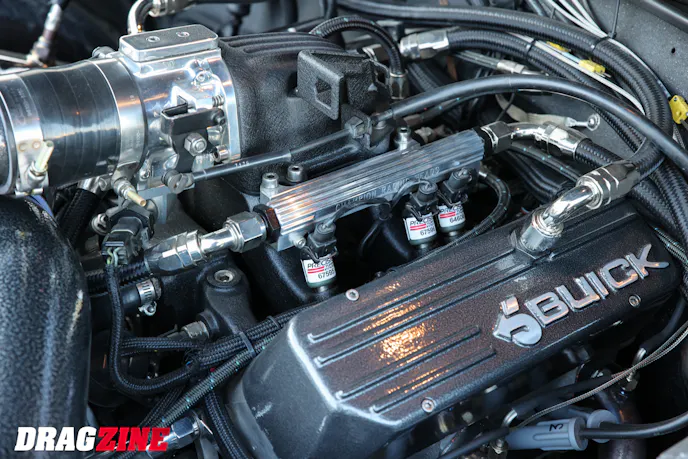
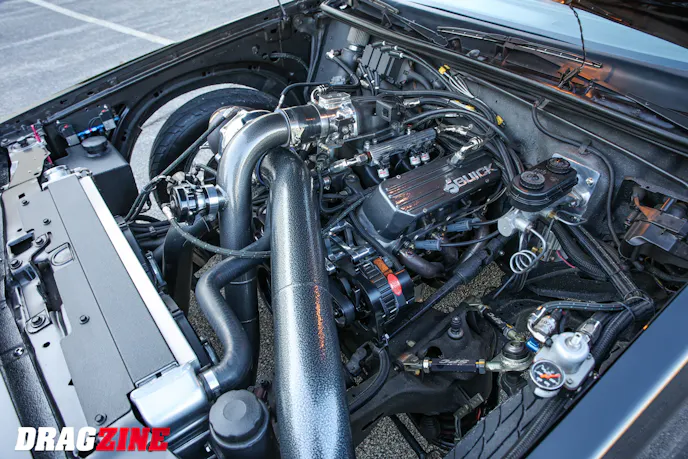
Under the hood, Evans stayed true to the car’s identity. Buick turbo V6 parts aren’t cheap, and they’re not common, but Evans never considered the LS solution. “The cheaper out would have been putting an LS motor in it, but I think it’s kind of neat still having the V6 in it,” he says.
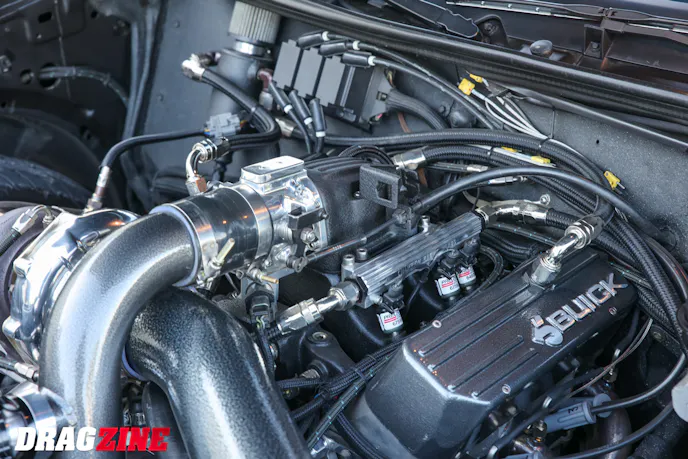
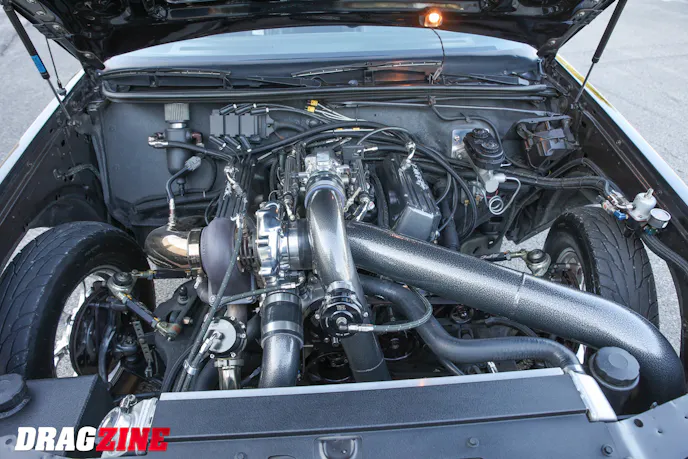
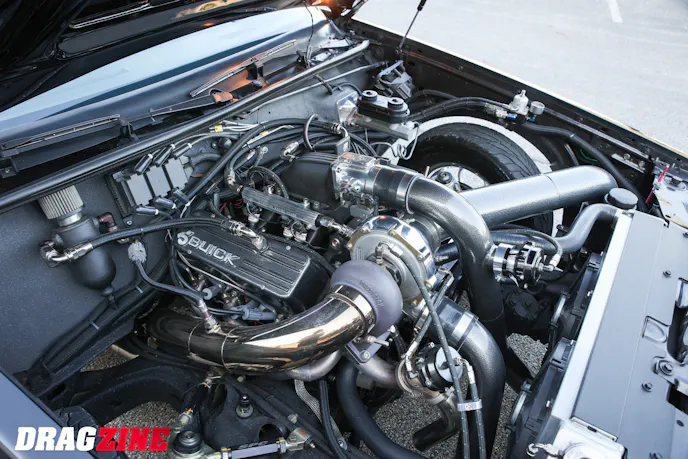
He kept the original Buick 109 block, girdled and strengthened with RJC hardware, and stroked it to 250 cubic inches with a 4340 Molnar crank, Diamond pistons, and Crower billet rods. The rotating assembly was built to withstand serious power, and Evans intended to give it exactly that.
The cam is a Weber custom-grind hydraulic roller; on top sits a pair of TA Performance Street Eliminator aluminum heads, extensively massaged by DLS Engine Development in Indiana. DLS also did the heads, the intake, and the external oil pump system. “It’s got all the good stuff in it now,” Evans says.
Boost comes from a Precision 6765 twin-ball-bearing turbo with a billet compressor wheel. With 32-plus psi on tap and a front-mount intercooler, Evans believes the Buick is easily capable of mid-nine-second power. He doesn’t have any dyno sheets to verify it, but having driven seven, eight, and nine-second street cars for most of his adult life, he says he can sense the numbers in the seat of his pants.
“I’d say it’s probably a 9.50 or a 9.40 ca, maybe quicker if it’s turned up. I’ve owned some fast cars, and I’ve got a pretty good understanding of what they feel like,” he adds.
The engine was built by the late Bobby Jacobs at Jacobs Performance in Columbus. The motor stands as one of Jacobs’ final builds, which is a detail that gives the Buick more emotional weight than Evans expected when he started.
The transmission upgrade followed the universal rule of power: the next weakest link always breaks first. After the back-half and early engine work that got the car into the 10.40s, the 200-4R began slipping. Evans priced a built version, then went another direction. “By the time I figured out what it costs to do that, I just had my normal transmission guy build a really nice Turbo 400 for it,” Evans explains.
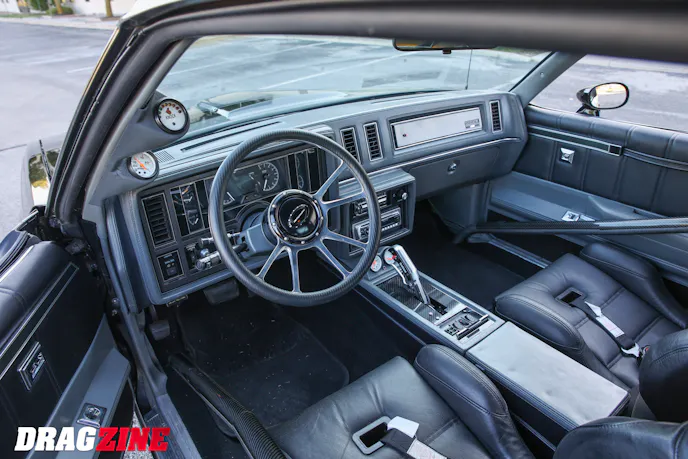
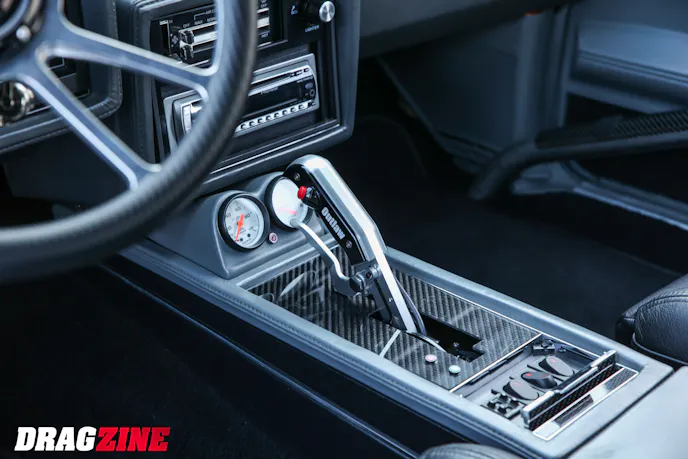
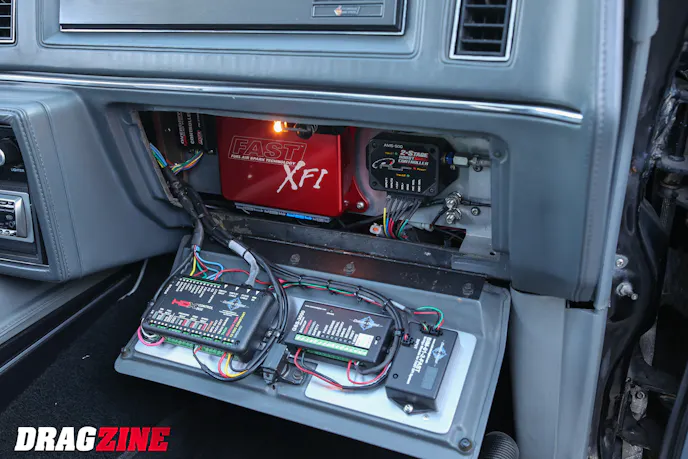
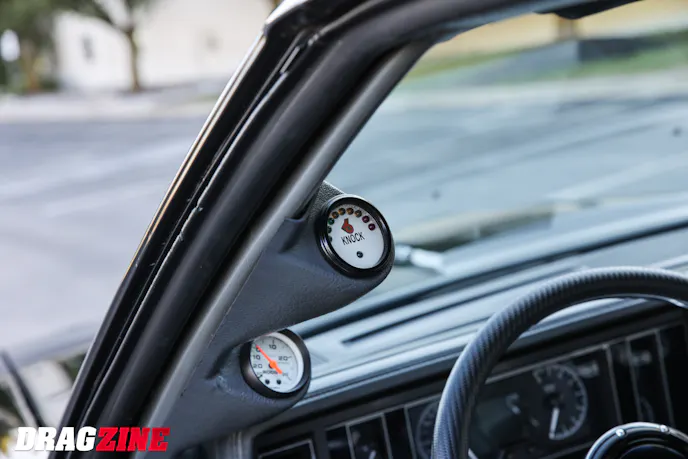
Today, the Grand National sports a TH400 with a PTC converter, Griner valvebody, and a JW flexplate, all assembled by Steve Grady with Grady’s Performance. John also recently added a Gear Vendors overdrive unit after talking with the Gear Vendors team at a drag-and-drive event at National Trail Raceway near his home. “It makes it really nice to cruise anywhere. You can actually enjoy the car instead of screaming 3,500 rpm down the highway,” he shares. That overdrive is one of the precursors to Evans’ planned participation in drag-and-drive events in the near future.
Modern streetability has been the consistent theme with the car, despite it becoming ever more wild with time. Evans recently rewired much of the car, added a Dakota Digital dash, and plans to convert to coil-on-plug and E85 very soon. “I’ve got a FAST coil-on-plug system and a whole new wiring harness for it. That’ll probably be the next thing. Then we’ll convert it to E85, so I’m not switching from pump gas to C16 all the time,” he notes. Cal Hartline in Florida handles the tuning via remote file exchanges.
All this progress unfolds at the pace of a man with many cars and a full, busy life. Evans owns Steeltree Construction and is approaching retirement after 38 years. With so many cars, he also finds himself spending less time with the Buick than he’d prefer. When that day for retirement comes, he intends to spend far more time in his shop. “I got a pretty nice shop with all the cars in there, and I plan to get back in there and dedicate a lot more time to them,” he says.
His other cars include a twin-turbo Fox-body project expected to make 1,700 horsepower, a Whipple-equipped 2015 Mustang he runs in True Street, and a 1964 Fairlane barn-find that he plans to restomod with a 427 Windsor. Yet the Grand National remains the one he enjoys most.
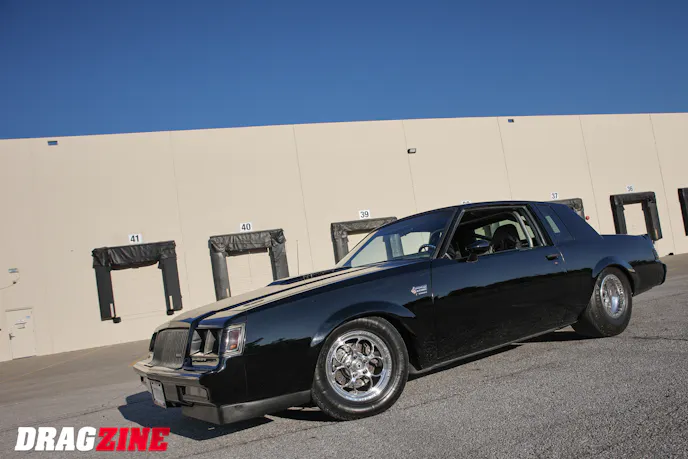
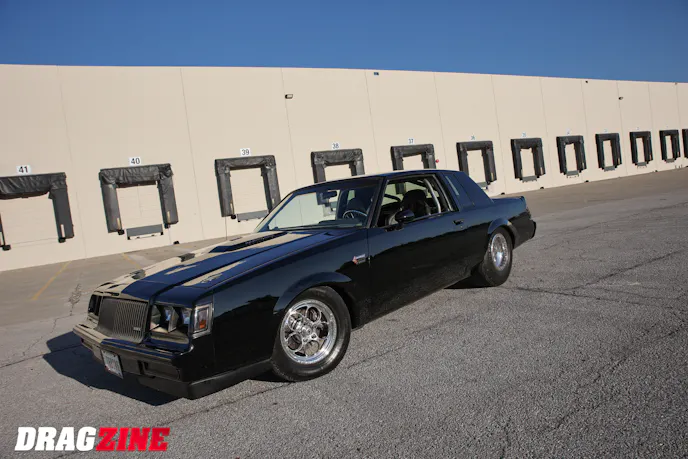
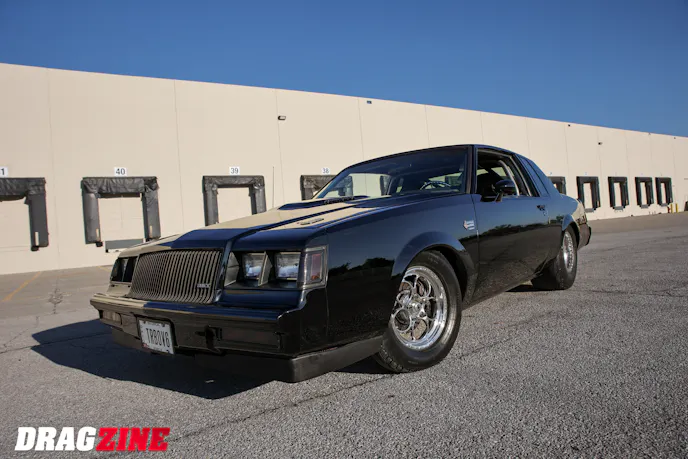
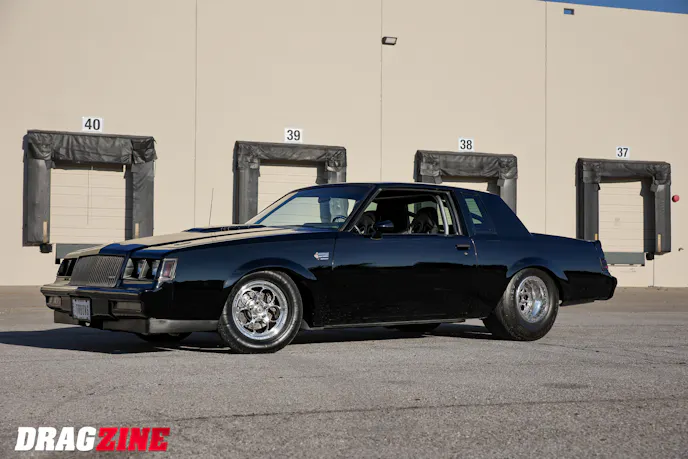
“The Buick gets a lot of attention at car shows, cruises, and Cars & Coffee events. I’ll pull in someplace where they don’t know me, shut it off, jump out, and people are right on top of it. Just the stance of the car and how clean it is make it stand out, and then I pop the hood and they’re in awe because it still has the V6,” Evans explains.
Evans grew up at racetracks with his father, a racer and street racer, and now watches his seven grandkids, six of them boys, start to show interest in the cars. “I’m hoping as they get older, they develop the love for automotive stuff the way a lot of us do,” he shares. “They’ll have some nice stuff one of these days.”
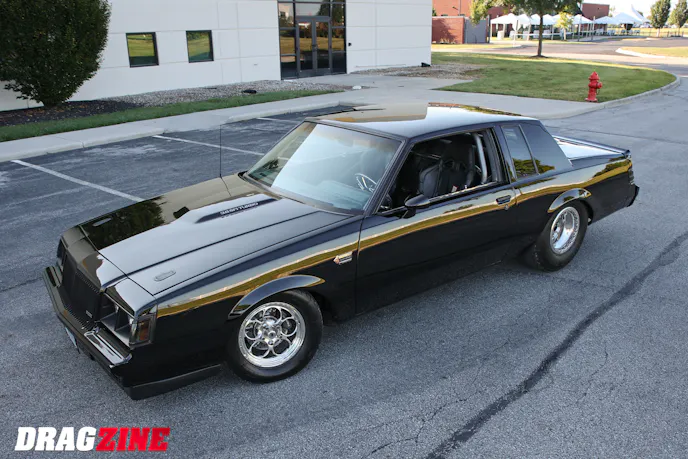
His 1987 Grand National will likely be one of them…perhaps the one car that he never meant to keep, built by a Ford guy who ended up building something meaningful out of a flip. It’s the car that always draws a crowd, the car that still looks factory-correct even with a back-half and a built mill, and the car that will carry Evans into the next chapter of his life.
You might also like
Piedmont Dragway Saved: New Owners Plan To Reopen Iconic NC Track
Historic Piedmont Dragway has been saved and will continue to operated as a race track. Greg Loflin and Terry Ferrell purchased the track.