Ryan Pederson didn’t come from a racing family, and that’s an important point to make, because it shaped the way he approaches every automotive project. “No one in my family is into this crazy automotive world that I love,” he says. The things he knows, he taught himself, first as a young teen making passes, and later as an adult building his own path through the sport. That mindset is what drew him to a black 2007 Corvette Z06 he used to work on at a local performance shop (a building he rented space in for his upstart trucking business). It wasn’t for sale, but he was drawn to it.
Pederson had noticed how clean this particular Corvette was and how carefully the previous owner had maintained it. It was a familiar car and an opportunity to build something step-by-step the way he wanted to. “This thing was like my dream car. It checked all the boxes for what I was looking for,” Ryan says.
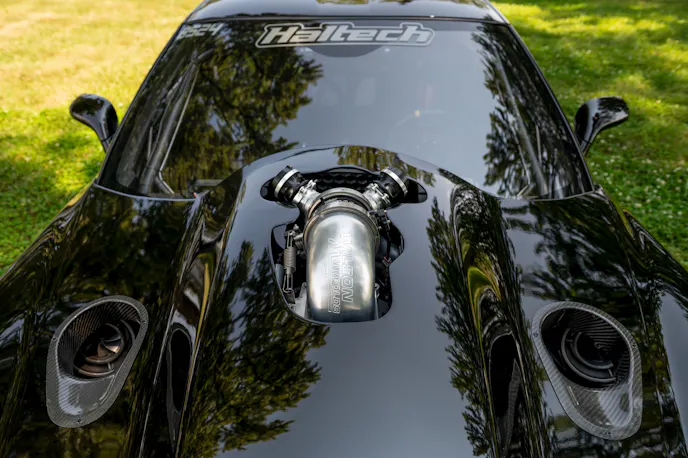
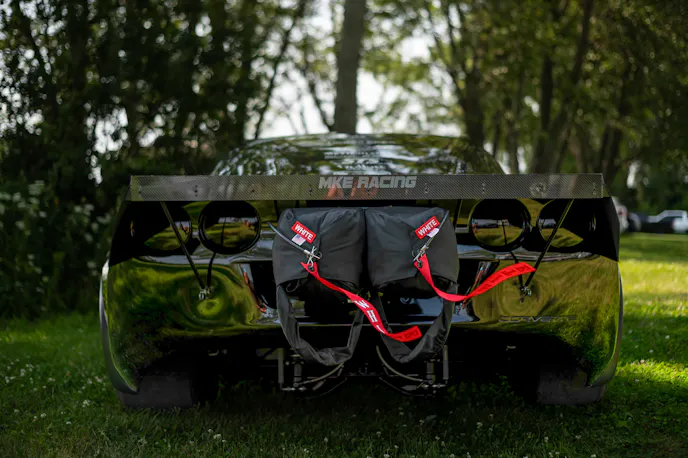
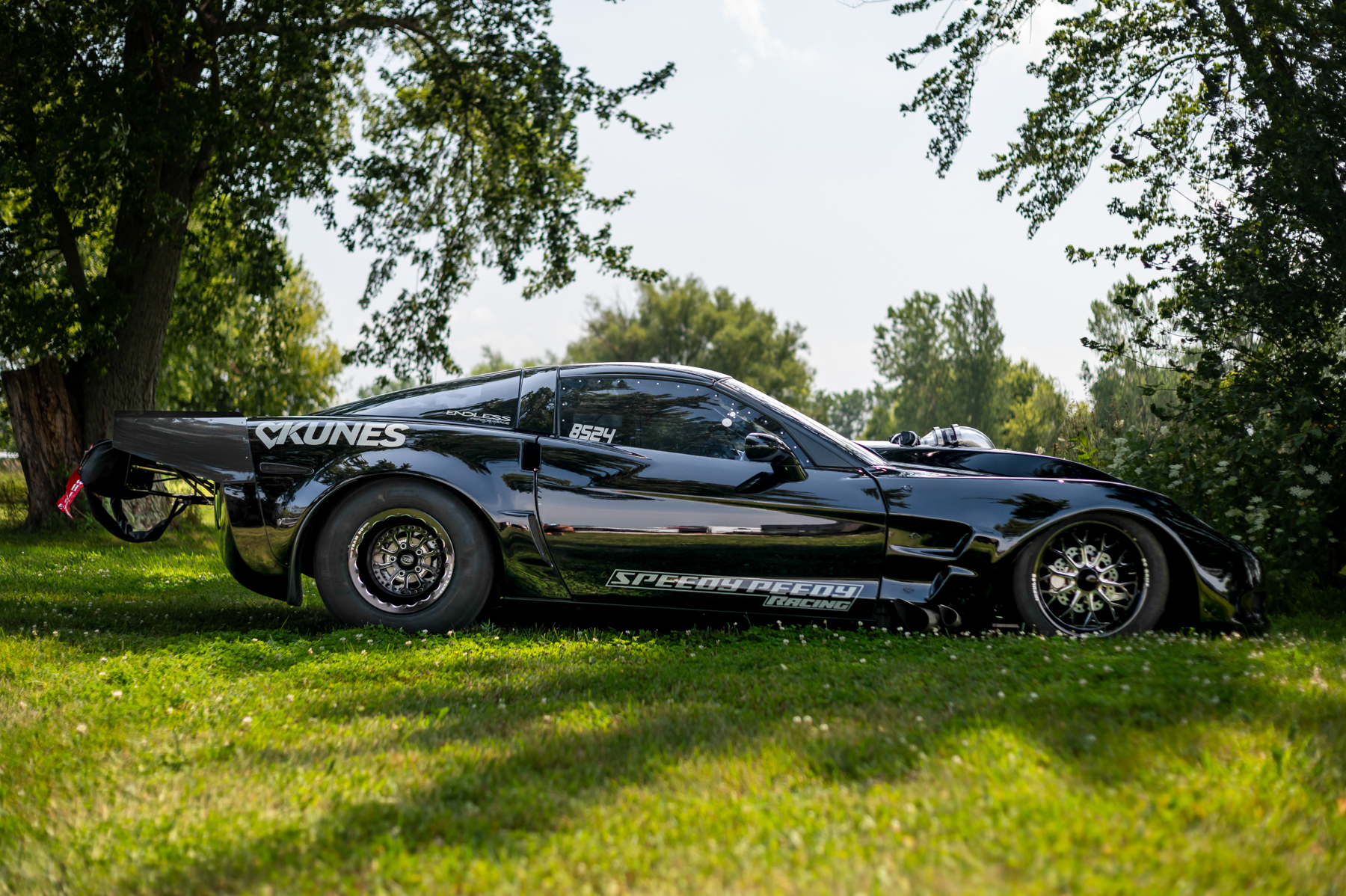
In 2017, Ryan had bought the car, never imagining it would one day become a 3,000-horsepower stick shift track rocket.
The Corvette had lived a rather modest life to that point. There were just 27,000 street miles on the odometer, and there was no hint of the racing future ahead of it. Most racers who build a car of this magnitude start with a rolling shell or a purpose-built chassis crafted from the ground up. Pederson instead started with a nice, perfectly-running street car with modest performance upgrades, and that contrast is part of what makes the Corvette so meaningful to him. “It’s the stages that this project has gone through that got us to where we are today. This car taught me everything,” Ryan proclaims.
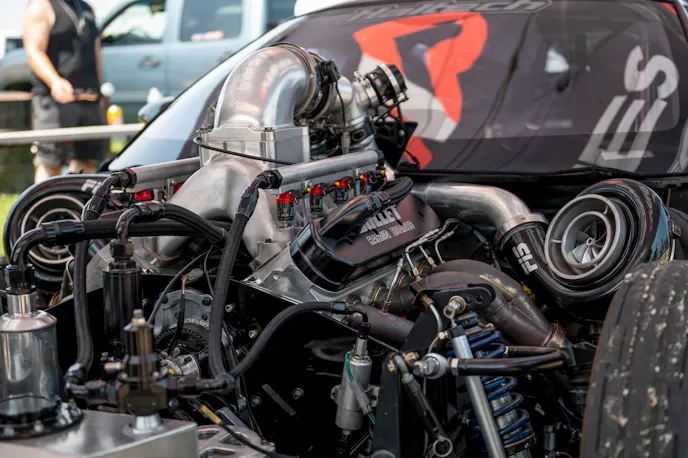
The transformation began with the engine, and that was an area where Ryan knew the learning curve would be steep. The centerpiece is a billet Noonan LS-based 427 built by Bullet Racing Engines in House Springs, Missouri. The rotating assembly includes a Callies crankshaft, Ross pistons, and R&R rods. A Dailey Engineering oil pump and pan keep the engine lubricated and alive under high boost. Bullet’s solid camshaft works with CID LS7 heads and Jesel valvetrain components, all feeding a CID intake manifold.
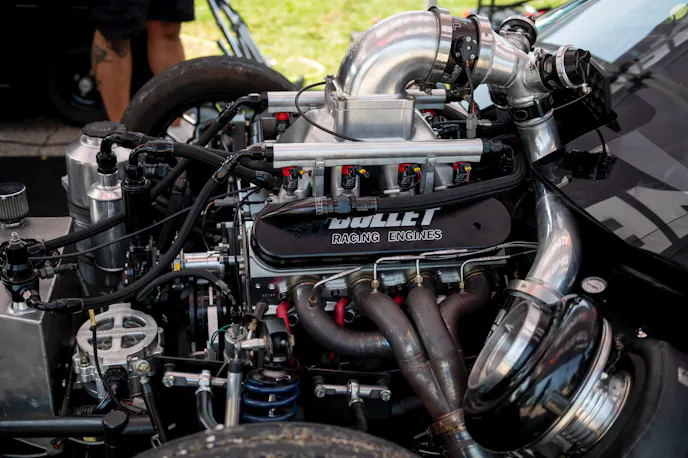
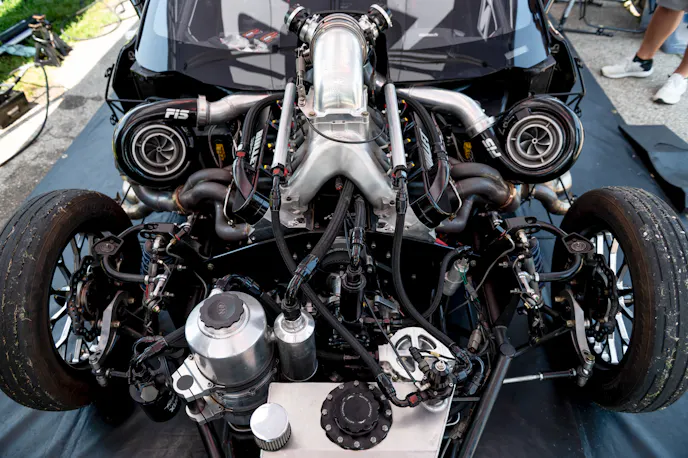
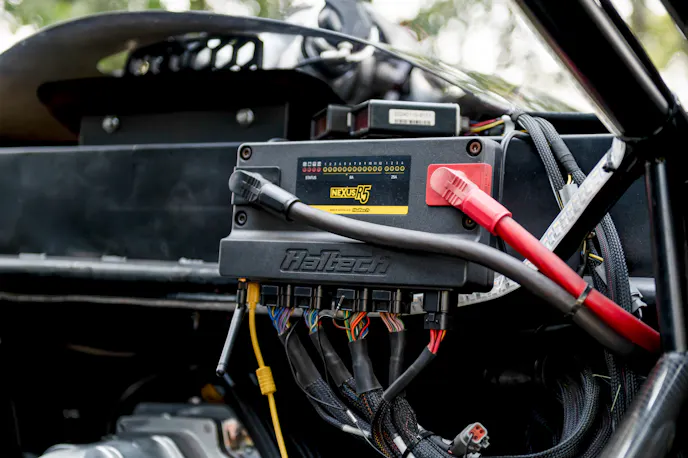
Boost is supplied by a Forced Inductions turbocharger, supported by Turbosmart’s Race Port blow-off valve and PowerGate60 wastegate. Fuel flows through FuelTech 820 injectors with Aeromotive pumps and a regulator handling delivery. Everything is controlled by a Haltech R5 engine management system tuned by Victor of Victory Wiring. Ryan credits Victor for helping turn the engine into a predictable, repeatable combination. “Victor is incredible. He’s got the car so dialed. You can have all the power in the world, but if the car isn’t consistent, it means nothing,” Ryan exclaims.
Consistency is even more critical in Ryan’s chosen arena of Outlaw Stick Shift class racing. Unlike most of the turbocharged cars in heads-up drag racing, there’s no automatic transmission smoothing out the violence, there’s no torque converter, no electronics controlling the gear changes. There’s a skilled driver, a clutch, and an H-pattern-style shifter that all have to be in perfect sync to make a competitive lap.
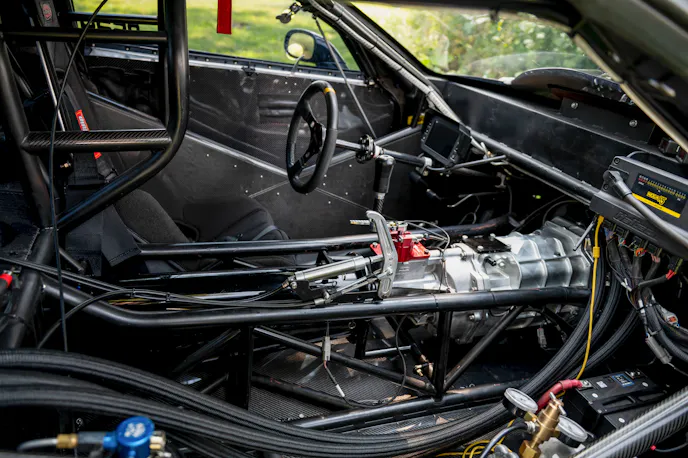
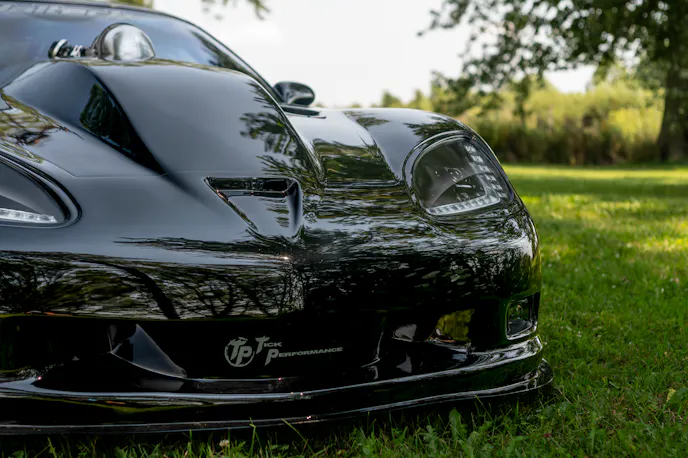
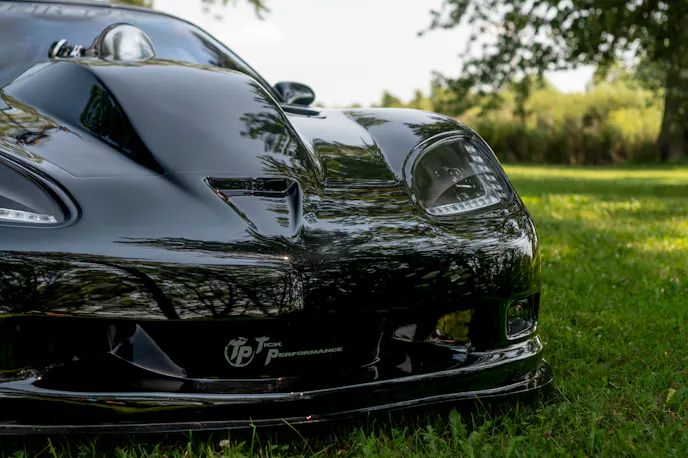
Pederson runs an H-pattern T56 transmission built by Tick Performance. It’s paired with a Black Magic Defiant clutch and a 3-inch carbon-fiber driveshaft from Precision Shaft Technologies. Ryan explains, “A stick car gives you a different connection. When everything hits right, it’s like you and the car are doing the same thing at the same time.” Ryan shifts the car at about 9,000 rpm, and has a 200 rpm window that he says, “if I don’t hit, I have to abort, and the run is over.” He wired the car with LED lights positioned all over the cockpit that are tied to the shift light, making it impossible to miss, there’s even LED lights under the car so his crew can see what’s going on from the starting line.
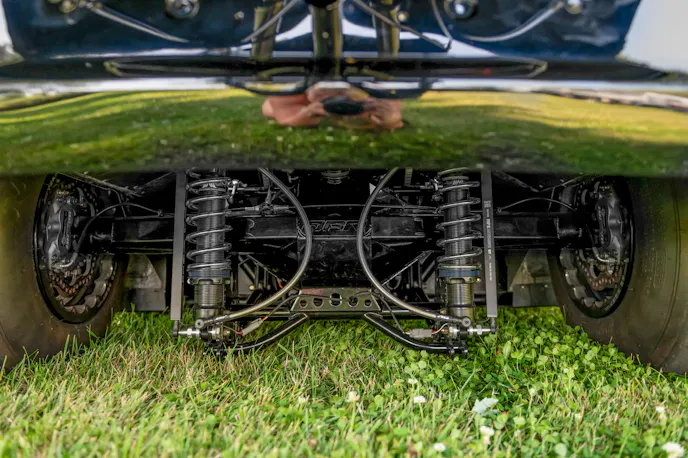
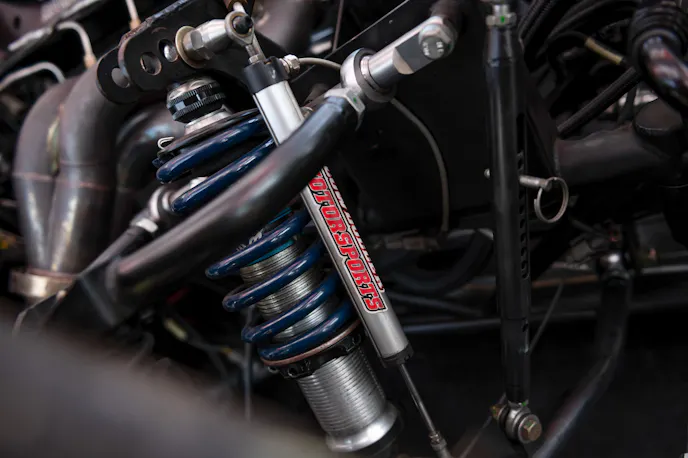
The chassis had to evolve as the powertrain did. Originally set up with IRS, an unfortunate 200 mph crash at FL2K in 2024 warranted a complete rebuild by Top End Fabrication, with a purpose-built 25.1 chassis and a four-link rear suspension. Up front, the Corvette uses TRZ upper and lower control arms, Menscer Motorsports shocks and springs, and a manual TRZ steering box. Out back, Top End Fabrication installed the four-link, anchored by a QBR rearend with Strange axles and 3.40 Pro Gears. Menscer shocks and springs complete the suspension package.
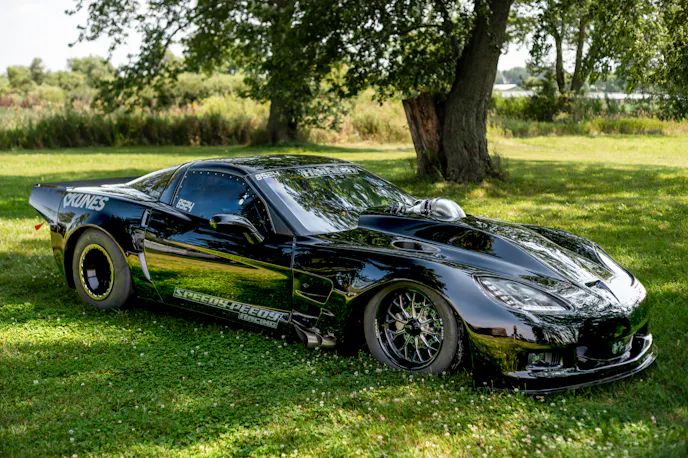
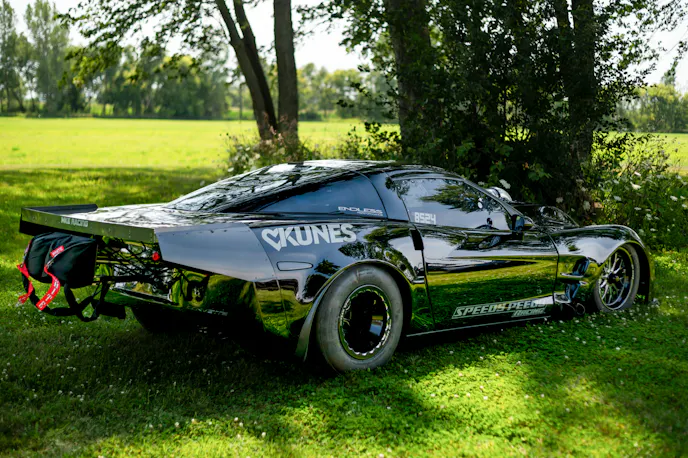
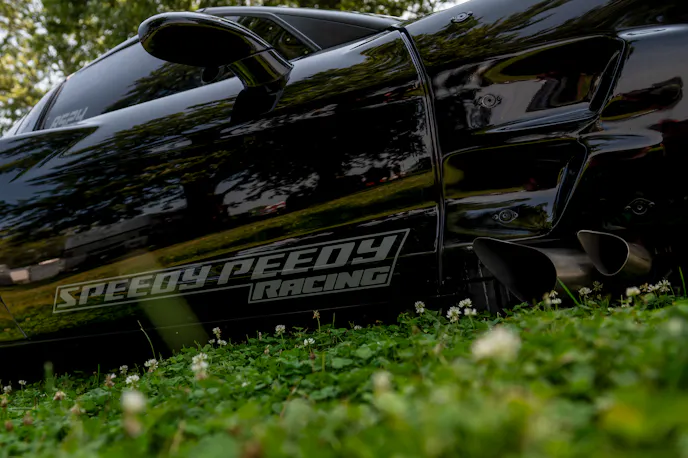
The car’s appearance also shifted from a refined street car to purpose-built racing machine. The factory doors were gutted for weight, while a fiberglass front clip from Larry Jeffers Race Cars replaced the stock nose. A Tim McAmis wing sits on the rear deck to aid with control at over 200 mph. Despite the modifications, Ryan kept the car in its original GM black, which Meticulous Auto Body in Milwaukee resprayed as the final bodywork changes were completed.
Inside, the transformation is as extensive as you would expect for a car of this performance caliber. The cockpit now houses a full chromoly 25.1 cage designed to protect Ryan at the speeds the car is now capable of. No creature comforts remain, as it’s just the essentials needed to run mid-six-second passes in a stick-shift car.
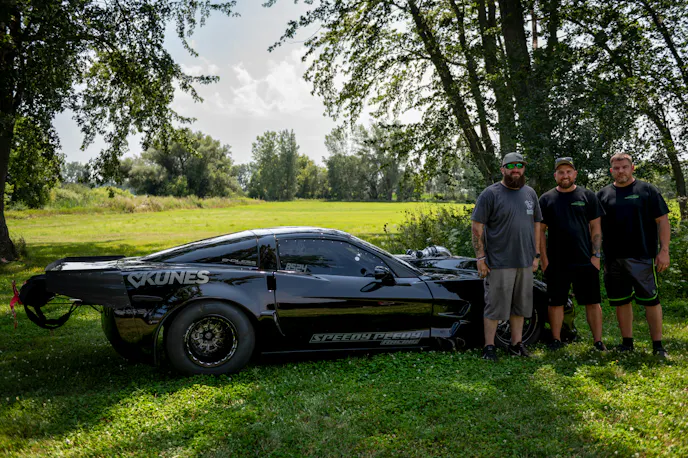
With this combination, the Corvette has recorded a best of 6.92 seconds at 217 mph in the quarter, with a 1.15-second 60-foot time; these numbers place it among the quicker H-pattern cars in the country. With just three seasons total on the car, and only 15 passes since the rebuild, Ryan has matched his 6.92 career best and envisions the car running as quick as 6.50s or even .40s once the combination is fully refined. But while the time-slips are impressive, Ryan sees them as proof that years of small, incremental decisions were the right ones. “It definitely didn’t happen overnight,” he says.
Ryan routinely competes at the World Cup Finals and FL2K, along with Street Car Braggin Rights in North Carolina, TX2K, and the Wisconsin Outlaw Stick Shift Challenge in Wisconsin.
That approach of continuous improvement is evident through every part of Ryan’s racing story. The build stretched to five years because Ryan was committed to doing it right, often reworking things once he learned a better way to approach them.
“I’ve always entered stick shift classes, from the day I started racing. I’ve had a lot of different Corvettes that I’ve raced, most of them stick cars. It’s just a whole different style of car, and figured if those cars were fun, let’s take it to the next level,” he tells us of his decision to tackle stick shift racing.
Balancing a growing race program with running a business is its own challenge, but the discipline required to run a company has benefited his approach to racing, and he has developed a circle of trusted partners, from fabricators to tuners and suspension specialists, who have helped him take his racing program to a high level. “The people I surround myself with are some of the best in the industry. You can never stop learning from these guys,” he says. Among his closest confidants who travel to every race and make it happen are Jake Nicholas and Aaron Brain.
Ryan’s passion for cars predates this build by many years, stretching back through a long list of vehicles that each added to his knowledge of automotive performance: he had a pair of early Subarus, multiple Corvettes, variations of the Z06 and ZR1 platforms, two Audi R8s, and even a Lamborghini Huracán. He wasn’t necessarily collecting cars, but this variety did give him experience with different forms of speed, and much was learned from each. “All of them bring new experiences, and that’s what keeps you going,” he shares.
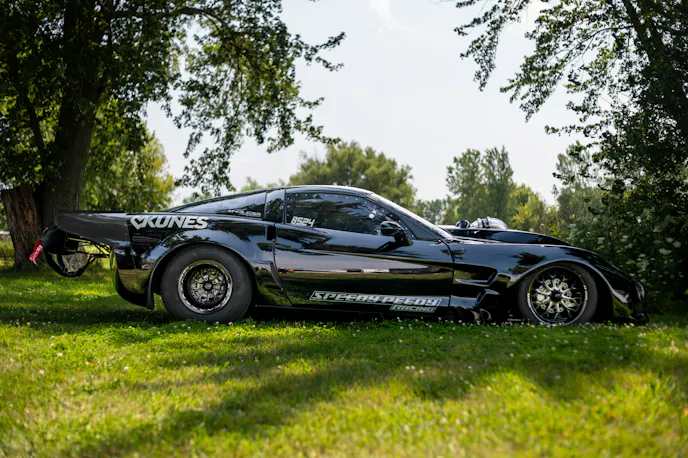
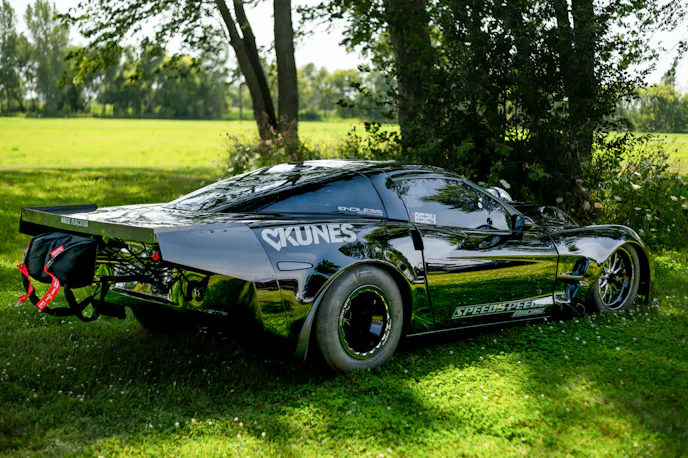
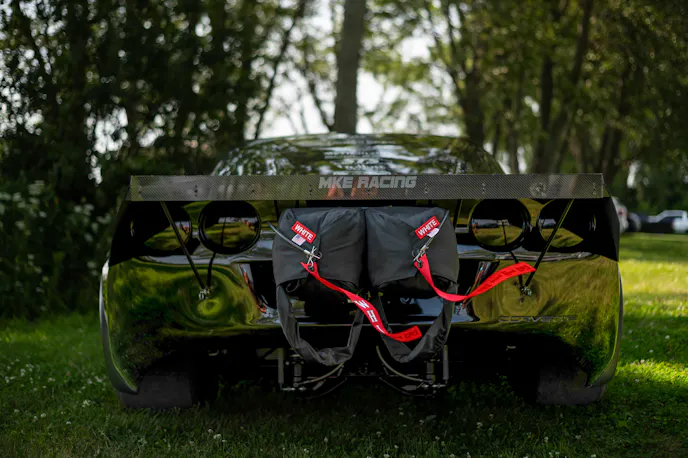
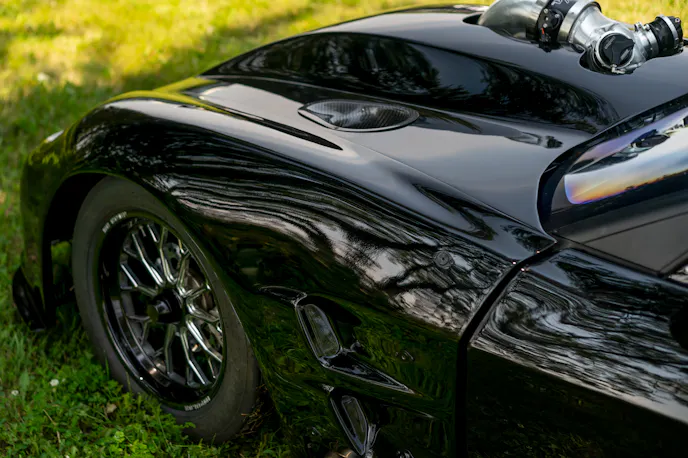
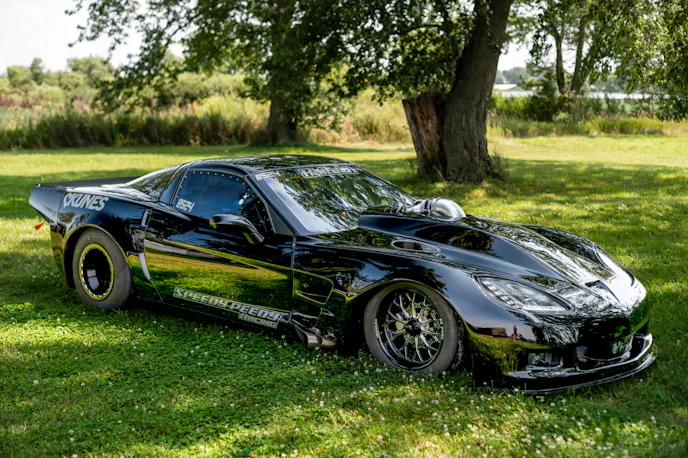
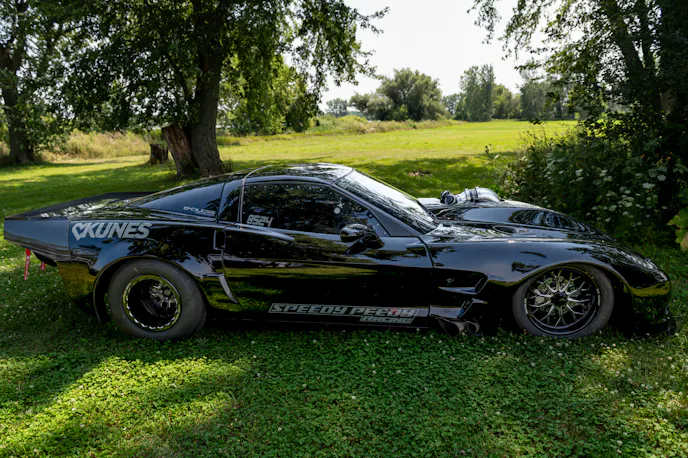
Today, the Z06 Corvette is the culmination of every hour Ryan has spent teaching himself, every broken part, and every late-night rethink of his build. It illustrates a progression from a teenager discovering racing on instinct to a legit racecar driver capable of competing in one of its most challenging classes and styles of car to drive in the sort.
What began as a clean, low-mileage Z06 that Ryan happened to work on has become a defining project that reflects the way he approaches racing, business, and life: with a willingness to learn, a comfort with doing things the hard way, and a belief that progress requires patience.
In that sense, the car’s transformation mirrors Ryan’s own. Both started simple and became something far more capable.
You might also like
Spring Fling Million Returns To Las Vegas With Big Money, Big Stakes, And New Twists For 2026
The Spring Fling Million is back at The Strip in Las Vegas. Bracket Racers from around the country will be in attendance chasing big money.