The 1988-97 W-platform Oldsmobile Cutlass has always carried a certain weight in drag racing. For a few brief, dominant years between 1988 and the mid-1990s it was the sharp end of Pro Stock, and to this day it is remembered for its aero properties that far surpassed what its rather boxy outward appearance might suggest. It was also a key piece of arguably the most exciting, competitive, memorable, and controversial era in Pro Stock history. Then it faded from the professional ranks, replaced by newer body styles during a time when manufacturers were quick to make changes to showcase their newest production vehicles on the racetrack.
Mel Collier won’t deny that nostalgia for nostalgia’s sake wasn’t part of his decision to construct perhaps the most advanced ’88-97 Oldsmobile Cutlass ever built, but he truly believes in the forgotten capability of the timeless body. As such, it was a deliberate attempt to reconnect the modern Pro Mod class with one of the most beloved shapes the sport ever produced.
Collier’s racing roots go back to weekends at dirt tracks, following his father as a hobby racer. Cars were always present, and they were always being worked on, just never as a profession. When Collier was old enough to drive, he gravitated toward autocross before life nudged him elsewhere. A year away at the University of Alabama introduced him to drag racing almost by accident, with a trip to Holiday Beach dragstrip that ended with one eighth-mile pass and intrigue with a new hobby. “After that, I came home, and I was like, ‘I know what I want to do. I want to drag race,” Collier says.
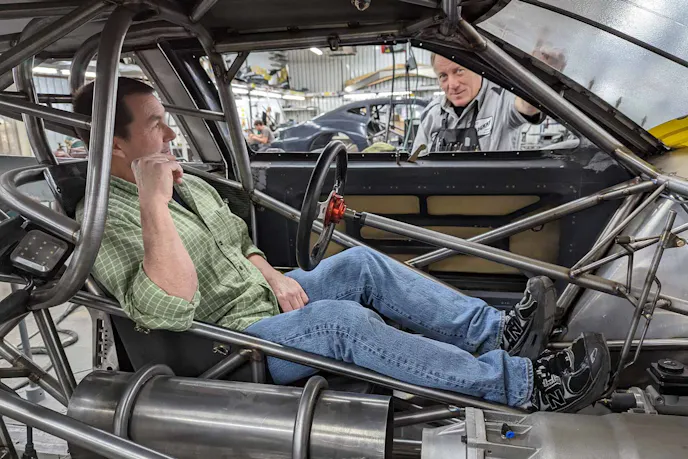
Like many racers of his generation, Collier’s early inspiration came from watching Pro Stock on television, especially the dominating lectures of “The Professor” Warren Johnson. He was enamored with WJ’s black-and-silver Hurst Oldsmobile Cutlass in the mid-1980s, and the surgical precision and self-built approach all resonated with the young Mel. Collier owned a Cutlass of his own at the time, and even as he detoured briefly into the later-model Mustang boom with small tire cars, the Oldsmobile body style never fully left his mind.
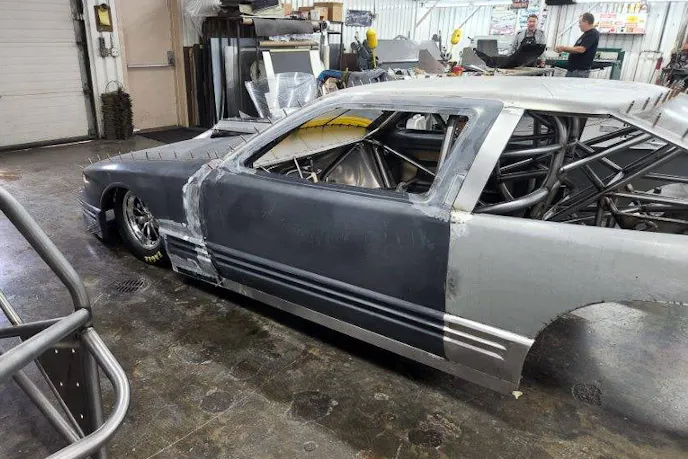
The Mustang years were productive, as Collier raced a lot, learned quickly, and eventually befriended and partnered with chassis builder Austin Pasquith. Pasquith was hands-on, inventive, and unafraid to try new things. “He basically stood there 12 hours a day with a grinder on his shoulder. He was always coming up with ideas,” Collier shares.
After a hiatus to raise his kids, Collier got back into racing, and together he and Pasquith built a white Fox body radial-tire Mustang that debuted in 2008 and immediately proved competitive. The car won races and championships locally. Pasquith used it as a rolling test bed for many of his new ideas, including an early version of the rolled-back cowl hood that later became commonplace across multiple classes. “I couldn’t see over the hood,” Collier says of his friend’s handiwork. “So he cut the back down and rolled it over. You see that on just about every car out there now. He did that in 2009.”
Even as his successes racked up, the conversations always circled back to that Oldsmobile, as Collier wanted to return to the Cutlass. He had visions of a modern version built to current Pro Modified standards. The opportunity finally presented itself in the mid-2010s, when Collier located an early-1990s Oldsmobile Pro Stock chassis. The idea was initially modest: he wanted to convert it into a small-tire car and see where it went. But once the car’s origin was confirmed, including a Haas build plate, the scope changed.
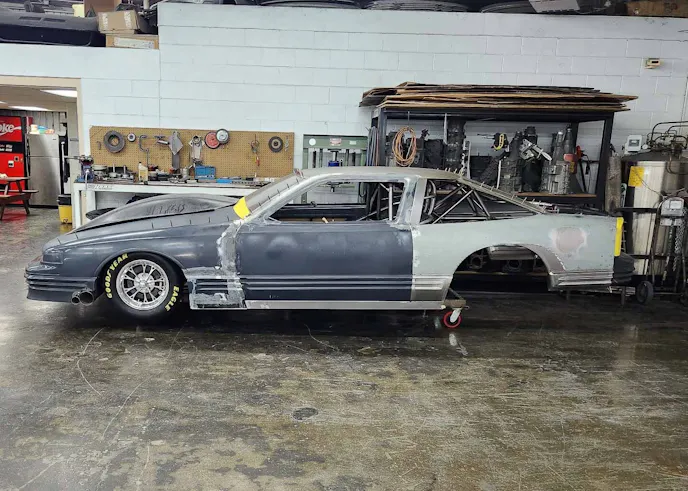
Collier contacted Jerry Haas, whose shop had built the car decades earlier. Haas and his team evaluated it honestly and eventually determined that it could be updated, but only by tearing it down nearly to nothing and adding “a bunch of new bars” to handle the horsepower produced by a modern twin-turbo engine combination. “They basically said it was going to cost the same to build a brand-new one. And with all the new technology and rule changes, it just made more sense to start new,” Collier says.
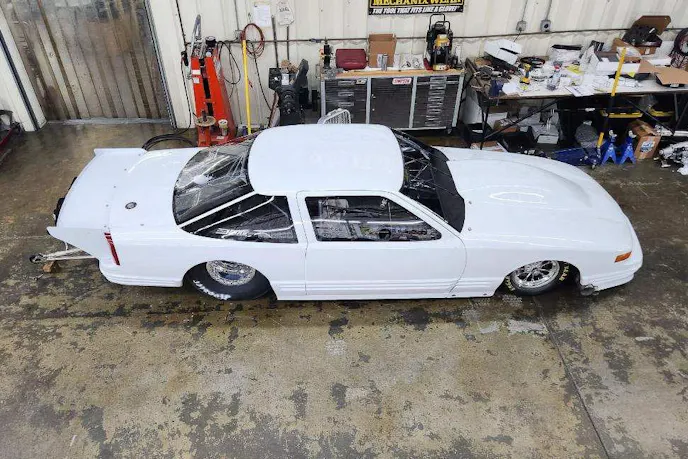
The commitment was made late in 2020 to invest in a ground-up new build. By spring of 2021, the new car was on the jig at Haas’s shop, being built to both NHRA and outlaw Pro Mod specifications. Then everything stopped. Pasquith contracted COVID-19 in July of that year and passed away two weeks later. For Collier, the loss was devastating on both a personal and a racing level. “We’d raced together for over 20 years. It was always just he and I,” Collier explains. “He did the tuning and building, and I was the monkey behind the wheel.”
Collier didn’t know where to turn at the time, having lost his trackside confidant who was to help him make this endeavor a reality. Haas offered to halt the project entirely, but Collier declined and soldiered on to the finish line. “We’d been talking about this car for a long time, and I needed to at least finish it,” he says.
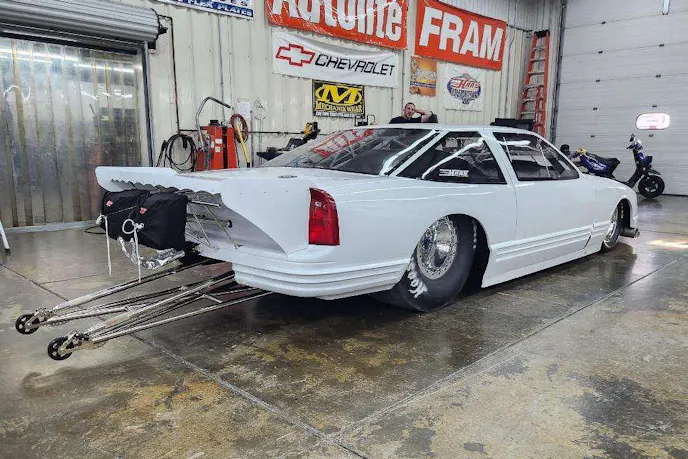
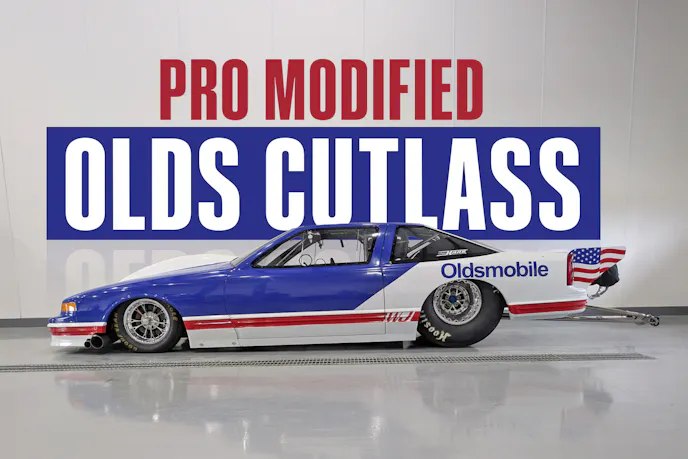
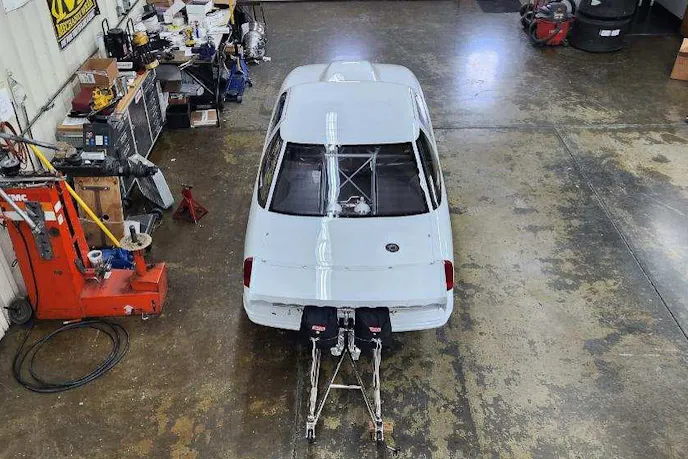
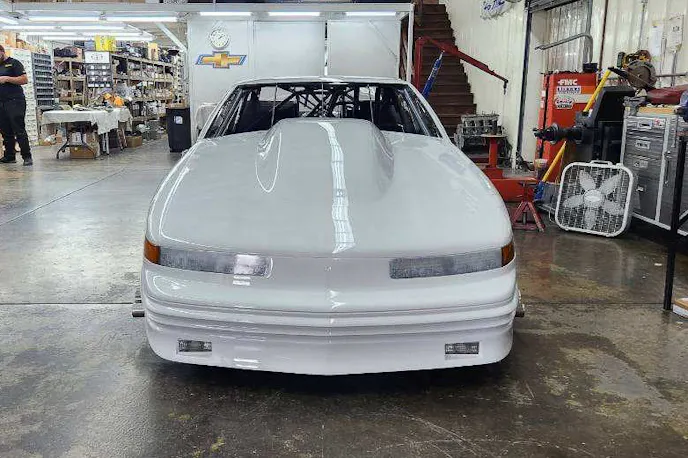
The car that emerged is entirely new despite its lineage. The chassis is Haas-built from scratch, using a steel roof and quarter panels. Carbon-fiber Oldsmobile bodies simply don’t exist at this level, and Haas still had original tooling. Weight parity wasn’t an issue, as the finished product tips the scales at a scant 2,300 pounds. The front clip is carbon, built by Harry Glass, with the hood molded to the nose. The hood itself borrows from Pasquith’s earlier innovations, blending a Mustang-style bubble into the Cutlass profile.
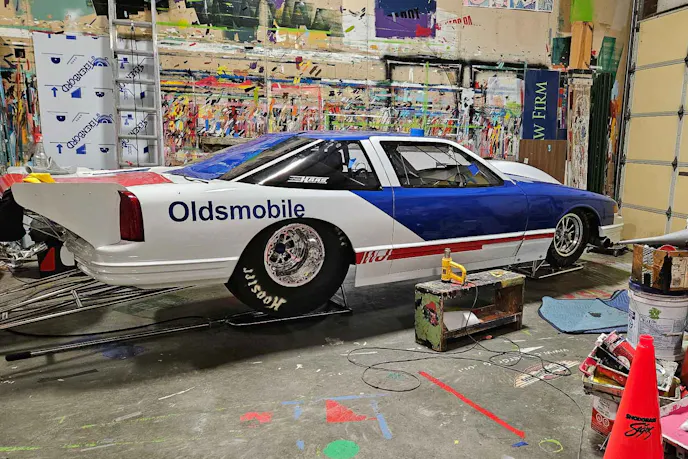
On one of Mel’s last visits to the shop, Haas asked him how he wanted to paint it. “I said I really want to do the blue and white, the AC Delco scheme that Warren ran in the early 90’s. I had heard how you have to get permission, as some companies, when they sponsor a car, want certain colors and schemes. I asked Jerry if he knew anything about that, and he said, ‘Well, I don’t, but you can call Warren and ask him.’ Jerry reaches into his back pocket, pulls out his phone, dials the number, and hands it to me. I didn’t even know what to say, I’m just fumbling through it because here’s a guy that, along with Bob Glidden, I’ve followed all my life, on the other end of the phone.”
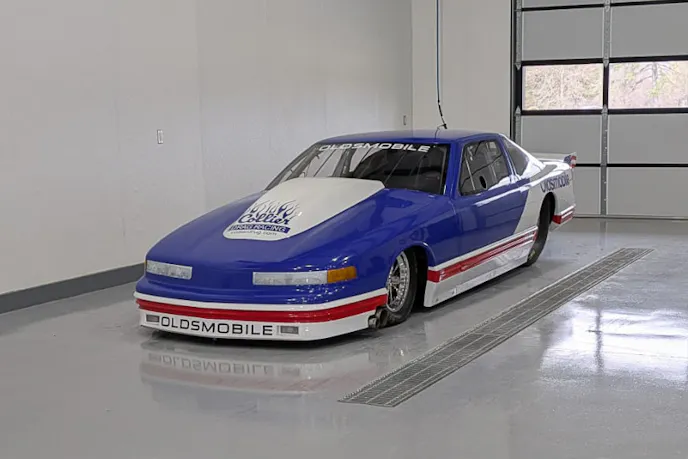
“I’m stuttering, telling him I’m a big fan and all. I then tell him I’m doing an Oldsmobile and I really want to do that AC Delco scheme, and he goes, ‘I’m sure Jerry’s building you a nice car, and because it’ll be nice, it’s fine with me.’ Then he’s like ‘well, I’m gonna’ get back to work,’ and I said ‘yes, sir,’ and we hang up.” Collier ultimately had the car wrapped, just in case he later decided he didn’t like it.
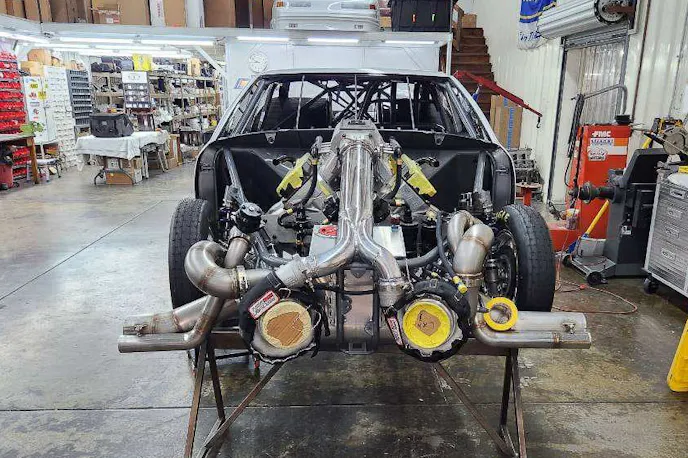
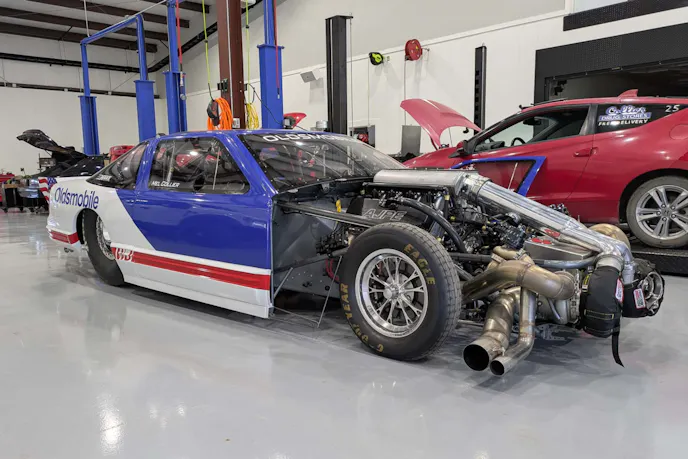
Power comes from a twin-turbocharged AJPE 481X wedge engine, chosen deliberately over a Hemi for durability and maintenance considerations. “A lot of guys like the Hemi, but it’s a lot of RPM and a lot of maintenance,” Collier says. The engine was initially assembled under Pasquith’s direction, with later refinements by tuner Matt Bell. Boost is currently supplied by a pair of 94mm turbos, with 102mm units available where rules allow. On the chassis dyno, Bell shut it down at 4,600 horsepower, so it’s got the juice to potentially become the quickest and fastest later-model Cutlass on the planet.
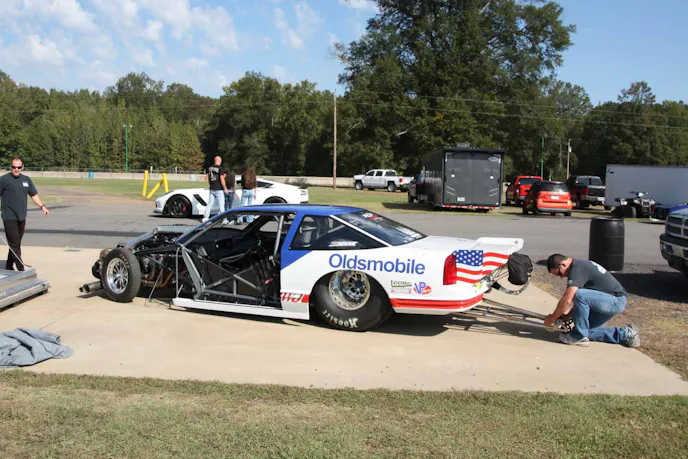
The drivetrain is equally serious. Mark Micke at M&M handled the transmission; the rearend is a beefy Haas-built 11-inch; electronics are Holley EFI-based, incorporating modern Davis Technologies traction control, ride-height sensors, and automated safety systems.
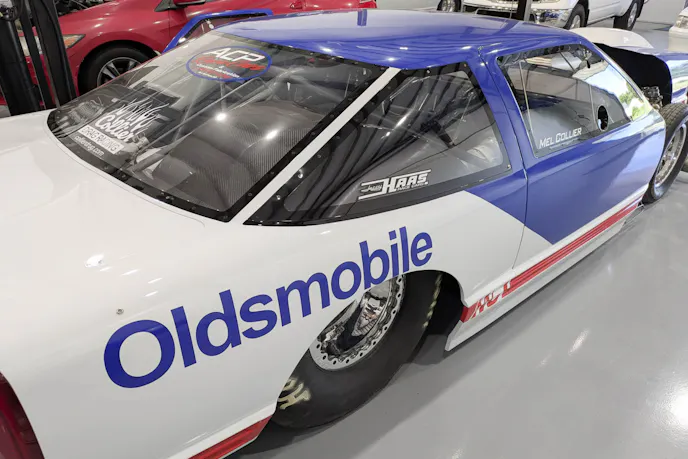
Both lightweight and aerodynamically sleek, Mel’s Cutlass has the potential to surprise some people. “That Oldsmobile body was one of the most aerodynamic bodies ever built,” Collier says. Haas himself demonstrated this by showing how the Cutlass nose fits nearly inside a late-model Camaro nose. “People like Camaros, but people like different, too,” Haas told Collier at the time.
Testing began at World Wide Technology Raceway in St. Louis, where Collier, with support from Bell and John DeFlorian from Haas’ shop, completed licensing passes and made several partial runs. The car went 4.30s at 150 mph while coasting and exceeded 167 mph in the eighth-mile despite minimal power. “I’m not trying to go fast,” Collier says, “I just want it to go down the track.”
Now, with the car complete, Collier finds himself uncertain about its future. He can drive it, but doesn’t have the technical support he had in Pasquith to campaign it. “We had big dreams, but sometimes life gets in the way,” he says. Spare parts are expensive. Campaigning a Pro Mod properly requires a level of commitment that no longer fits his life.
In 2025, “got up the nerve” to take it to his local track’s state championship race to idle it down the ‘strip to honor Pasquith, but it’s now up for sale. Collier would love to keep and race it, even eyeing the Winter Series in Florida to debut it, but doesn’t know if desire meets reality. “It’s a gorgeous car, I just don’t know what to do with it.” At nearly 58, he’s shifted focus toward bringing kids into the sport, letting them sit in real race cars, hear them fire it, and feel the magic without the challenge of having to have a cutting-edge program to do it.
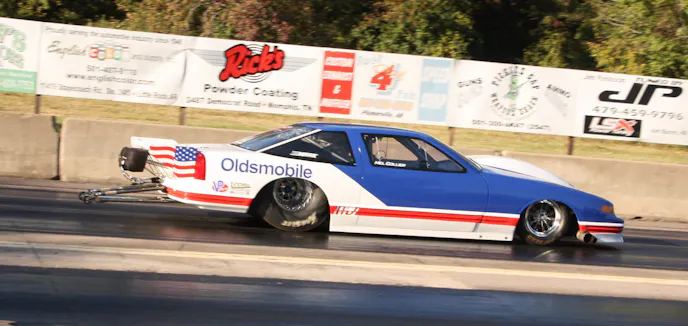
“I finished the car because it was something Austin and I started together. He was important to me,” Collier says sentimentally. Whether the Cutlass ultimately runs competitively, gets sold to the right hands, or becomes a rolling ambassador for what drag racing can still be, its purpose has already been fulfilled. It’s proof that originality still has a place in Pro Modified racing, and that sometimes the most meaningful cars are not the ones built for performance above all else.
You might also like
Game Changer or Controversy? Liberty Equalizer Rocks Outlaw Stick Shift Racing
Things are getting spicy in the Outlaw Stick Shift World. A new transmission is causing controversy and could change the class forever.