High-tech gadgets and tools are becoming more common in today’s garage. High-performance enthusiasts have learned to embrace technology because it opens the door to new possibilities for their builds. We’ve already looked at how 3D printing can be used in the shop, now let’s explore how a 3D scanner can be a valuable tool for all kinds of automotive projects.
What Is a 3D Scanner and How Does It Work?
There was a time when 3D scanners were considered science fiction, but engineers and scientists turned them into reality. You can think of a 3D scanner as a device that captures data points from the surface of an object and uses that information to create a digital 3D model. That model can then be imported into software like AutoCAD or Fusion 360 and used to create parts or modify the object that was scanned.
A 3D scanner collects data points using one of several methods: laser triangulation, structured light, photogrammetry, or LiDAR. From this collection of points in 3D space, a “point cloud” is created to represent the surface of the scanned object. The scanning software then constructs a mesh from that point cloud to define the object’s surface. Finally, the model can go through post-processing to clean up noise or fill holes, resulting in a usable 3D model.
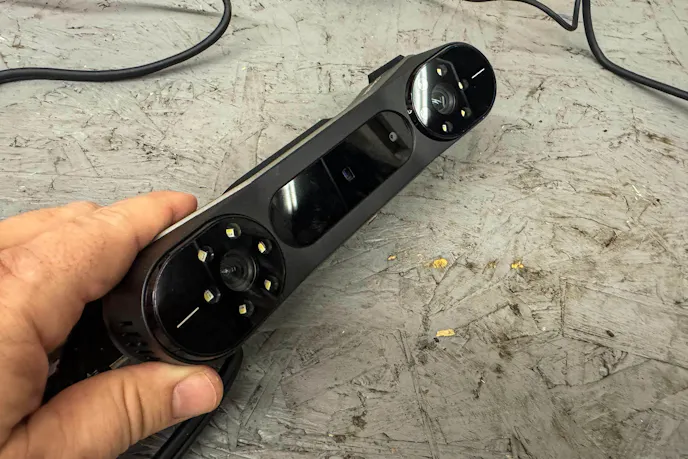
There are different types of scanners designed for different purposes. Desktop scanners are ideal for smaller objects with a high level of detail. Professional industrial scanners offer extreme precision but come with a significant price tag. Handheld scanners are portable and work well for medium-sized objects. Most consumer-level 3D scanners are handheld and typically cost under $2,000 USD. You can even turn your smartphone into a 3D scanner with the right software, although it won’t be as accurate as dedicated hardware.
Automotive Applications for a 3D Scanner
If you’re doing basic upgrades to your project vehicle, a 3D scanner is probably overkill. But if you’re tackling hardcore fabrication work, it can be an extremely valuable tool. A 3D scanner gives you the ability to create templates, prototypes, modify parts, design new components, and much more.
Let’s say you need to build a complex bracket for a project. You can scan the area where the bracket needs to fit and virtually recreate that space. This gives you a digital canvas to design bracket models and confirm fitment before you begin fabrication. Instead of wasting time and materials building a bracket that won’t work, you can dial in the design ahead of time.
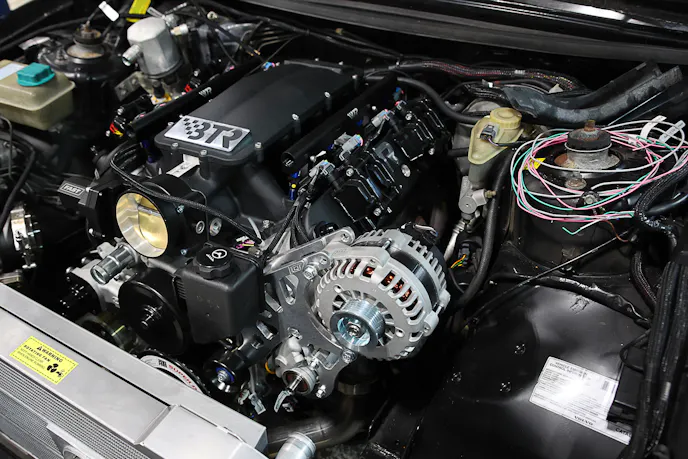
Now consider modifying a part for a specific application. You can scan the part, import it into CAD or Fusion 360, and experiment with changes digitally. This allows you to refine the design before making physical cuts, eliminating the risk of ruining a perfectly good component.
One of the most popular uses for 3D scanning in automotive applications is part creation. For example, if you need to design a mounting system for an intercooler in a tight space, you can scan the entire area to capture precise dimensions of everything surrounding it. With that digital environment, you’re free to experiment with different mounting designs without firing up a single tool in the shop. Once you finalize a design that works, you can move to fabrication with confidence, saving both time and materials.
Putting a 3D Scanner to Work in the Shop
With multiple project cars in the garage, there’s always something that needs attention. It might be basic maintenance, major upgrades, or custom fabrication to improve performance or functionality.
The team at Creality sent us one of its CR-Scan Raptor 3D scanners to put to work on various shop projects. The Raptor falls into the “prosumer” category of the scanner market. It’s not as expensive as a full industrial scanner and doesn’t carry quite as many features, but it’s still a powerful tool that works exceptionally well for automotive applications.
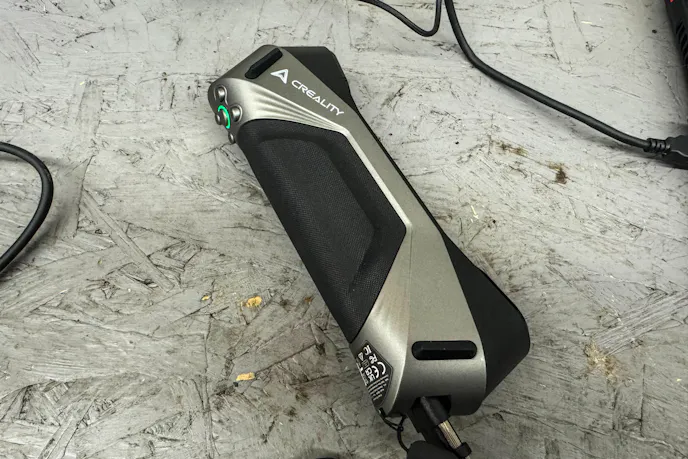
The Raptor offers accuracy up to 0.02mm, can scan both small and large objects, and captures data at up to 60 frames per second. It features hybrid blue laser scanning, which works better on dark surfaces, reduces scan noise, and improves overall accuracy. The Raptor also includes a Near Infrared (NIR) scanning mode that enhances the brightness of color textures.
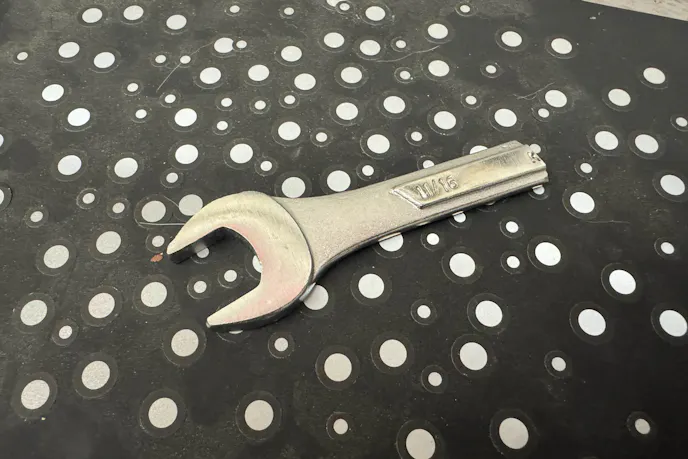
Our real-world test involved creating a custom tool. The transmission cooler line fittings on the TH400 transmissions in Project Red Dragon and Project Number Cruncher required a custom wrench. Our initial solution was simple, we cut down one of Harbor Freight’s finest box wrenches to get the job done.
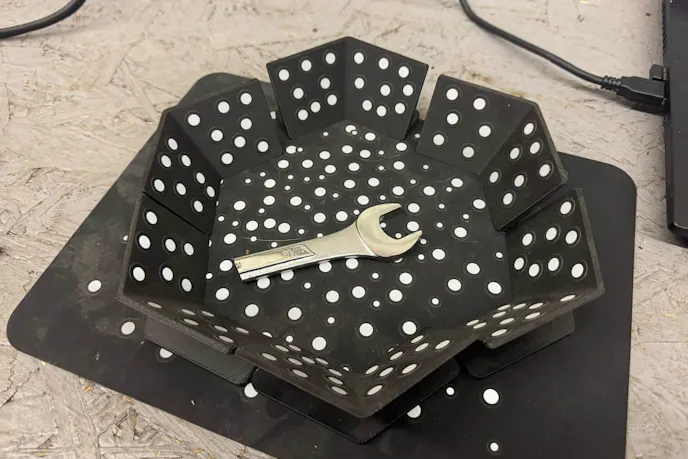
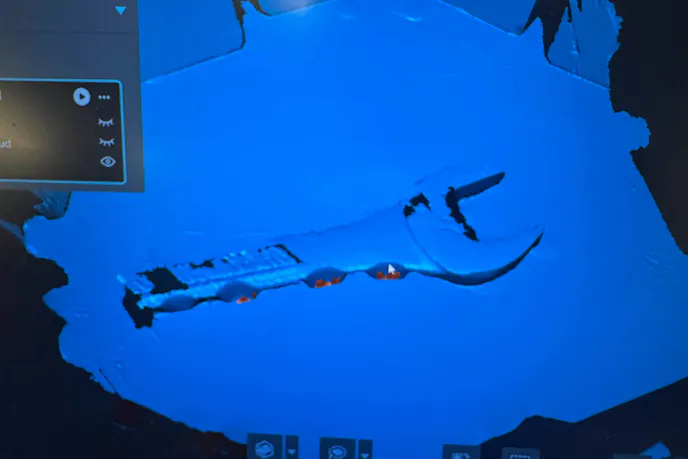
That “custom” wrench has worked fine so far, but we’d like to create something more refined. To make that happen, we scanned our current wrench with the Raptor to generate a digital model we could import into Fusion 360. From there, we can refine the design and eventually have a more polished version machined by a local CNC shop.
As gearheads, we’re always ready to spend money on a new tool or shop toy. A 3D scanner might not be at the top of everyone’s must-have list, but for builders who are constantly fabricating, modifying, and designing new parts, it could be a game-changing addition to the shop.
You might also like
Jasmine Salinas Set for 2026 NHRA Top Fuel Return
Jasmine Salinas returns to action for the 2026 season. The driver will run a hybrid NHRA and IHRA schedule to gain more seat time.