When selecting components for an engine package, you need to go beyond simply determining what will fit. Pistons are one of those critical parts that not only must be designed for your specific application, but also need to be made from the correct material. With that in mind, let’s take a look at the basic differences between forged and cast pistons.
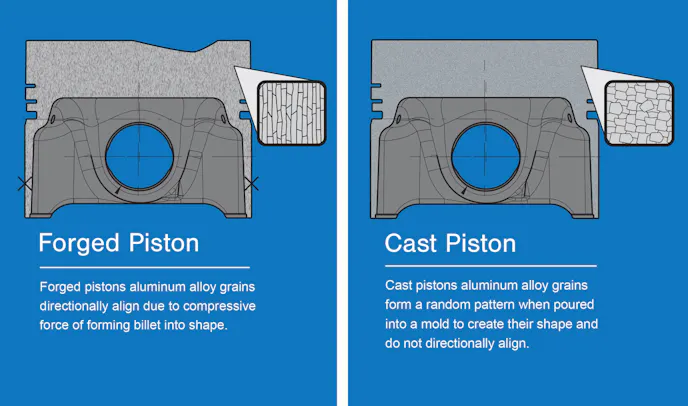
The biggest difference between forged and cast pistons is how they are manufactured, and that difference directly affects how each type should be used. A cast piston is created when molten aluminum is poured into a mold to form the piston. A forged piston, on the other hand, is made by placing a heated billet aluminum alloy into a die and applying a high amount of compressive force to shape the piston.
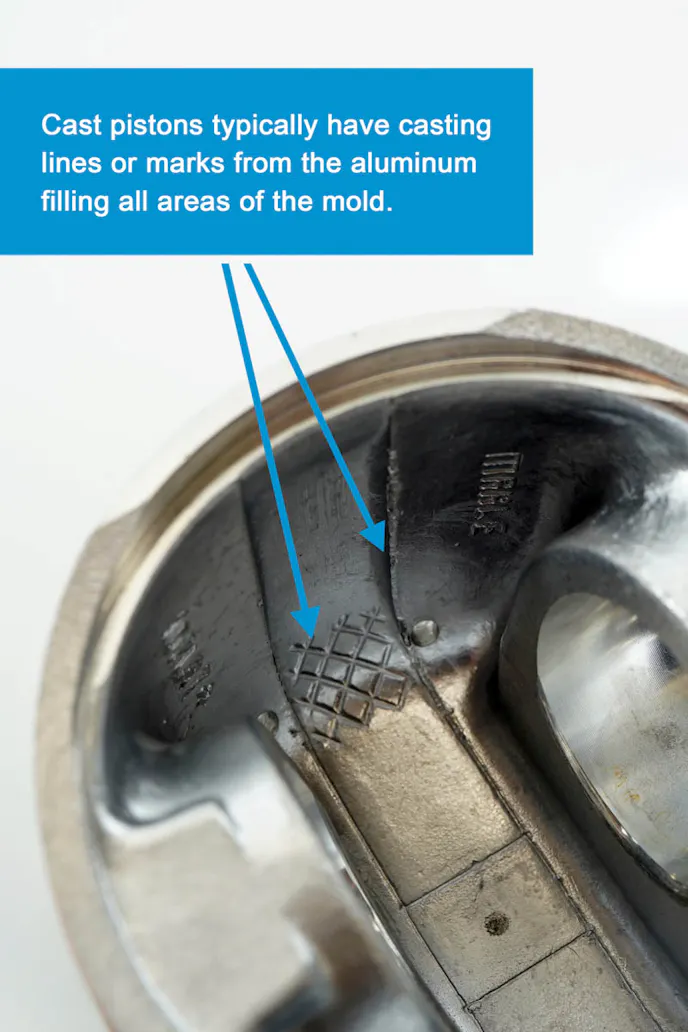
So why does this manufacturing process matter, and how does it impact how a piston can be used? MAHLE Aftermarket provided the following information to explain why the process makes a difference.
“The cast piston will be less expensive and lighter; however, it will not be as strong. The forged piston will weigh more, but it will be stronger and be best suited to high-horsepower, boosted, and high-RPM applications. The forged piston can sustain higher performance applications because of how the grain flow of the material is arranged. Since the cast piston is poured into a mold, the aluminum layers in the mold in a random grain pattern. When the aluminum billet is compressed in the forged piston, the grains directionally align to create a stronger piece of material.”
As you can see, not all pistons are created equal, and it’s important to make sure you’ve got the correct one for your application.
You might also like
Gary Williams Scores Second $30,000 Spring Fling Victory
Gary Williams collected another big check at the Spring Fling. Williams was able to pocket $30,000 with his victory Wednesday.