Vince Napp created the first Jr. Dragster for his kids back in 1991, and little did he know how much his creation would change the face of drag racing. Fast forward to 2026, and you’ll find Jr. Dragsters at nearly every NHRA track, helping build a pipeline for the future of the sport.
Jr. Dragsters are powered by single-cylinder engines that can propel the tiny machines deep into the 7.90s at speeds up to 85 mph in the eighth mile. Just like their full-size Top Fuel counterparts, Jr. Dragsters continue to evolve thanks to new technology.
J.C. Beattie Jr., owner of ATI Performance Products, is a Jr. Dragster dad who found a way to create a harmonic damper for Jr. Dragster engines that offers several benefits.
“Well, I’ve never put a damper on something that didn’t have one and made it worse. My kids started running Jr. Dragsters when they were about five years old. Back then, they were low-horsepower and low rpm, not a big deal. Once you get into the 8.90 ET range, these engines really start to wake up. The engine just shakes and makes noise. It’s not really smooth anywhere until it reaches its counterbalance point. So, I knew there was a need.
“A couple of engine builders I talked to while racing had also asked about it, and that’s how this project started,” Beattie explains.
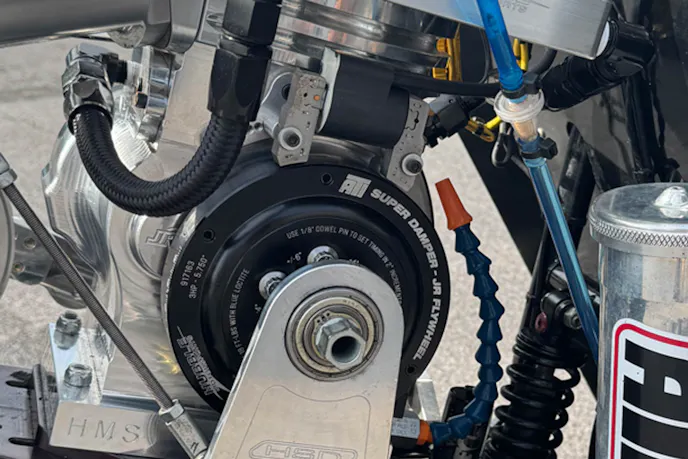
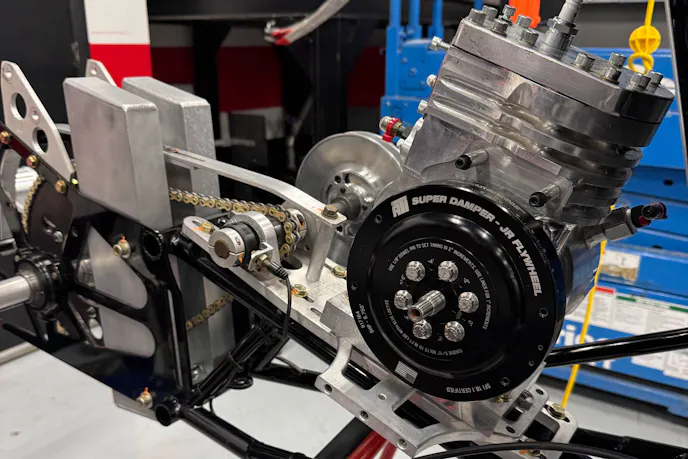
After evaluating existing options in terms of size and magnet placement, Beattie went to work creating a damper that functioned properly. The first version did its job, but there was room for improvement. A new version was developed that fit more applications and was easier to adjust. That updated design is now being used for different types of engines and will also be applied in go-kart racing.
These Jr. Dragster dampers operate on the same principles as full-size engine dampers.
“The Jr. Dragster damper works on the same principle as a full-size engine damper. It uses an inertia weight combined with different durometer O-rings, varying diameters, and has different face configurations. It’s very similar to some camshaft dampers we’ve made in the past and other custom applications.
“For example, we make a damper for a generator used in motorhomes, it’s a similar inertia concept. These junior dragster engines are single-cylinder with nothing opposing them, so they naturally shake a lot. Anything you can do to reduce that vibration will extend the life of the components. It also adds another level of consistency because everything is more controlled instead of moving around undampened,” Beattie says.
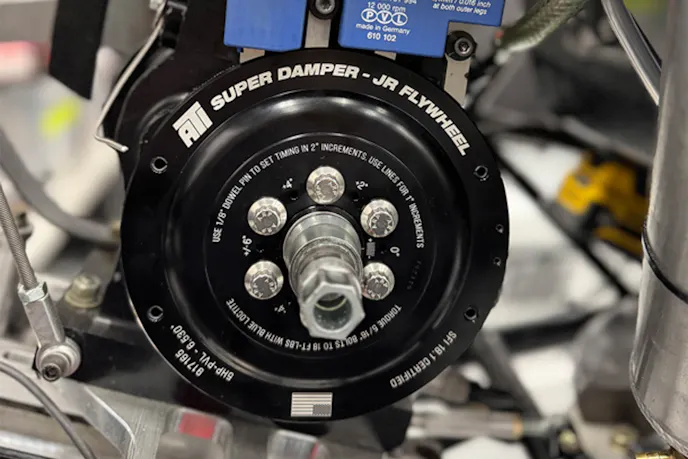
One thing Beattie made clear is that these dampers aren’t designed to make a Jr. Dragster go faster. Instead, what racers will notice is how much smoother the engine operates, especially at lower rpm. The added stability and reduced vibration help prevent parts from loosening while the Jr. Dragster is running, reduce wear on components, and improve overall consistency.
“Most of these kids are bracket racing. Once you get into later rounds, second, third, fourth, and beyond, races are often decided by hundredths or even thousandths of a second. It gets extremely tight, so consistency is everything,” Beattie states.
Jr. Dragsters have become ultra-competitive and play a key role in developing future racers. ATI’s Jr. Dragster harmonic damper isn’t the type of product that lowers ETs or increases mph, but it does provide something bracket racers are always chasing: consistency.
You might also like
From Pro Stock To Top Fuel: Aaron Stanfield Takes A Major Step Toward Nitro Racing
Aaron Stanfield is well on his way to becoming a Top Fuel racer, Stanfield earned his Top Fuel license in Leah Pruett's dragster.