Tim Moceri wants—and believes he needs—to reinvent the way motorsports attracts the public. A shift in culture demands it if the racing industry is going to survive and thrive.
Despite an aggravating, protracted, and ultimately unsuccessful attempt to purchase the former Palm Beach International Raceway (PBIR) in Jupiter, Florida, Moceri and his RPM Group are steadily developing a blueprint for the future of racing.
He understands that what worked for baseball in the Iowa cornfields—“If you build it, they will come”—doesn’t necessarily translate to modern motorsports.
“A lot of racetracks that were built back in the day were focused purely on one thing, and that’s just, ‘Let’s get race cars on the track.’ And that does not work anymore. People don’t think like that anymore,” Moceri said.
“We live in a way more internet-friendly world [with] social media and all these things, and you have a lot more things pulling at you. So, you can’t just build this hole-in-the-wall, dingy racetrack anymore and expect people to show up and have fun. That might have worked back in the day, but now people are expecting experience,” he said. “They’re expecting to be wined and dined, so to speak.”
RPM Group Still Working Through Land Logistics
RPM’s ambitious blueprint centers not on cornfields, but on approximately 500 acres of sugarcane fields in Hendry County, Florida, near Clewiston, roughly an hour west of the former PBIR site and on the south bank of Lake Okeechobee.
“We’re currently in negotiations with several landowners. We’re negotiating with two to three different owners right now in proximity to an airport that’s in Clewiston, and we’re looking to finalize the purchase of the property within the next month or so,” Moceri said.
Clewiston is also a community that Moceri says recognizes and welcomes the economic impact a thriving racetrack could bring.
“They understand the value of motorsport. They understand the value of what this track will bring to their community. And it’s been a very positive conversation. It is a domino effect,” Moceri said. “You have tire shops, you have chassis builders, you have mechanic shops, you’ll have dealerships.”
RPM’s Mission Is To Replace What Racing Lost
“We’ve always had a mission statement to replace what we lost,” Moceri said.
What was lost in West Palm Beach was a local racetrack that supported drag racing, road racing, and go-kart racing.
“And so, with our relationship with Clewiston, which is in Hendry County, our pitch to them was we want to make Clewiston the next Daytona or Sebring, but we want to do it focused on drag racing. We want to make drag racing a staple in your community. We want to make it a staple on the [NHRA calendar] for a national event in the future if we’re able to get this done. And we always wanted to create a national sporting event to be able to bring more eyes on Clewiston. So, they were excited about that, and the NHRA was excited about the prospect of that happening.”
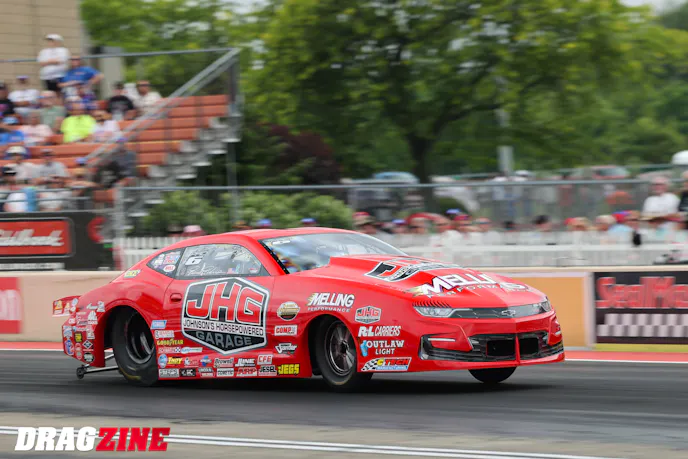
That is why the first phase of RPM Group’s multi-stage project is expected to begin with a dragstrip.
“And for those reasons, that’s why we’re pursuing this relationship first,” Moceri said. “I’m not a drag racer, per se, but I always have the fondest memories growing up at Moroso Motorsports Park when I was a kid and watching the drag racing. I always enjoyed it. I think it’s a great spectator sport. And it’s one of the most exciting spectator sports as far as motorsports goes for the novice watcher or individual to get into.”
The name RPM Group isn’t simply a clever reference to engine speed. It represents the organization’s mission.
“RPM” stands for Restoring and Preserving Motorsports.
Moceri is pursuing that mission alongside business partner and RPM president Erik Bentley.
RPM Envisions A Full Motorsports Destination
RPM Group’s vision goes far beyond building another dragstrip.
“We want to do a full family experience, similar to what you have with Downtown Disney or Universal Studios or something like that. We want to do a downtown area. We want to do shops and amenities and different restaurants. We want people to come and enjoy racing, but we also want it to create a new type of racetrack where you have all aspects of racing and also car culture,” Moceri said.
“The RPM Group is revitalizing and preserving motorsports.”
The broader goal is to combine the experience of high-end private racing facilities with a public motorsports destination accessible to racers, enthusiasts, and families.
“We want to create an experience where you have what you have at the private racetracks, like Thermal Club [at Palm Springs, Calif.] and others, but we want to reinvent the idea of what a public professional motorsports facility looks like. And we want to take that nationwide. We don’t want to just stop at this track. We want to reinvent motorsports and create it so it’s more palatable for the family and for people that want to get into it.”
Moceri and Bentley have clearly embraced an “if you’re dreaming, dream big” philosophy.
Moceri said RPM Group was established with the intention of working with organizations such as SEMA and PRI “to be able to save motorsports and to reinvent it and make it exciting for the next generation.”
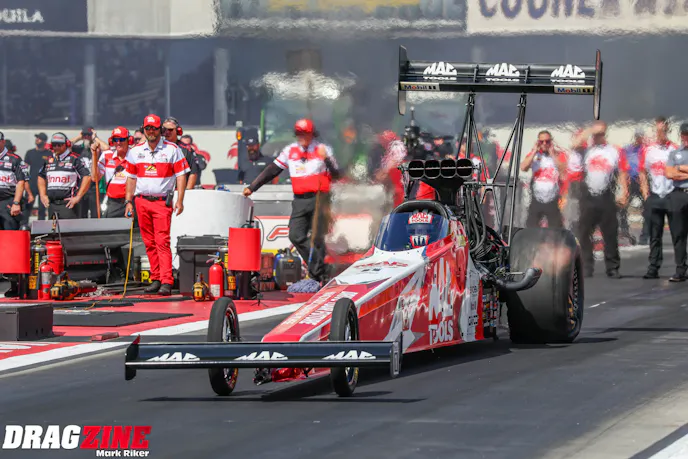
At the same time, RPM is inviting “anyone and everyone to reach out to help us make this a reality.”
The group is seeking support from anyone who benefits from the racing industry, participates in motorsports, or simply enjoys racing.
“We cannot do this alone,” Moceri said.
Much like the army of engineers, laborers, and Imagineers that descended on Central Florida more than 50 years ago near Kissimmee to build Walt Disney World and transform both the Disney brand and the entertainment industry, RPM wants to create a similar economic and cultural impact in the Clewiston area.
“So, we do not plan on building a hole-in-the-wall racetrack,” Moceri said. “Our grand vision, which will take years, is going to be a full-immersive experience for anybody that is either into racing, loves cars, or is just getting their feet wet.”
“We have very, very ambitious ideas as to how to accomplish these things with the next generations, but we are not going to stop at just a dragstrip and a road course. We want to build an experience where anyone who loves cars and loves motorsports and lives and breathes this stuff can be fully immersed in it with every facet of the experience. And that’s from either living there or staying there or dining there or shopping there. It’s all going to be about cars and culture and everything that we love about this amazing thing that is motorsports.”
Failed Palm Beach International Raceway Deal Led To New Plan
RPM Group ultimately chose to build its vision from scratch after failing to purchase the former Palm Beach International Raceway property.
According to Moceri, a New York-based private equity firm that itself failed to convert the 174-acre PBIR property into an industrial site, repeatedly changed the asking price during negotiations.
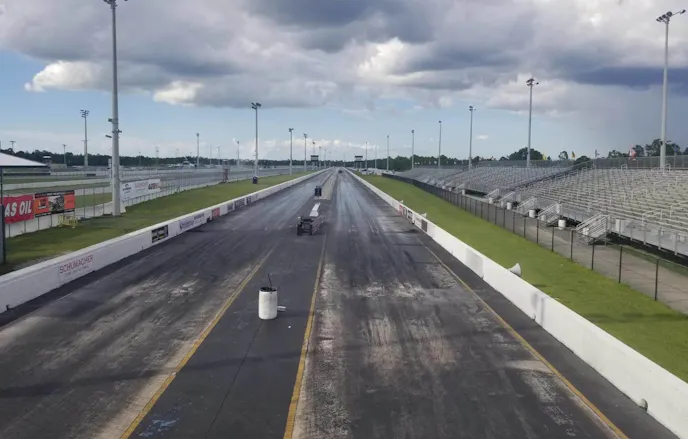
RPM offered $30 million for the property, and Moceri said he knows of other prospective buyers who offered more than $50 million. The current owners rejected those offers and set the price at more than $70 million.
“Anybody that came to the table with any sort of money to buy the property, they would either double it or they would come back with [a counter-offer] asking for more money. It got to the point where we were wasting our time,” Moceri said.
“And that’s why we created the RPM Group, and that’s why we are building something from scratch. And that’s where we’re at now.”
PBIR Sale Process Frustrated South Florida Racing Community
The New York firm that owned Palm Beach International Raceway originally wanted to launch its own racing series with multiple racetracks, similar to the IHRA.
Its goal was to develop a motorsports entertainment company that could eventually go public.
That concept never gained traction, and COVID ultimately brought it to an end.
A later deal would have sold the land to a company that planned to construct a Walmart distribution center, but that proposal also fell apart.
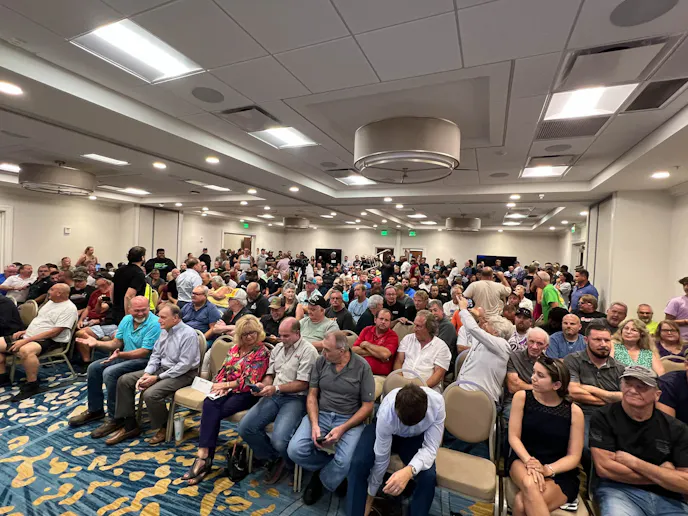
Moceri called the effort “a giant knife in the heart of any racer,” but said the property owners apparently underestimated the passion of the local motorsports community.
“When it went to the board for rezoning, because they had to rezone the property from a raceway to industrial,” Moceri said, “the racers and the local racing community showed up in droves and put the pressure on the commissioners to block it. And they did.”
“By the time they blocked it, the deal fell through. But they ended up suing the commissioners and getting the rezoning done. Once it was rezoned, the deal was already dead in the water. And they then had to go to finding another buyer, which they’ve been going back and forth with.”
Moceri said several potential buyers have attempted to purchase the property without successfully completing a deal.
“And they’ve had several buyers try to buy this track. And for some reason, they’ve never been able to get a deal done. So, from ’21 up until now, the track’s been for sale, but they’ve only been inclined to talk to or to sell to developers that are pursuing a warehouse distribution center and not racing.”
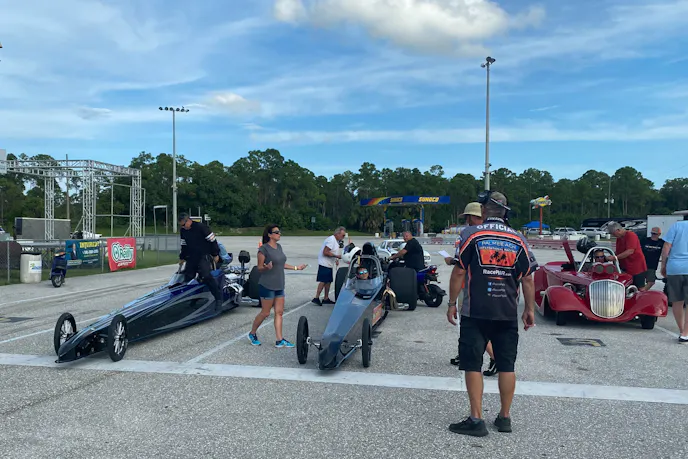
He said the owners don’t seem to “understand why people would have a problem with you selling their livelihood or their childhood to the highest bidder.”
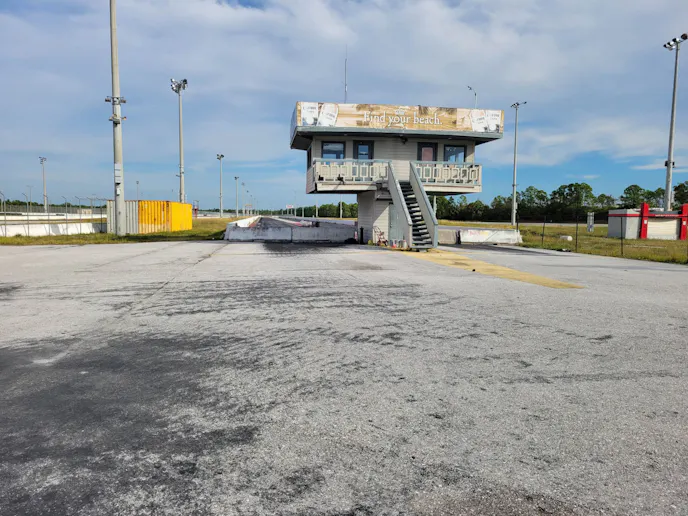
The former Palm Beach International Raceway property has been vacant since 2021.
According to Moceri, “Everybody under the sun, I believe, in racing and has anything to do with motorsports has tried to buy the place and they can’t get a deal done because it’s just too much money.”
If RPM Group succeeds with its ambitious Clewiston motorsports project, it appears Jupiter’s loss could ultimately become Clewiston’s gain.
You might also like
John Force Racing Targets Big NHRA Championship Weekend At Texas FallNationals
Vandergriff leads John Force Racing into the Texas NHRA FallNationals. Beckman, DeJoria and Hart chase crucial Countdown points.