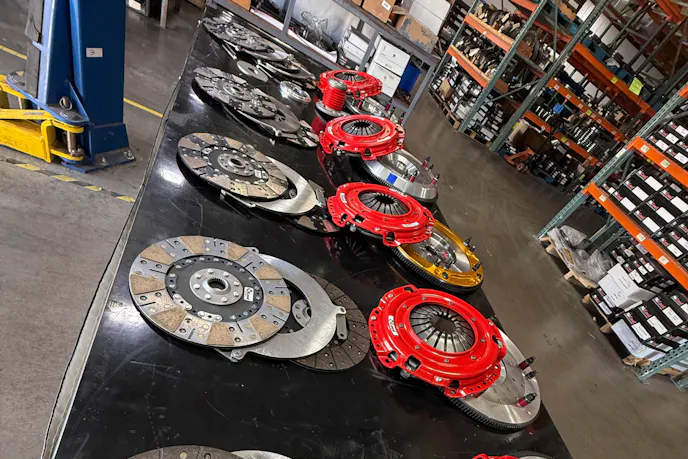
The old saying goes: as horsepower goes up, drivability goes down. Torque is the real force behind that tradeoff, and the clutch is what brings it all together. Knowing how much torque your engine makes is critical to selecting the right clutch for your application.
In this article, we’ll break down clutch design and materials, explain when to upgrade, and cover best practices as well as common mistakes during installation. We’re joined by clutch engineer Will “Mr. Clutch” Baty of McLeod Racing, who brings more than 40 years of motorsports product development experience. Two seasoned owner/racers, Skylar Hardy and Jeff Smith, share their insights from the drag strip as well.
How a Clutch Package Comes Together
Clutch performance starts with design and engineering for the specific application. Bellhousing space ultimately dictates what’s possible, whether that means using a larger-diameter clutch or a multi-disc assembly. Everything must work seamlessly with the release mechanism.
When space allows, a large-diameter single-disc clutch can handle applications up to roughly the 650 lb-ft torque range. Beyond that, higher power levels typically require multi-disc configurations.
“When you can’t increase diameter, you have to go up by adding discs,” Baty explains. “Many people assume a twin disc is strictly for racing, but that’s not necessarily true. What we can achieve through friction materials and design plays a major role in overall drivability and holding capacity.”
Friction Materials and Heat Management
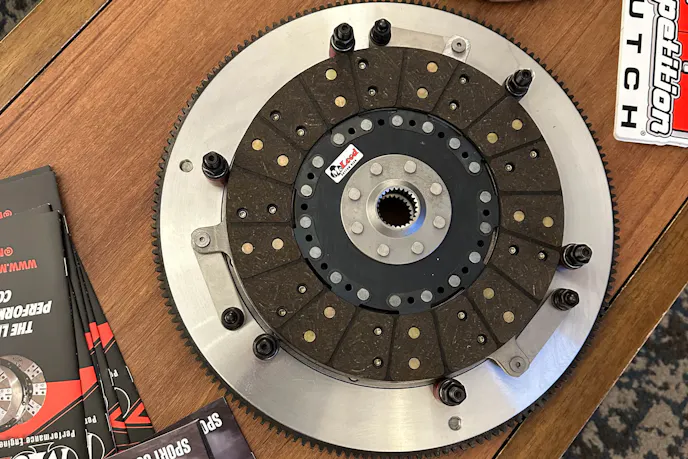
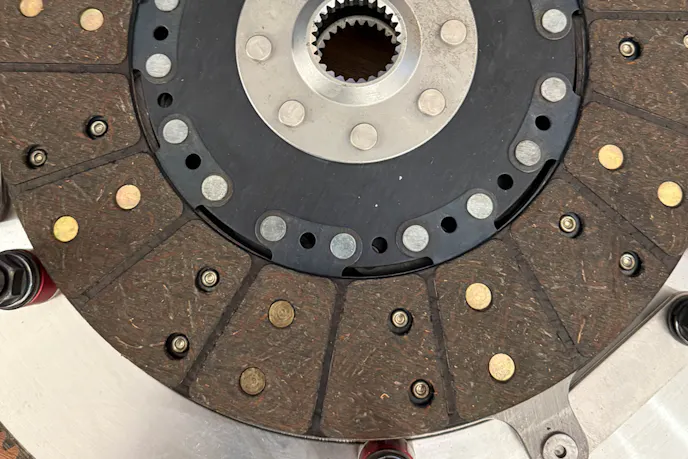
As the pressure plate engages, clamping force is applied to the disc’s friction material, working to harness and hold the engine’s torque. At this point, heat is generated rapidly. The more the clutch slips, the more that heat increases—making material choice a critical factor in clutch design.
Today’s enthusiasts continue to push the limits, which is why McLeod continuously tests and refines friction compounds to deliver more durable, higher-performing clutches.
“Heat is the number one killer of the clutch,” Baty says. “Organic material doesn’t tolerate high heat very well, while cerametallic materials thrive on it.”
As performance demands increase, clutch design must evolve accordingly. However, Baty emphasizes that extreme solutions aren’t always ideal.
“We can build a very aggressive clutch, but that’s not what our customers want. We don’t want to take the enjoyment out of the driving experience.”
For the drag strip, Skylar Hardy agrees.
“The right amount of clutch slip might be the most important. Slip too much and you end up abusing the clutch; too little, and it will shock the drivetrain and either break parts, spin tires, or unload the chassis.”
On the drag strip, clutch slip effectively becomes a form of traction management.
Clamp Load, Friction, Surface Area, and PSI Explained
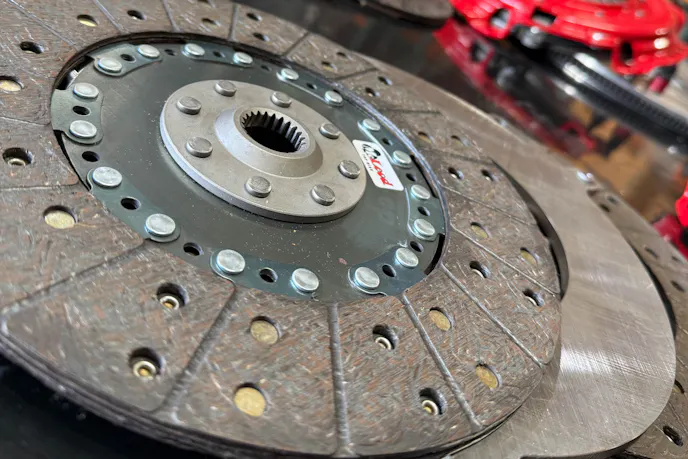
Once design and materials are established, four key variables define a clutch’s torque capacity: clamp load, coefficient of friction, surface area, and PSI.
“You combine all four, and that determines holding capacity,” Baty explains.
Mathematically, clutch capacity is proportional to clamp load, coefficient of friction, effective radius, and the number of friction discs.
- Clamp load is the force applied by the pressure plate to the clutch disc. Increasing clamp load improves torque capacity.
- Coefficient of friction depends on the material used, such as organic or metallic compounds, and directly affects how effectively torque is harnessed.
- Surface area refers to the total friction material in contact. More surface area distributes the load across a larger contact patch, improving heat management and smoothing engagement. This can be increased by adding discs, even if overall diameter is reduced.
- PSI (pressure per square inch) is calculated by dividing clamp load by effective friction area.
To illustrate PSI, Baty compares it to pushing your hand across carpet. With an open palm, it slides easily. Using just your fingertips with the same force increases PSI, making it harder to move and generating more heat over a shorter distance.
Clutch Diameter and Weight Matter
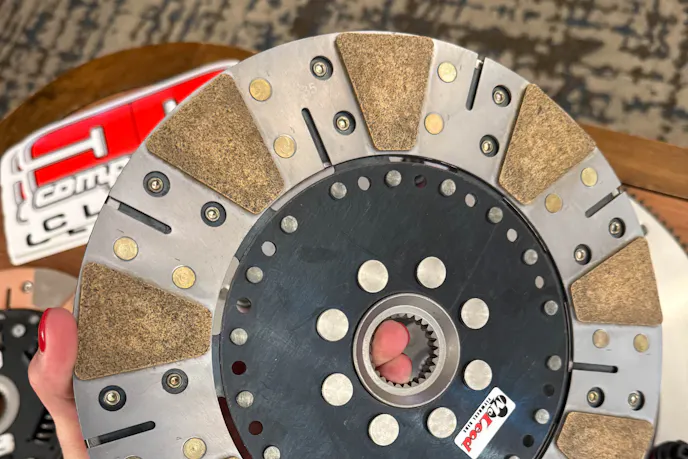
Clutch weight, flywheel weight, and how that weight is distributed play a major role in moment of inertia (MOI).
“You can have two clutches that both weigh 25 pounds, but it’s where the weight is,” Baty explains. “Closer to the center is less effective; farther out is more effective, increasing the MOI.”
For example, a 25-pound assembly with an 11-inch diameter clutch has more rotational inertia than one with a 9-inch diameter because more mass is positioned farther from the center.
Smaller clutches offer benefits as well, particularly in reducing inertia.
“It’s about moment of inertia. One example is utilizing a smaller disc on the input shaft,” Baty says. “At higher RPM—say above 5,000—you don’t want all that mass spinning from a larger disc.”
Smaller discs decelerate faster, improving shift performance and reducing wear on the transmission synchros.
However, reducing total rotating weight comes with tradeoffs. While it frees up power that would otherwise be stored as inertia, it can also reduce low-end drivability.
“When you lighten the assembly, it frees up the power from the engine to the rear tires,” Baty explains. “But for every action, there’s a reaction.”
A lighter setup can make the engine easier to bog down under load or during initial takeoff unless the vehicle has sufficient torque, gearing, or forced induction to compensate.
Do’s and Don’ts of Clutch Installation
For track and race enthusiasts, proper installation is critical.
First, measure everything during installation.
“Write it down and date it,” Baty advises. Establishing a baseline allows you to track wear and detect issues early.
Second, improper throwout bearing setup is one of the most common mistakes. Always follow the manufacturer’s instructions. For the McLeod billet bearing, Baty recommends setting at least 0.200 inches of air gap with the bearing fully compressed.
Hardy adds, “Setting the correct air gap is critical. Too much can damage transmission components; too little prevents full disengagement and burns up the discs.”
Proper spacing ensures consistent wear and prevents slippage or disengagement issues.
From a driver’s perspective, Mustang racer Jeff Smith emphasizes pedal setup as well.
“Proper quadrant and firewall adjustment are key to where the clutch engages and disengages. When set correctly, you’ll get strong, consistent launches.”
What to Check During Inspection In Between Races.
This is where your earlier measurements matter. By comparing current measurements to your baseline, you can track wear rates and identify uneven wear patterns.
Next, inspect for signs of overheating, such as warping, hot spots, or glazing. These are indicators of reduced friction due to excessive heat.
“When you start seeing color changes, the clutch has gone through heat cycles,” Baty notes. “Purple is bad, and orange is even worse.”
As the clutch wears, air gap decreases, and the diaphragm fingers move upward. On adjustable race clutches, shims can be removed to restore the proper air gap.
Jeff Smith shares his real-world experience:
“I started out running low 12s and have run as quick as 8.96 seconds at 161 mph using a McLeod Racing RXT HD twin-disc clutch rated at 1,300 lb-ft, along with their lightened billet flywheel. It’s a very reliable clutch that just works. I typically only adjust it every so often to compensate for wear of the discs.”

Conclusion
Knowing when to upgrade or choose the correct clutch ultimately comes down to factors like torque, gear ratio, tire diameter, vehicle weight, and intended use.
As torque levels increase, so do the demands placed on the clutch and flywheel assembly. If you’re just getting into racing—or are unsure—it’s a good idea to consult with clutch professionals who can help guide you in selecting the right setup for your specific application, intended use, and power level.
An overly aggressive clutch can harm both drivability and drivetrain components. Proper installation—especially correct air gap setup—is critical to performance and longevity. Consistent measurement and inspection help identify wear and prevent failures.
The clutch is a vital drivetrain component, and experts like Baty bring decades of experience in helping racers and enthusiasts build systems that perform reliably without sacrificing the driving experience.
You might also like
Beyond Electrical Tape: How DEI Fire Tape Protects Wiring And Plumbing
DEI Fire Tape uses self-fusing silicone to protect race car wiring, seal hose sleeves, resist heat, and provide temporary leak repairs.