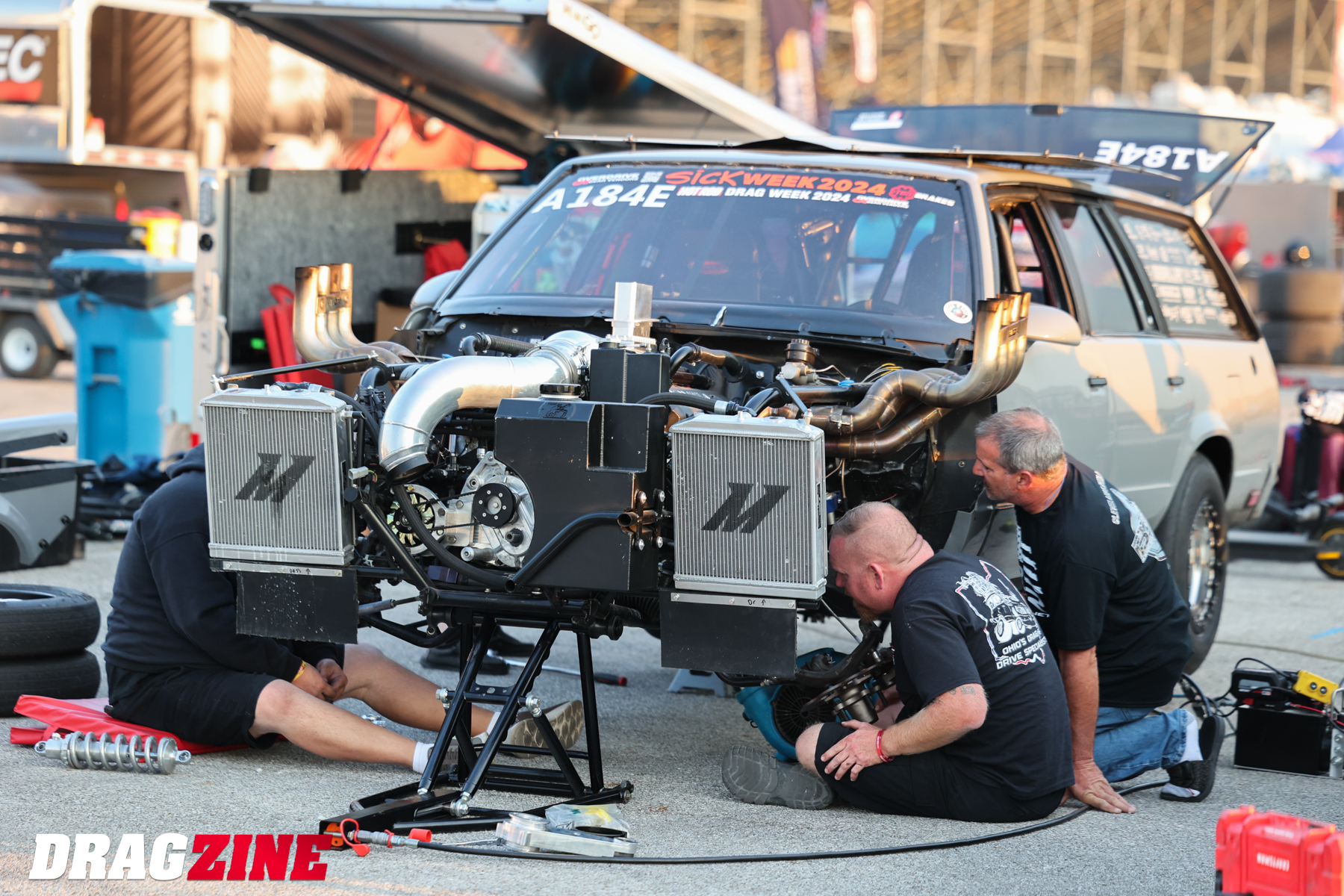
It’s truly amazing how technology has enhanced the capabilities of high-performance vehicles. Modern electronic fuel injection (EFI) has given tuners a broad canvas to create new ways to make horsepower. One of those methods is the use of dual fuel systems, which allows radical combinations to run on both pump gas and methanol for drag-and-drive applications.
Dual fuel systems aren’t anything new, but having the ability to switch from pump gas to methanol is a fresh approach. In a previous article, we covered the dual fuel system that Chuck Stefanski built for his wild seven-second drag-and-drive Pontiac wagon. Now, we’re going to look at how that combination runs on both pump gas and methanol, with a Holley Dominator ECU calling the shots.
The most common dual fuel setup pairs pump gas with E85. A flex-fuel sensor is used to measure the ethanol content flowing to the engine, and as that percentage changes, the ECU adjusts the tune accordingly to maintain drivability and add power. Methanol, however, throws a curveball into the equation, since there currently aren’t any flex fuel sensors that work with methanol.
Setting Up The System
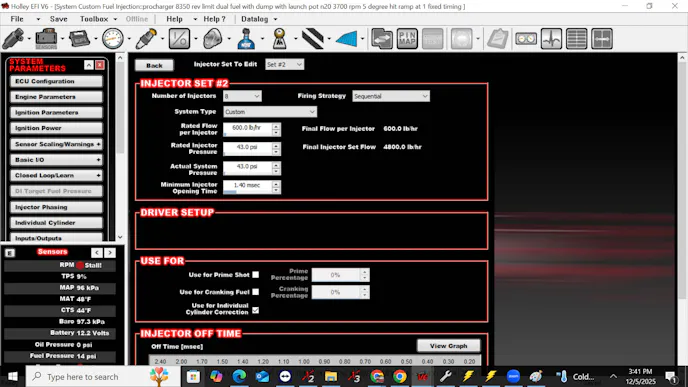
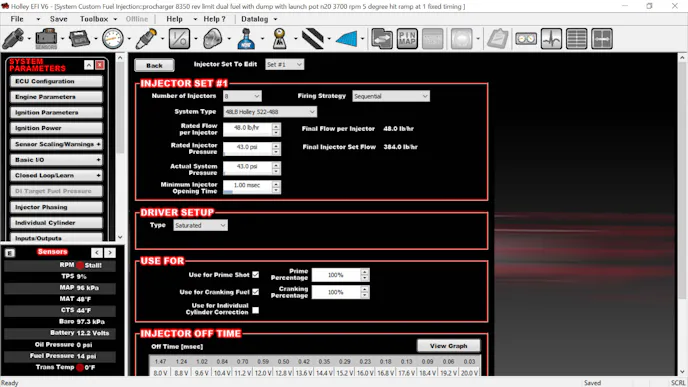
The first part of the puzzle when running a pump gas and methanol dual fuel system with a Holley Dominator involves the fuel injectors and driver boxes. The Dominator can control up to 24 injectors through its driver boxes, allowing it to manage both the pump gas and methanol injectors. This is accomplished by turning the injectors on and off based on how the fuel map is split.
The second part of the puzzle, and where the real magic happens, is in the Holley software itself. Big 3 Racing’s Rick Trunkett is a wizard when it comes to tuning Holley products, and he explains how the software sorcery works.
“Horsepower can be measured in pounds of fuel per hour, or brake-specific fuel consumption, which is different for pump gas and methanol,” Trunkett explains. “The portion of the fuel map running on pump gas will have a lower amount of fuel, or pounds of fuel per hour. When the system transitions from pump gas to methanol, we match that transition rate to where the fueling numbers need to be to make power on methanol. The computer doesn’t know what kind of fuel is being used, it only understands the stoichiometric ratio and does all the math from there to make everything work.”
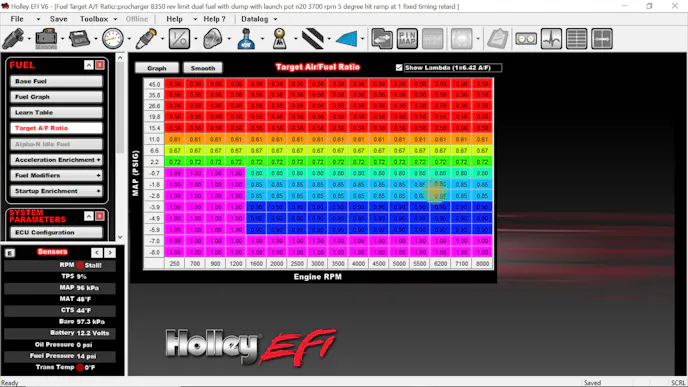
The “flipping” between the two fuel maps is triggered by engine load, RPM, and boost parameters that Trunkett sets. At reduced load levels with low boost, the engine operates on the pump gas map. As load, RPM, and boost increase, the system gradually transitions to methanol based on the engine’s demands. This means there is a mixture of both fuels being created to keep the engine happy as it moves to the more aggressive methanol tune while boost increases.
“The software is very smart and brings the methanol in as it’s needed,” Trunkett explains. “This reduces wear and tear on the engine because it’s not running on methanol all the time. On the flip side, it also makes sure the engine doesn’t get hurt by staying on pump gas when it’s under enough load to demand methanol.”
While setting up this type of dual fuel map may sound simple, it becomes fairly complex once you begin working on the transition points between the pump gas and methanol tunes. Trunkett starts with a fuel map from a similar combination that runs on pump gas for the lower portion of the tune. He then loads a methanol tune into the upper portion of the map. This is all done using what the Holley software offers, but you have to have a deep understanding of how the software works, along with how to properly create these advanced fuel maps.
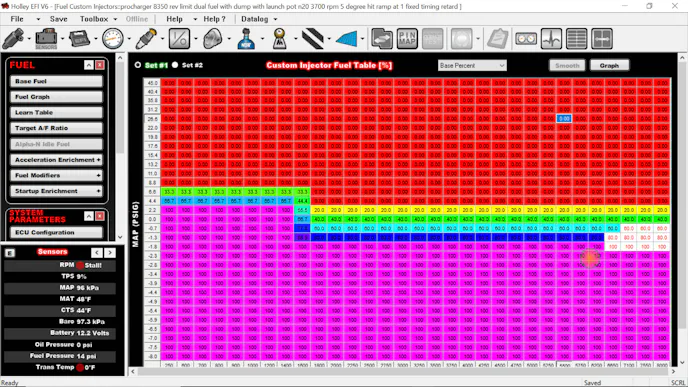
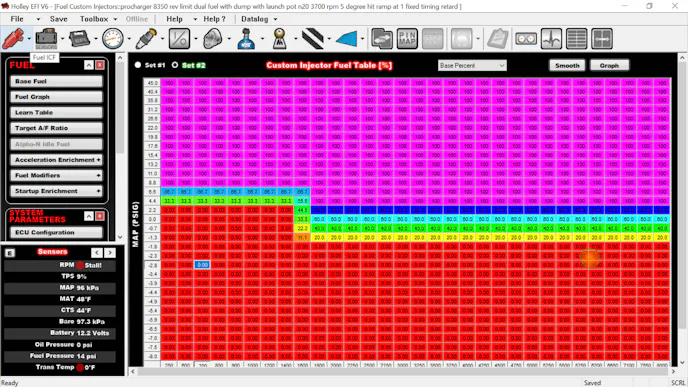
“The two base tunes are just general starting points, but they make it easier to fine-tune the car since it isn’t sputtering and banging like it would if you started from scratch,” Trunkett says. “I use fuel trims to really craft a tune with a clean transition between the pump gas and methanol maps. That’s the hard part and what takes time. If you’re going to try this, you really need to understand engine management, fueling, and how fuel maps work.”
According to Trunkett, the spark side of the tuning equation is relatively straightforward. There’s no need to stray far from the spark table values you’d normally use for a pump gas or methanol engine. The key is simply ensuring the correct spark table is active based on which fuel map the engine is operating in at any given moment.
Creating a pump gas and methanol dual fuel setup is absolutely possible with the right tuning knowledge. This type of system allows a boosted combination to seamlessly switch between fuels without major hardware changes. For drag-and-drive racers, it’s an ideal solution, an engine package that behaves like a street car on the road, but transforms into a monster when it’s time to make a pass down the track.
You might also like
Ida Zetterström Launches 2026 Top Fuel Campaign At Charlotte 4-Wide Nationals
Ida Zetterström is ready to make her return to Top Fuel. Zetterström will drive for Shawn Reed Racing at the Charlotte 4-wide Nats'