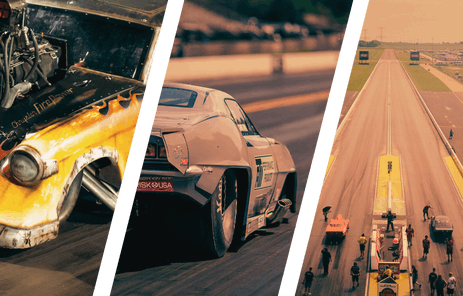
At first glance, every drag racing tire looks similar, they’re round, made of rubber, and designed to put horsepower to the pavement. But that’s where the similarities end.
Bias-ply slicks and radial tires are the two primary tire types used in drag racing, and they’re built very differently. Those construction differences dramatically affect how each tire performs, how a race car is tuned, and what racing applications each tire is best suited for.
Class is now in session at Tire University, and today’s lesson comes from Mickey Thompson Tires’ Jason Moulton.
What Are The Differences Between Slicks And Radials?
There are visual differences between a slick and a radial, but the real difference, however, lies beneath the rubber.
The carcass of each tire is made in a specific way. Bias-ply tires are constructed in a way that the plies are shared between the tread and sidewalls. The tire’s ply cord is set in a criss-cross pattern that uses a 45-degree angle to the bead of the tire.
A radial tire uses a design where the plies of the sidewall run across the tire. The “breakers” or tread plies are laid down in a longitudinal fashion on a radial. The 90-degree angle the cord of a radial uses creates a more stable dynamic than the 45-degree angle the bias-ply uses.
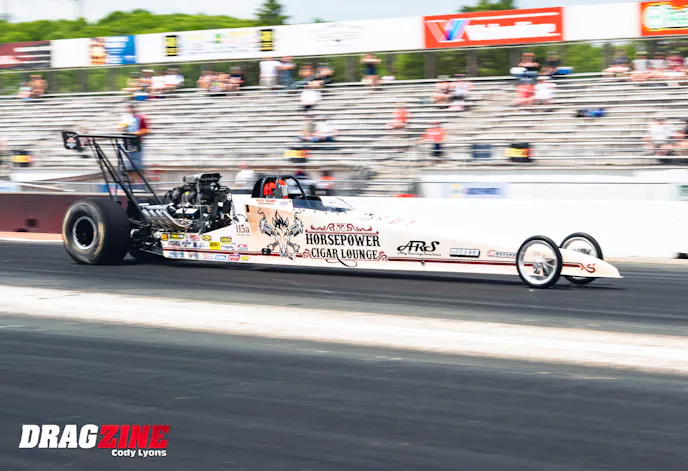
In a drag racing application, the bias-ply slick uses a carcass designed to absorb more of the energy created during launch. That absorbed energy causes the tire to wrinkle and flex dramatically. A radial tire works differently. Its carcass is engineered to transfer more energy directly to the racing surface instead of absorbing it.
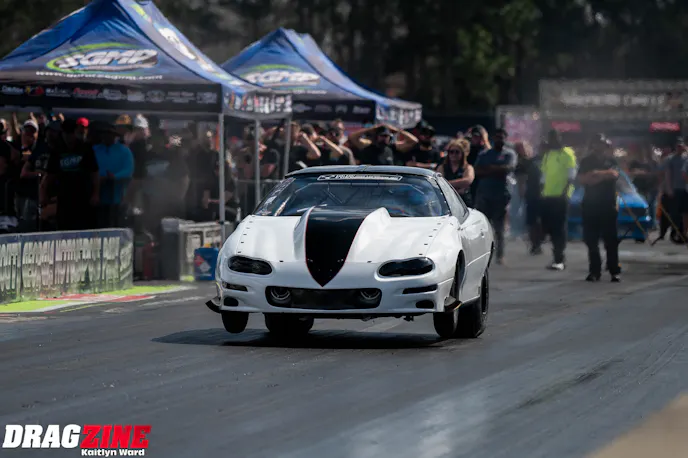
“A good comparison is when passenger cars transitioned from bias-ply tires to radial tires. Fuel economy improved because the tires weren’t absorbing as much energy between the wheel and the road.
“The same principle applies in drag racing.
“The benefit of a radial is that it transfers energy more efficiently. The downside is that because it doesn’t absorb much energy, getting the car off the starting line can be more challenging,” Moulton explains.
These construction differences give each tire its own personality.
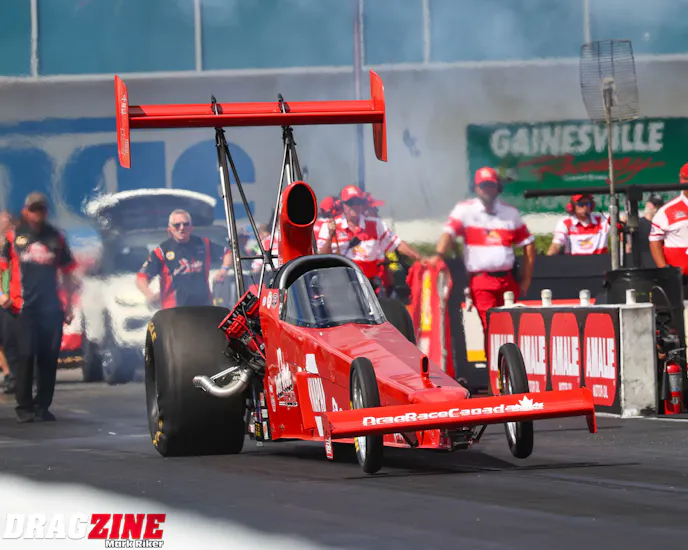
Bias-ply slicks provide a wider tuning window because they absorb so much energy and are generally more forgiving.
Radials, on the other hand, allow more power to reach the racetrack, making them capable of quicker elapsed times.
How Slicks And Radials Perform Differently
Although bias-ply slicks and radials are both drag racing tires, they deliver power very differently.
Launching a race car successfully is all about applying as much power to the track as quickly as possible without overpowering the tire.
That’s where radial tires excel. Because they transfer energy more efficiently than bias-ply slicks, they often produce quicker elapsed times when the track has enough grip.
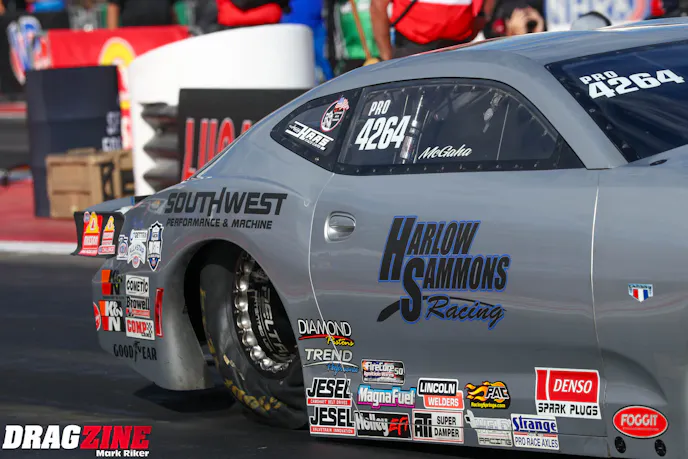
“When you watch a bias-ply tire leave the starting line, you’ll see it wrinkle significantly. That’s the tire absorbing energy. A radial doesn’t wrinkle nearly as much because it isn’t absorbing that energy. Once the car gets moving, the radial gains an advantage because more energy is being transferred to the racetrack instead of being absorbed by the tire.
The difference really comes down to construction.
A bias-ply tire is built differently than a radial tire. The manufacturing equipment is different, the internal construction is different, and the way the tire behaves is different,” Moulton says.
Consistency Matters
Another major difference between the two tire designs is consistency.
A bias-ply slick constantly changes shape during a pass. It wrinkles on launch, returns to its normal profile, and then grows in circumference as centrifugal force increases downtrack.
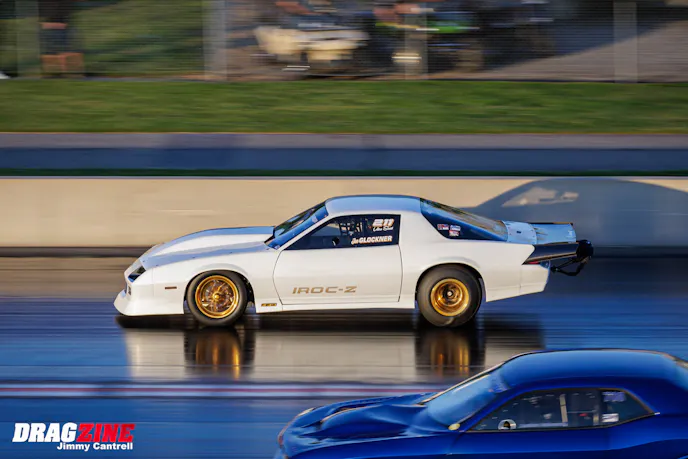
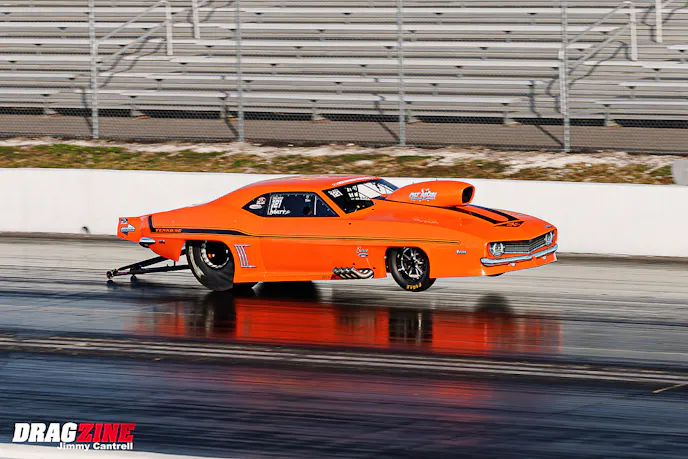
All of those changes affect consistency because the tire is continually changing throughout the run.
A radial tire experiences very little shape change during a pass.
That stability produces more consistent elapsed times, more predictable and repeatable incremental numbers, and improved overall consistency—qualities that are especially valuable to bracket racers.
Tuning Differences Between Slicks And Radials
Entire books could be written about tuning race cars for slicks versus radials, but the basic concepts are straightforward.
Bias-ply slicks work exceptionally well on tracks that aren’t perfectly prepared because they’re designed to operate with a controlled amount of tire slip during launch.
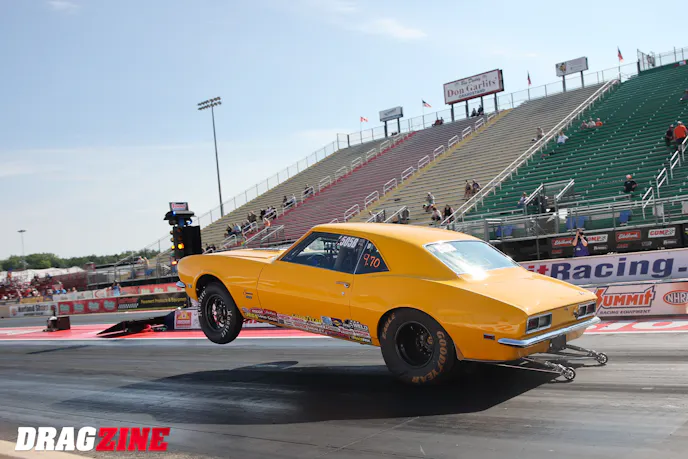
That controlled slip creates a much larger tuning window.
“When a bias-ply tire wrinkles at launch, that wrinkle needs to work properly. If it snaps back too quickly or not quickly enough, performance suffers. That said, the bias-ply tire generally provides a larger tuning window on the starting line,” Moulton states.
Cars running slicks typically squat more at launch and experience less rear suspension separation. Controlled tire growth and wheel speed are key to maximizing slick performance.
Radial tires require a completely different approach.
They thrive on prepared racing surfaces where they can dead-hook. Radials are also extremely sensitive to tire pressure, making air-pressure adjustments an important tuning tool when track conditions change.
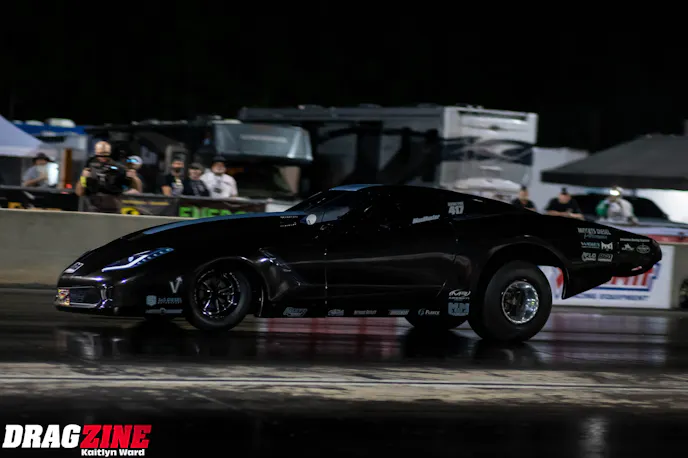
Suspension setup also differs dramatically.
A radial tire car is designed to separate the rear suspension aggressively during launch to maximize tire loading throughout the run.
The goal is simple: keep the tire planted without allowing it to slip.
“With a radial tire, you want to load the tire aggressively. That’s why many fast radial cars separate the rear suspension dramatically on launch. The rear of the car rises, applying force to the tire and maintaining load. Radials can handle significant loading,” Moulton explains.
The Rise Of The Radial Slick
Drag racing tire technology continues to evolve, and one of the newest developments is the radial slick.
This hybrid design combines the smooth tread surface of a traditional slick with the internal construction of a radial tire.
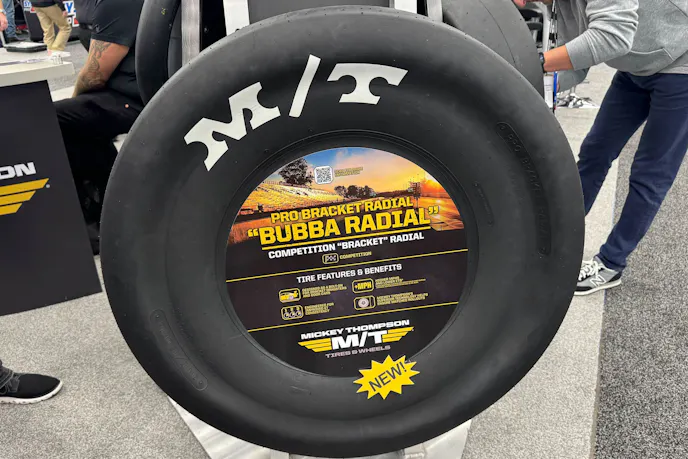
According to Moulton, early testing has produced impressive results.
“With the technology we’re working on with this Bubba radial, we’re seeing some impressive performance improvements. We’re taking a bias-ply tire off, bolting on the radial slick, and in some cases, we’re seeing improvements of up to a tenth of a second and 3 mph in the quarter mile. With tuning changes on each vehicle, the potential is there to see these types of improvements.”
Choosing The Right Drag Racing Tire
Both bias-ply slicks and radial tires offer distinct advantages.
Bias-ply slicks provide forgiveness and a broader tuning window, making them an excellent choice for changing track conditions and many sportsman racing applications.
Radials reward racers with greater efficiency, improved consistency, and faster elapsed times when paired with the proper chassis setup and a well-prepared racing surface.
Ultimately, the right tire comes down to your racing style, your vehicle’s setup, the conditions you’ll be racing in, and your overall performance goals.
You might also like
Elite Motorsports Looks To Keep Its NHRA Pro Stock Winning Streak Alive In Texas
Elite Motorsports is chasing another Countdown win in Dallas. Here's how the team is approaching the NHRA FallNationals.