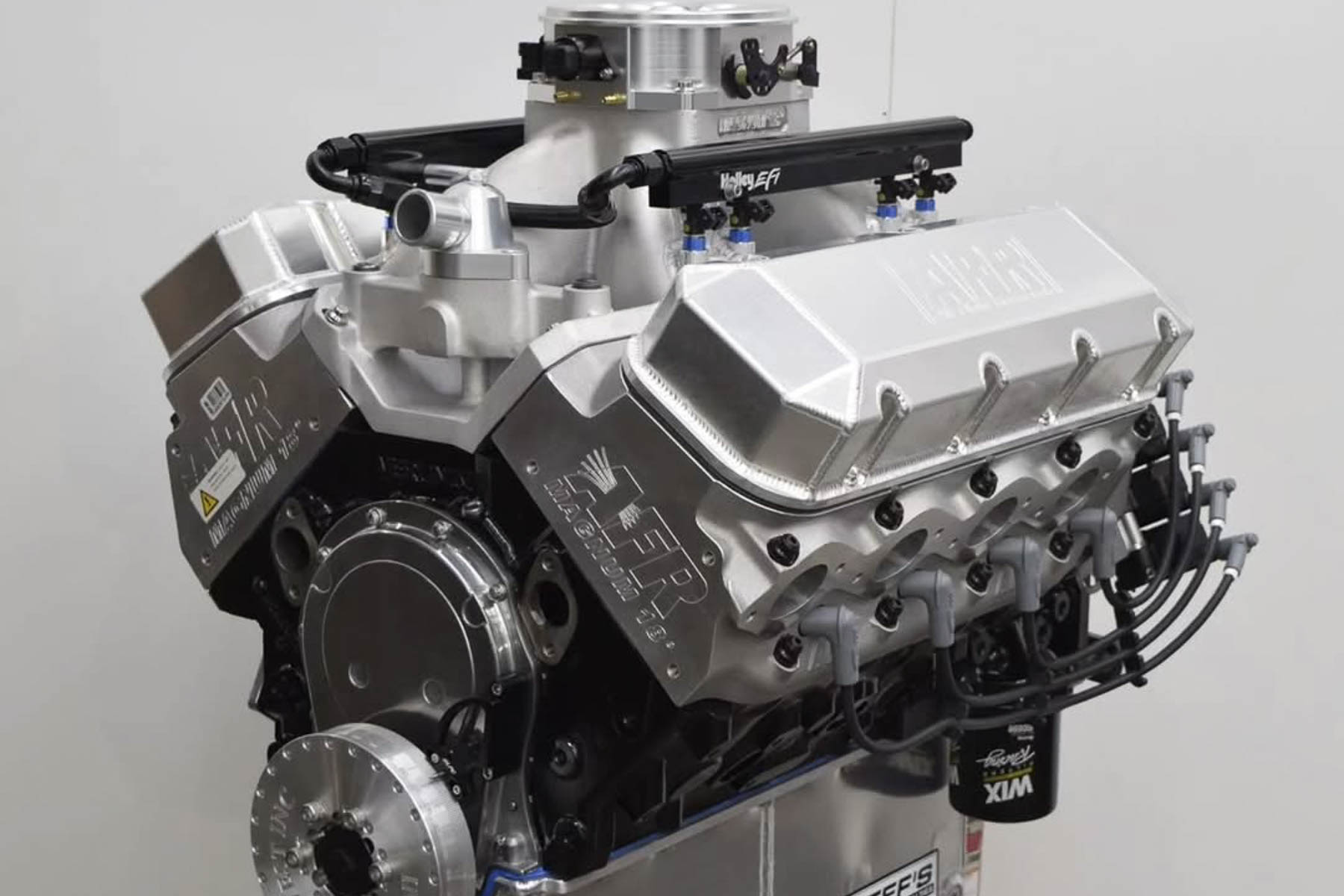
Cylinder heads are the great divider in the world of engine building. Choose wisely, and you’re a hero winning races. Get it wrong, and the mistake is expensive. The key is delivering every ounce of performance from your engine’s displacement. We’ll show you where to begin and the right questions to ask. For the purpose of this article, we’ll focus on beloved all-American muscle: two-valve-per-cylinder, pushrod V8 engines.
To guide us through the process, we welcome Steve Arent, Vice President of Sales for all Racing & Performance Holdings brands, including Air Flow Research, known throughout the industry as AFR. AFR has been a pioneer in cylinder head manufacturing and flow dynamics for over 50 years. Arent has been a key part of that legacy since 2017 and has been involved in the automotive performance industry for more than 40 years, first on the engine-building side and later in manufacturing.
Start With The Right Questions
The first step in choosing a cylinder head is to envision the end result and expectations of your vehicle. Where are you going to be driving? What are your power goals? As you’ll soon discover, cylinder head design varies greatly between mild street/strip combinations and full race competition.
Both paths start with knowing your engine displacement and target horsepower, the two top priorities. An engine’s power is directly tied to how effectively it can fill the cylinders, first with air and fuel on the intake stroke, then by evacuating exhaust gases on the exhaust stroke. All of that airflow must pass through the cylinder heads at the proper volume and velocity. How effectively this process continues as RPM increases is a key ingredient for peak horsepower.
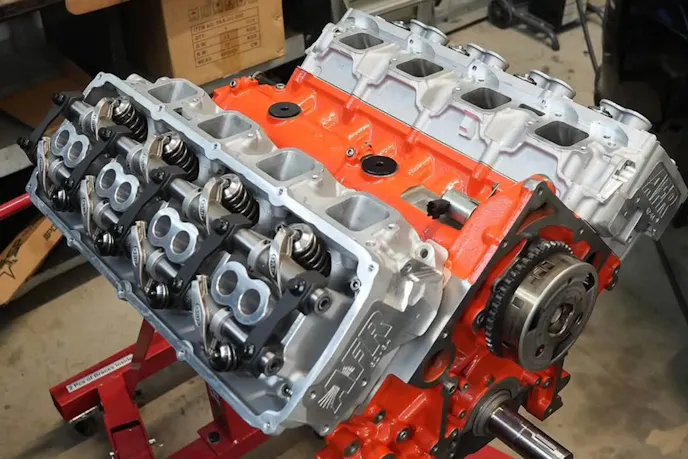
With these variables in mind, and the vast range of engine combinations, it becomes clear that one size does not fit all. Over the years, AFR has developed an effective checklist, which you can view here to get started.
“We’re going to act like your doctor,” explains Arent. “We’re going to ask you a lot of questions to narrow down and determine which cylinder head is going to benefit your application.”
Details matter, because AFR uses that information to construct cylinder heads with the right-size components made from the right materials. Proper component selection ensures the head matches the engine’s airflow requirements for the intended use while maintaining durability.
Build Your Knowledge
To make an informed decision and have productive conversations with experts like AFR, it helps to understand the basics of cylinder head flow and geometry.
Runner CC: Runner CC is the internal volume of the intake port, measured in cubic centimeters. Larger ports can support higher airflow volume at elevated RPM, while smaller ports maintain higher air velocity, improving throttle response and low-to-mid-range torque.
There is always a trade-off between volume and velocity. “Bigger is not always better,” notes Arent. Higher volume can slow airflow velocity and hurt low-to-mid-range torque, while high velocity can choke a high-power engine by limiting airflow volume. Additionally, two ports with the same CC volume can behave very differently depending on shape and surface finish. CFM and velocity are related but separate measurements, and the goal is finding the right balance.
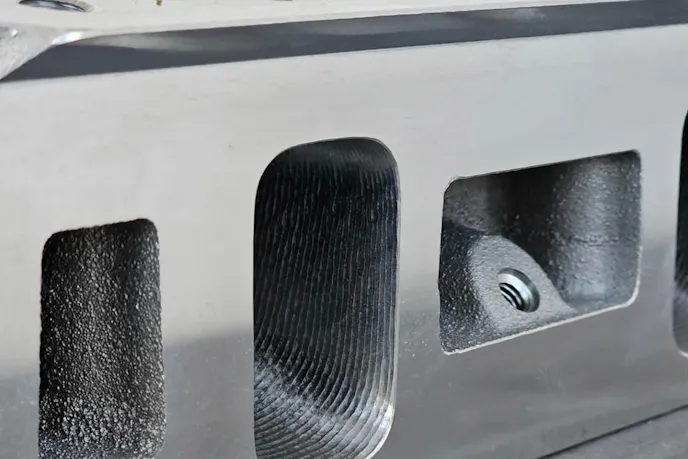
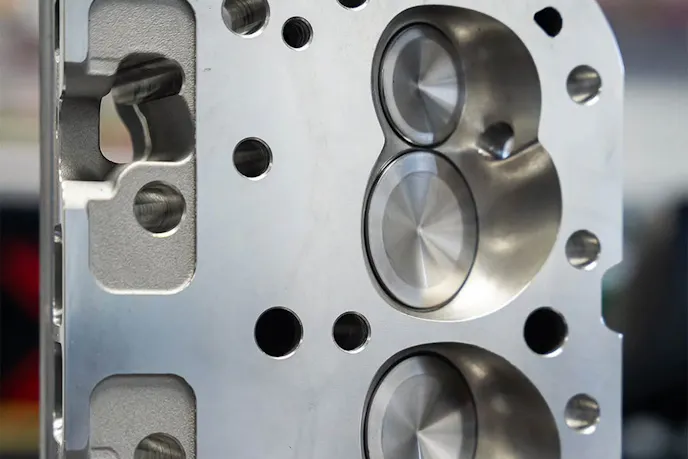
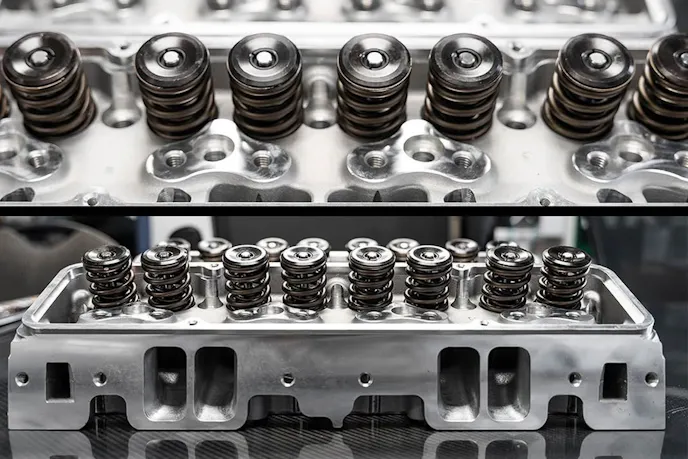
“With the way AFR manufactures and CNC-ports cylinder heads today, our 195cc small-block Chevy heads are supporting over 600 horsepower naturally aspirated and more than 1,000 horsepower in boosted applications, even on small 372ci street/strip engines. That level of performance simply wasn’t possible ten years ago,” explains Arent.
Combustion chamber volume and deck height: These factors directly affect the space where compression peaks at top dead center. That volume determines compression ratio, which impacts torque and horsepower potential. It also helps determine the required fuel octane to prevent detonation.
Valve guides and seats: The valve guide controls precise valve movement, while the valve seat provides a seal when the valve is closed. Materials and machining quality are critical, as these components must be accurate, durable, and capable of managing heat transfer. Different applications will not only demand different materials, but also different designs to maximize performance.
Pick Your Path – Street/Strip
From here, cylinder head selection branches into two main paths: street/strip and full race applications. Both rely on the same foundational questions, then factor in budget and what’s truly required to excel.
For street/strip builds, drivability, emissions considerations, and budget take priority. An experienced manufacturer like AFR can usually narrow down a suitable cylinder head quickly, but they still work through the full checklist to ensure nothing is overlooked, including whether the power goal involves forced induction or nitrous.
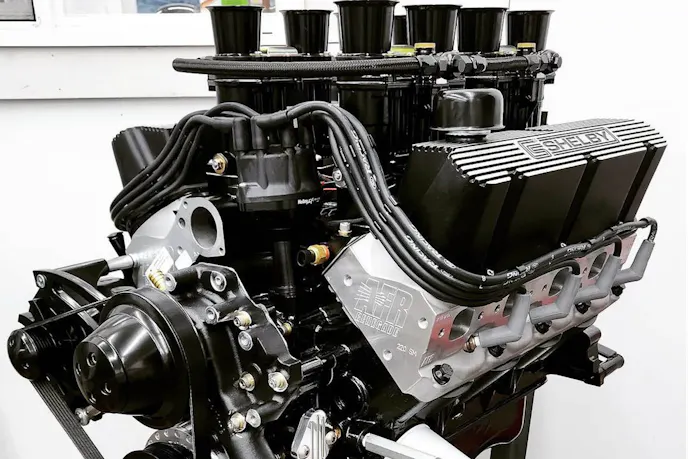
For example, AFR’s literature notes that its 195cc “Street” heads for Small Block Chevy engines up to 400 cubic inches feature 100-percent CNC-ported intake runners, exhaust ports, and combustion chambers, A356 aluminum castings, and high-quality components throughout. They are recommended for displacements up to 400ci and operation up to 6,500 rpm, and are legal for 1994-and-older emissions-controlled vehicles under CARB EO #D-250-2.
These heads use stainless steel beadlock valves, ductile iron valve seats, and bronze valve guides — balancing durability, street performance, and affordability.
Forced induction adds another layer to cylinder head selection. According to Arent, “If this is a boosted application, what we’re going to recommend is that the customer upgrade to an Inconel exhaust valve. It’s still a stainless valve, but the composite includes Inconel, and it withstands temperature changes far better than a standard stainless valve.”
Pick Your Path – Full Race
The checklist becomes much more detailed for full race applications.
“We’re also going to dive into the car, the weight, the transmission you’re using, whether it’s manual or automatic, the rearend, and the gear ratio,” explains Arent. “We take all of that into consideration so we can come up with the right cylinder head recommendation. Then we’ll also recommend an intake manifold that best matches the cylinder heads to optimize the engine and get the most power out of it.”
This holistic approach matters because drivetrain characteristics affect RPM recovery after each shift. The cylinder head must deliver the correct airflow volume and velocity during those critical moments.
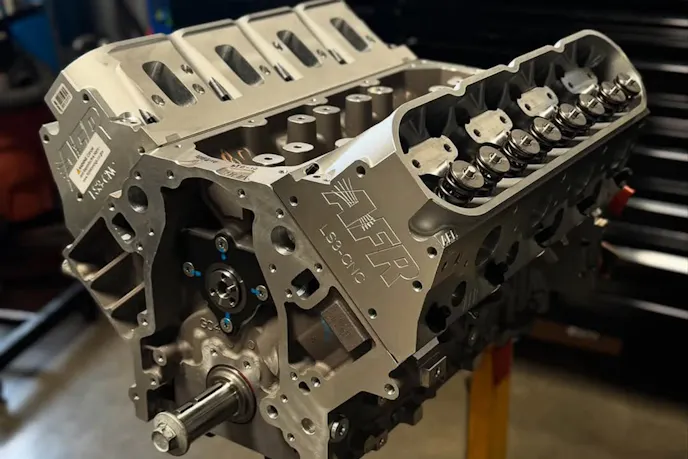
Full race engines typically mean larger displacement, higher RPM, and increased heat load. “That’s when we get into recommending titanium valves, titanium retainers, and copper-beryllium valve seats,” says Arent. “All of that helps lighten the valvetrain for higher RPM operation.”
For example, AFR’s 385cc big block Chevy rectangle port cylinder heads are designed for 540-plus cubic-inch racing engines operating at or below 7,600 rpm. These heads feature 100-percent CNC-machined intake runners, exhaust ports, and combustion chambers, titanium retainers, and premium components. They are capable of flowing 456 CFM at 0.900 inch of lift. The exhaust valves use a tulip-style design for improved flow efficiency and are constructed from Inconel to withstand extreme heat.
Designing A Durable Aluminum Cylinder Head
All AFR cylinder heads are aluminum, with durability and heat management built into the design.
“The biggest thing AFR is known for on every cylinder head is a 0.750-inch deck,” explains Arent. “That gives you stability for head gaskets in boosted, high-compression, or high-RPM applications. Once heat builds, the cylinder head doesn’t move as much.”
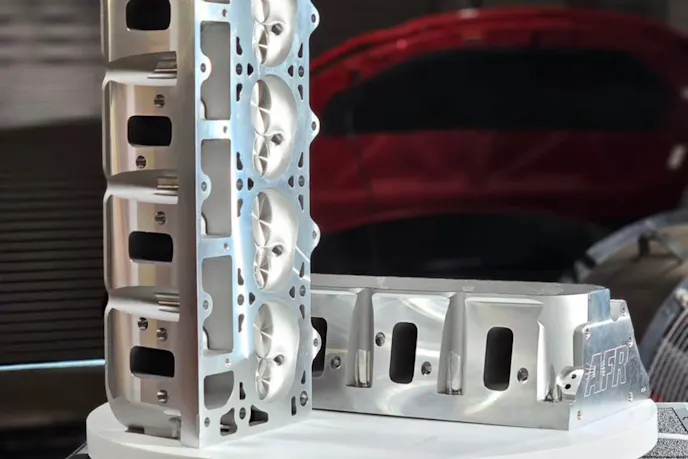
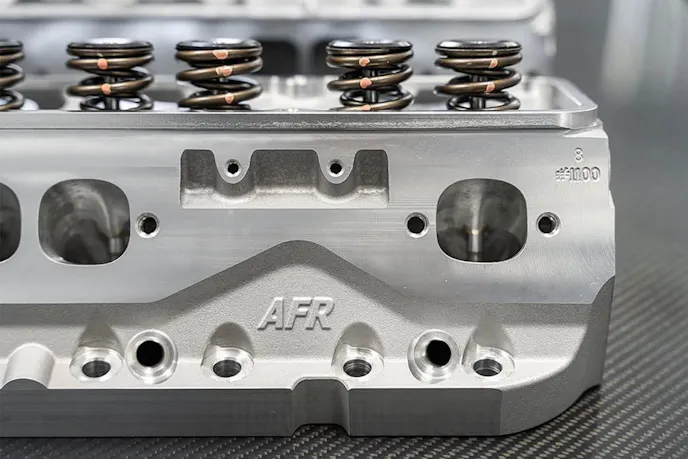
Cooling design is equally important. “The water jackets are designed so coolant is concentrated around the spark plug and exhaust valve, the two hottest areas in the head,” Arent says. “Keeping those areas cool reduces the chance of detonation and component failure.”
For added protection, AFR prefers coolant flow of roughly 50 gallons per minute to help reduce cylinder head temperatures.
Keys to Success
Choosing the right cylinder heads is an investment that requires education and expert guidance. The ideal choice balances airflow volume and velocity while maintaining durability under extreme heat and stress. It must be matched to engine displacement and the vehicle’s intended use, whether street/strip or full race.
According to Arent, the three keys to success are simple: “Know your cubic inches up front. Have realistic horsepower expectations. And lastly, questions are key to this whole thing.”
Those principles bring us full circle, back to the AFR checklist and the importance of starting with the right questions.
You might also like
NHRA Renews The GESi Pro Stock No 1 Qualifier Award
The NHRA officially renewed the lucrative GESi Pro Stock award. The fastest driver at every single event takes home a massive cash bonus.