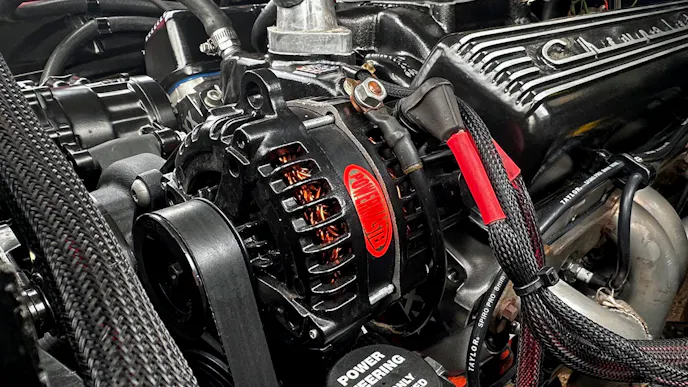
An electrical system that can’t keep up does more than dim your lights. Low power impacts critical engine components such as the fuel pump and ignition coils. It can also disrupt the electronic control unit (ECU) and/or the power control module (PCM). In a worst-case scenario, you could end up with a failed alternator and a complete shutdown.
In this article, we’ll take a look at how your electrical system works and why it needs to be upgraded as you build performance. We’re joined by Ed Law, Technical Sales Manager at Powermaster Performance, who brings 30 years of experience and best practices.
How Your Electrical System Works
The basics of your vehicle’s electrical system include a battery, alternator, and voltage regulator. The battery provides the initial electrical power. Once the engine starts, the crankshaft pulley—via the serpentine belt—drives the alternator to generate power, measured in amperage.
The voltage regulator maintains a consistent output, generally between 13.5 and 14.5 volts, to power electronics and keep the battery charged. Think of electricity like water flowing through a hose: voltage is the pressure, and amperage is the volume.
The alternator functions like a mini power plant. Inside are a rotor and a stator. The rotor is an electromagnet made of copper wire wrapped around an iron core. As it spins inside the stator—constructed from heavy-gauge copper windings—it generates alternating current (AC). An internal rectifier bridge then converts that AC into the direct current (DC) required by automotive electronics.
While wire gauge and rotor speed influence potential amperage, output is directly tied to engine RPM because the alternator is driven off the crankshaft. As a result, alternators produce less amperage at idle and reach full output as RPM increases.
A high-output alternator becomes necessary when performance upgrades demand more electrical capacity.
The Low RPM Challenge
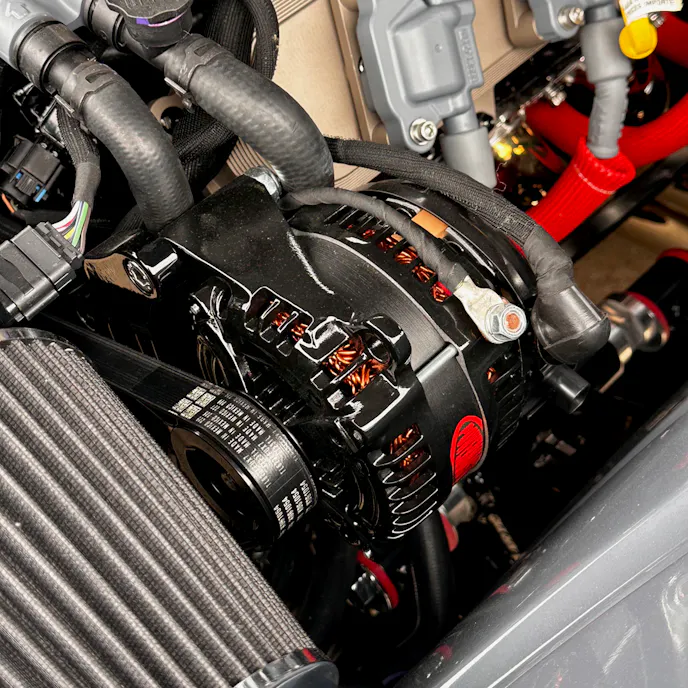
Modern LS and Coyote engines are factory-designed with low idle speeds, typically around 550–650 RPM. Performance builds often include upgrades such as cooling fans, a larger fuel pump, bigger injectors, hotter coil packs, and intercooler pumps—all of which increase electrical demand.
At low idle speeds, alternator output is at its lowest, which can lead to issues.
“At idle speeds, the alternator cannot keep up with the demands of the vehicle. The rotor and stator get overheated, and it gives up the ghost,” Law explains.
Confusion often arises because not all manufacturers publish idle amperage according to SAE J56 standards (idle amperage/rated amperage/voltage). Some only list rated amperage, which can lead to overestimating a stock alternator’s capability.
For example, a stock replacement alternator for a 1998–2002 Chevy F-body LS1 is more accurately rated at 50A/102A at 12V—not a full 102A at all times, as it may be advertised.
To address this issue, Powermaster Performance developed the HPR Alternator Series, designed to deliver significantly higher idle amperage.
“We have alternators that make 145 amps at idle, or in LS applications, up to 190 amps at idle,” Law says—compared to roughly 50 amps at idle for stock units.
What To Know Before You Upgrade To A High Output Alternator
There are many considerations to make before installing a high-output alternator. In addition, Powermaster has a “How To Choose” guide right here on its website.
Calculate Amperage Draw
Start by inventorying all electrical components and their amperage requirements at both idle and full load. Add them together to determine your total draw.
Law recommends keeping total demand at about 80% of the alternator’s maximum output to prevent overheating.
Powermaster’s HPR Series offers two sizes:
- Small frame: 145A/180A at 12V
- Large frame: 195A/250A at 12V
Both are direct bolt-in options for LS, Coyote, and HEMI engines, with some models available in 14V and 16V configurations.
Mounting Orientation
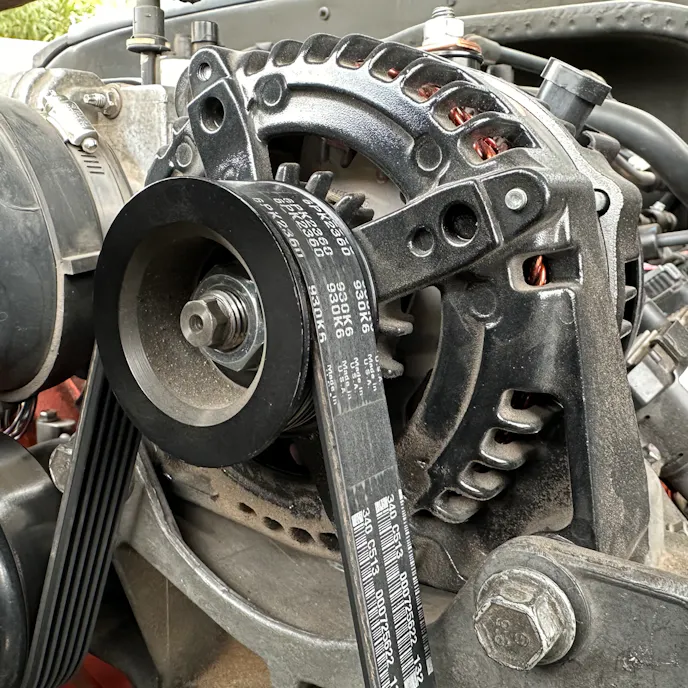
The mounting orientation of the alternator is another consideration. Alternator cooling fans are designed to spin clockwise.
“The way an alternator pulls air in is from the back and pushes it out the front,” Law explains.
Some racers mount alternators in reverse orientation, causing the fan to spin counterclockwise. While the alternator will still produce power, cooling efficiency is compromised.
“When you spin them backwards, airflow cavitates, and the rotor and stator get very hot. It shortens lifespan,” Law says.
Additionally, reverse mounting can loosen the pulley due to thread direction.
If reverse mounting is required, Powermaster offers dedicated counterclockwise alternators with proper cooling design and left-hand threads.
Late Model Electronic Controlled Charging
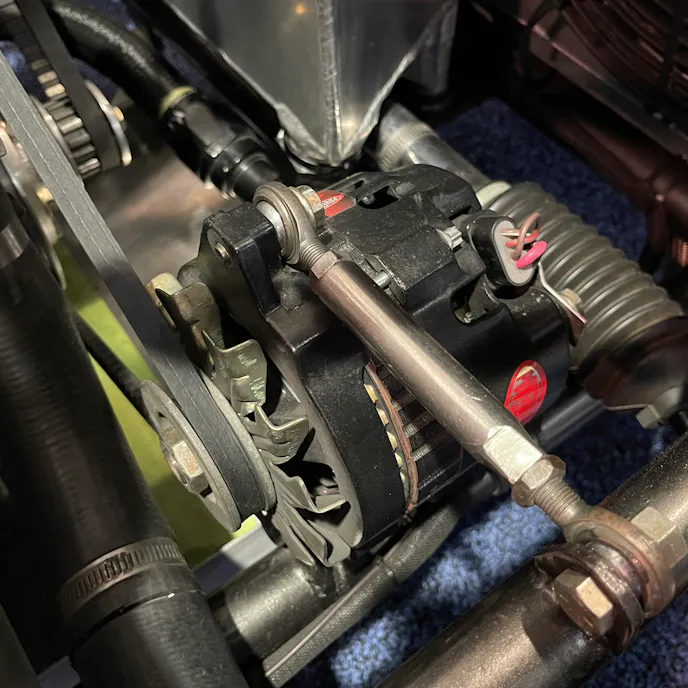
Many OEMs now control alternator output through the ECU. GM uses Regulated Voltage Control (RVC), while Ford relies on PCM-controlled systems. Switching to a one-wire alternator can trigger warning lights and error codes because the system cannot properly communicate with the unit. A bypass harness is typically required. Powermaster one-wire alternators include this functionality built into the voltage regulator.
Further details are in this reference video: https://youtu.be/pCHphRnIqnM?si=0b1rQlgP0_3VTg_u
Charge Cable and Ground
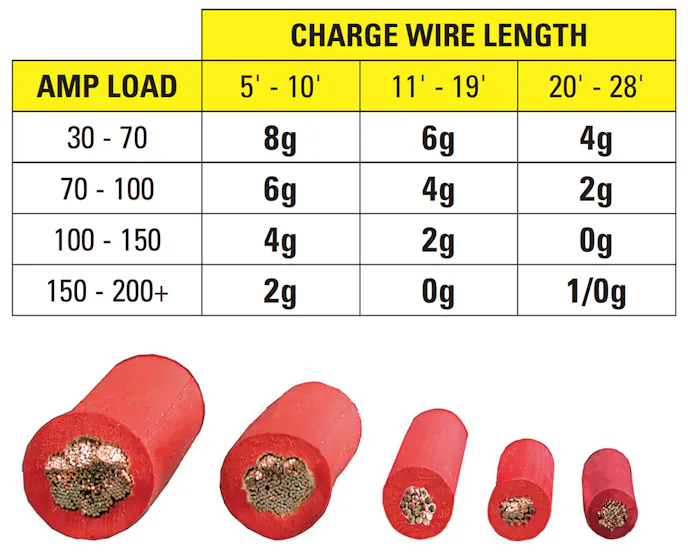
Upgrading to a high-output alternator requires upgrading your charge cable.
Use multi-strand copper cable, and increase gauge size as the distance from the battery increases. Ground cables should match the charge cable in size and be securely mounted to the engine block, with paint removed at contact points.
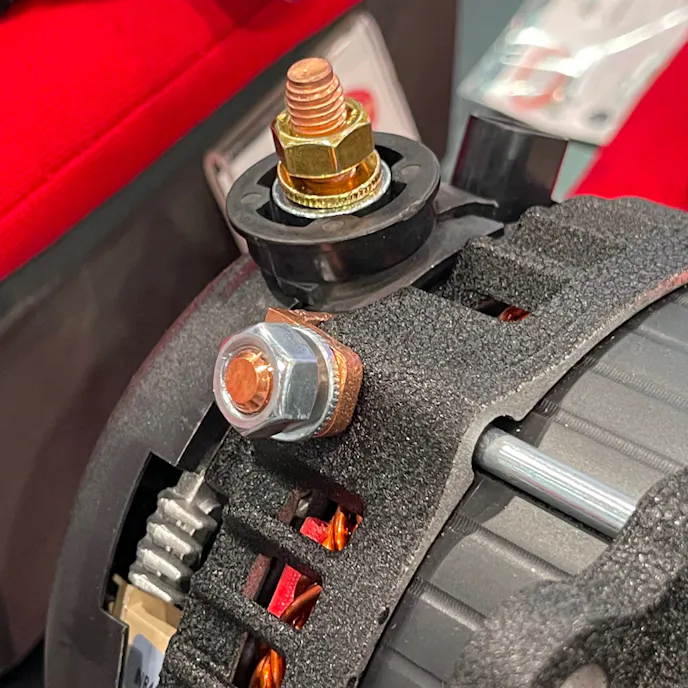
High-output alternators should also have a dedicated case ground. Powermaster units include a ground stud for this purpose.
“If you have a high amp alternator, you don’t want it hunting for ground. It starts shorting out, arcing, and sparking,” Law warns. “It will burn a regulator very quickly.”
Top End Limitations and Pulley Ratio
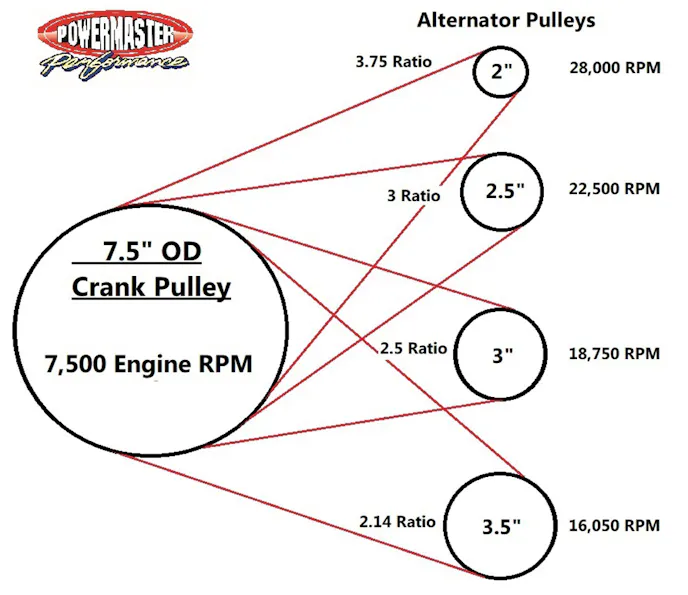
While improving idle output is critical, high-RPM operation must also be considered. Alternators generally should not exceed 18,000 RPM due to the tight clearance between the rotor and stator.
“When the case flexes and the rotor contacts the stator, the lights go out—that’s all it takes,” Law explains.
Pulley ratios play a major role. Most setups use a 3:1 ratio, but adjustments, such as a larger alternator pulley, may be needed to stay within safe limits. For example, the Ford Mustang GT350’s high-revving 8,250 RPM engine requires pulley adjustments. Powermaster includes a 3.25-inch pulley in its kit to reduce alternator speed and prevent failure.
Conclusion
Upgrading your vehicle’s charging system is essential when building for performance. Stock alternators often cannot supply enough amperage at idle, leading to potential failures in critical systems.
By calculating your electrical demands, selecting the proper alternator, and ensuring correct installation, you can avoid these issues and maintain reliable performance.
If you need assistance, Powermaster Performance offers direct support and an in-house repair program to help keep your system running at its best.
You might also like
2026 PDRA World Finals Results And World Champions
The PDRA World Finals delivered big championship drama. Here's a recap of who won at the finals and who scored a PDRA championship.