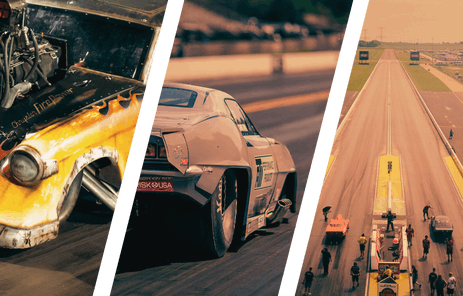
The Coyote 10 laid down an impressive performance in the finale of Horsepower Wars C10 Shootout, presented by Summit Racing. But as we looked at our 1972 Chevy C10, we couldn’t help but repeat the infamous words of “The Bride” from Kill Bill: “You and I have unfinished business.” Coyote 10 was oh-so-close to running fours in the eighth-mile, and we couldn’t help but wonder what this turbo Coyote was capable of with just a few small changes and a little more track time.
The 4-link, the FFRE-built Coyote, the HPT turbo – it all just flat worked. But we had hit the limit of the fuel system and the tires. Between the upgraded turbo and the oxygenated fuel, believe it or not, we were out of injector and fuel pump. That limited the top end of power (and boost) that the Coyote could make. And the Mickey Thompson ET Street S/S 295/55/15 drag radials were great for street driving and filled the wheel well nicely, but were hardly the best match for over 1,500 horsepower. (Yes, with the upgraded turbo, we were indeed making that much and then some at the crank.)
Let’s Get Fuelish
As a little refresher on the Coyote 10 fuel system, it uses a Radium R22A 22 Gallon Fuel Cell (PN 20-0622). It’s a top-of-the-line, SFI and FIA-approved fuel cell with a bladder which is resistant to all fuel types, housed in a powdercoated aluminum housing, filled with anti-slosh foam that suppresses explosions. It’s about the safest thing out there. But what really makes it special is the seamless integration with an FCST-X Fuel Cell Surge Tank. The FCST-X builds on the proven features of previous fuel cell surge tanks with a fully CNC-machined, corrosion-resistant aluminum design, simplified servicing, and broad fuel and pump compatibility, including multiple electric and mechanical pump options. New upgrades include a larger 2.6L capacity, faster pump access, improved internal fluid management, reduced leak points, and support for multiple high-flow brushless pumps. Enhanced safety features like improved rollover protection and anti-rotation electrical terminals further refine the system for high-performance fuel delivery.
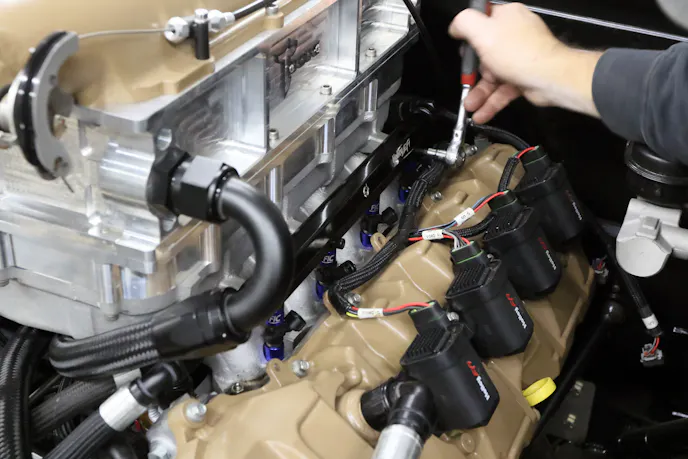
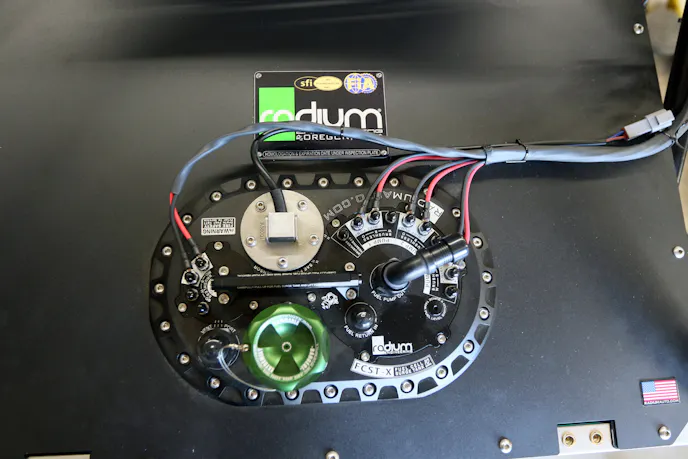
If you aren’t familiar with the FCST-X and this type of multi-pump surge tank setup, a lift pump pulls fuel from the bottom of the fuel cell into a 2L surge tank, where up to three independent EFI pumps supply high-pressure fuel to the engine without cross-flow between filtration chambers. If the lift pump starves, the surge tank’s stored volume and the regulator return help keep the pumps fed and the engine running. Integrated one-way fill valves automatically replenish the surge tank when fuel levels rise, with excess fuel safely overflowing back into the fuel cell.
We chose the unit with three Walbro F90000274 surge pumps and one lift pump (PN 20-1992-03), which are sometimes called the Walbro 450, 465, or 485. It delivers 430lph at 40psi and 13.5 volts. At 18 volts, it can deliver 40% more volume at 73psi. 1,290 liters per hour may seem like a lot of fuel, and at 1,400 horsepower with E85 and up to 65psi of fuel pressure, our needs should be under 1,000 liters per hour. But here’s where things get fun. Move that fuel pressure to 75psi to match an increase in boost, now we need over 1,000 liters per hour. Now add 200 horsepower, and we’re right at 1,200 liters per hour. Not a lot of headroom…but that’s not even the whole story. It gets worse.
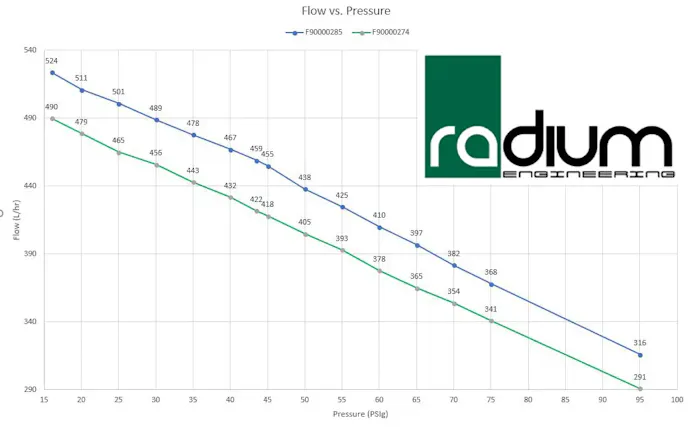
“We kept putting more base pressure in it, to band-aid an injector problem,” Eric Yost stated. “We started at 60psi base and ended up at 75 base pressure. Under boost, we hit 105psi but started losing pressure.” To be safe, let’s say the HPT 76103 now had our Coyote at 1,700 horsepower. At 105psi of fuel pressure on E85, we are now around 1,600 liters per hour required.
The solution? It was time to upgrade the fuel pumps. The Radium surge tank made upgrading extremely easy. “We started with the three Walbro pumps and changed two of them out to the Hellcat 525lph pumps on the dyno. After the race, we replaced the third one out to a 525,” Yost told us. Step three, was giving these pumps more voltage. That’s where JMS stepped in.
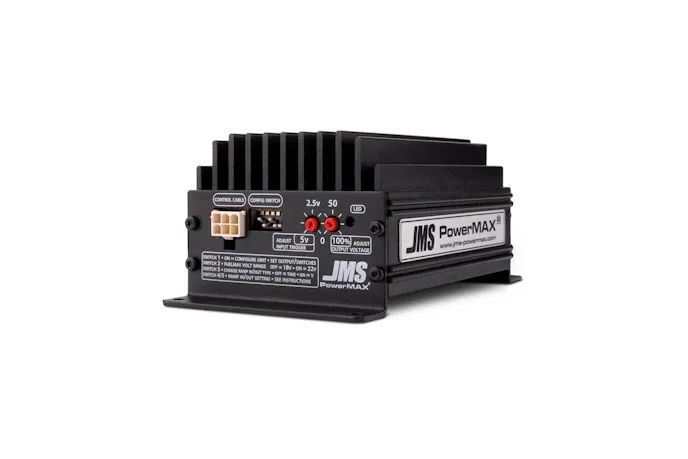
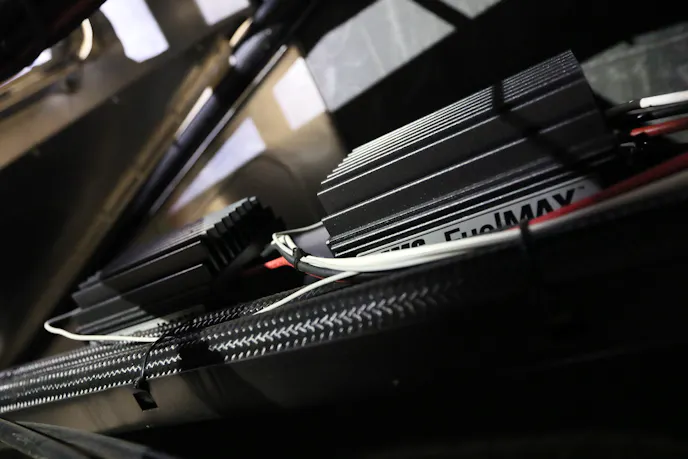
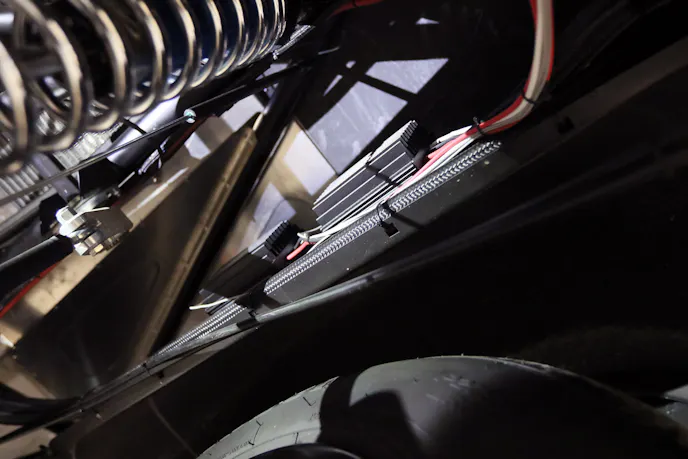
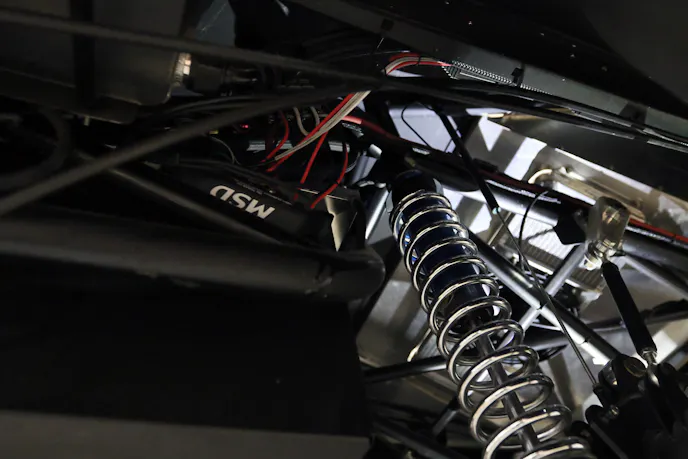
Remember when I said the Walbro pump produced 40% more volume at 18 volts? Pressure and voltage work at opposite ends in terms of how they affect the fuel pump’s performance. At 105psi, even the Walbro 525lph pump only puts out 309 liters per hour. By adding two JMS Fuelmax P2020s, each Walbro should put out over 400 liters per hour at around 100psi. The Fuelmax allows you to keep the 12-volt battery and charging system in the car, and everything it’s connected to, for that matter, while providing even more voltage to the fuel system than it would with a 14- or 16-volt battery (scalable from 14.4 to 22 volts). Yost set up the Fuelmax to pull a signal from the Holley EFI at 50% throttle position and 2psi of boost pressure to increase the voltage to 18.5.
Traction Action
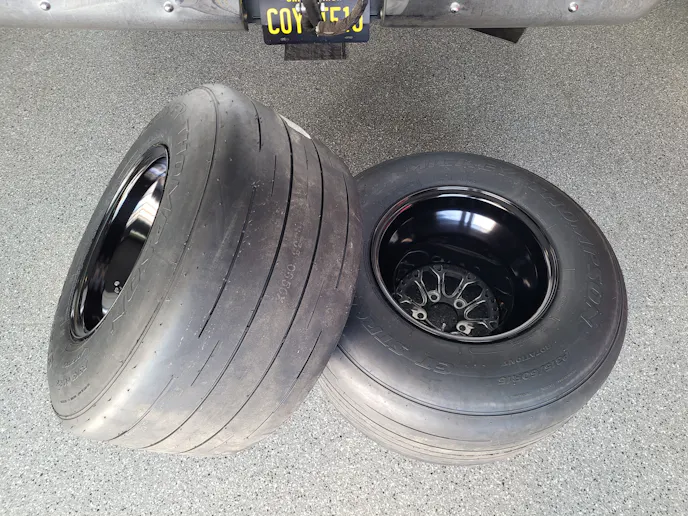
I know what you are thinking, why on earth did you guys choose that tire in the first place, and it’s time for some insider baseball here on Horsepower Wars. The C10 Shootout was originally going to be an old school versus new school buildoff, and all Chevy-powered. But we got the bright idea to use the LS vs Coyote 3 engines, and the next thing you know, we were putting over 1,400 horsepower to 28×12.5-inch street radials. The ET Street S/S truly is a great tire for a high-powered streetcar (or truck), but with this much power, the Radial Pro is a much better tire. Moving to a 275/60/15 kept the same diameter with a slightly narrower width. Believe it or not, it uses the same R2 compound, but the construction of the tire itself is radically different in bridging the gap between a slick. The Radial Pro visually looks different, more like a slick than a radial, but if we were to cut the tire open, we’d see different belts and plies as well.
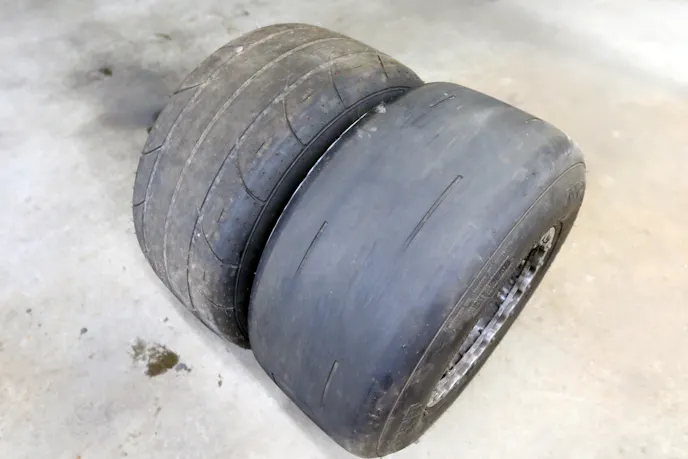
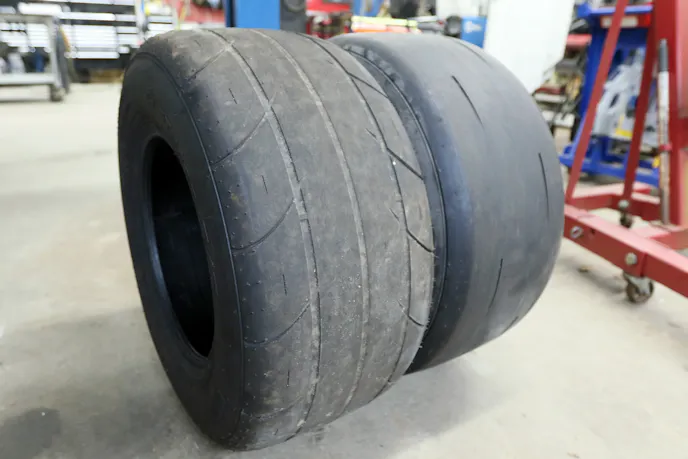
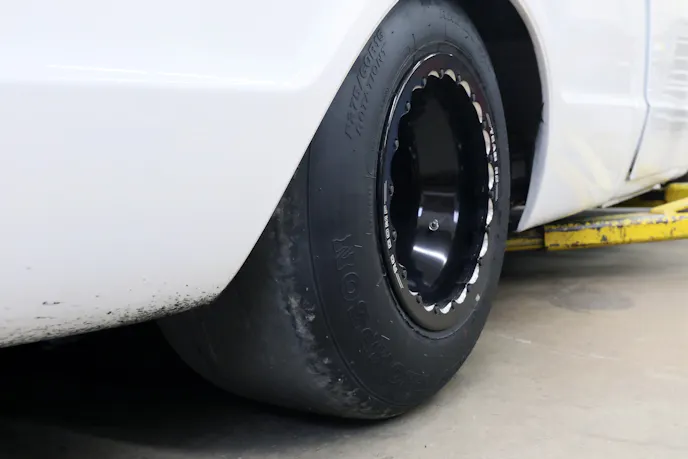
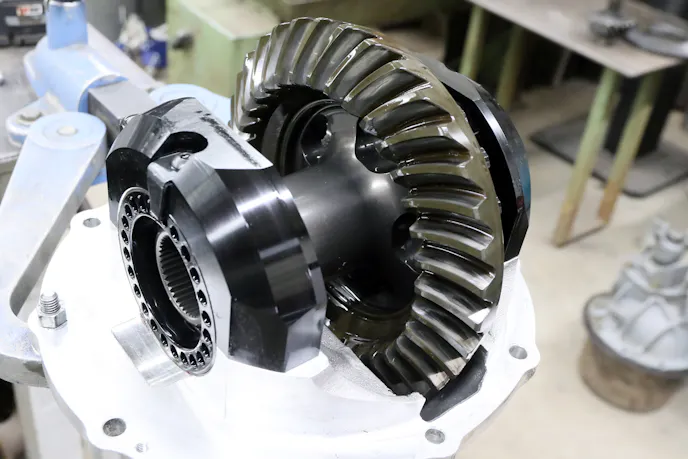
The last piece of the puzzle was dialing in the gear ratios, having chosen a 3.50:1 rearend gear for the quarter-mile and street, it was apparent this would need an upgrade as well. We called Strange for a 4.29 Pro Gear with 35-spline pinion to install in the center section that would be more suitable for eighth-mile racing. Pro Gears, if you didn’t know, are 9310 forged steel that is a little softer material that allows the teeth to flex and not crack or break. This would help us go through the finish line at a higher RPM to keep the Coyote in its powerband.
We Expect Results
For our testing, we headed to Street Car Braggin Rights at Rockingham Dragway. We knew early on that this was going to be a successful test session. It didn’t take long to know we had ourselves a hot rod. At The Rock, the 275 Pros were clearly the ticket, quickly dialing in some of our fastest sixty-foot times. Yost had the Coyote 10 going 1.16 short-times like a bracket car (nearly a tenth faster) – 1.25 was the fastest it went at Darana Dragway.
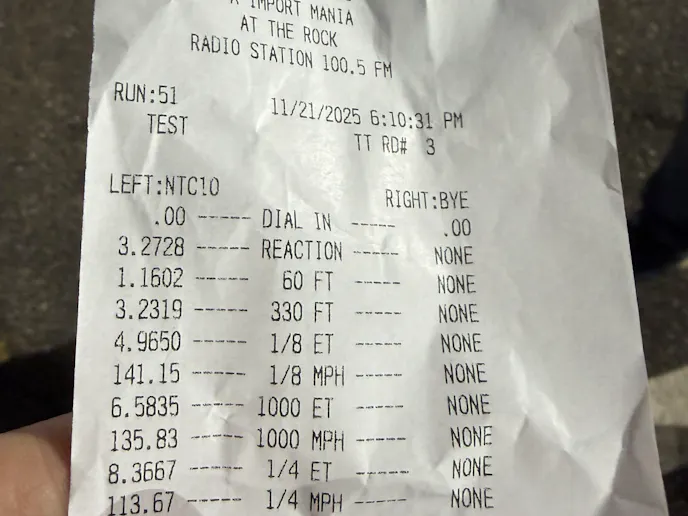
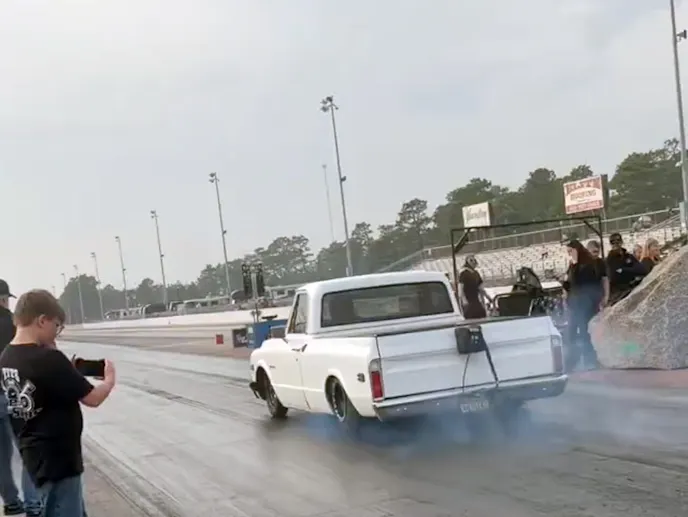
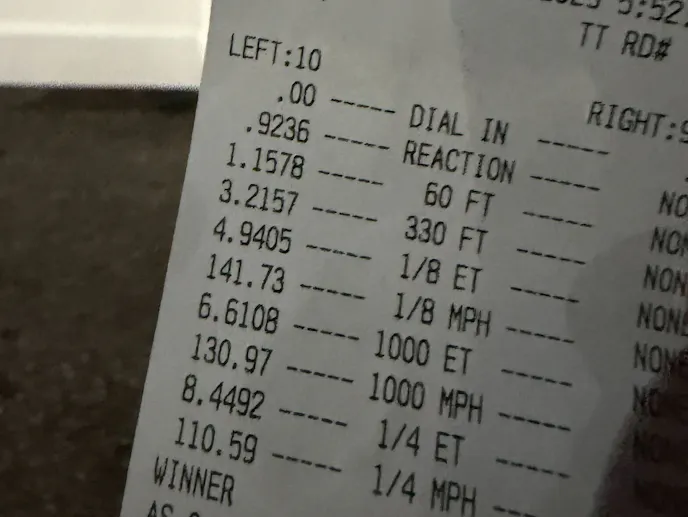
The fuel pressure issues were solved going down the track, which helped Harrell add more power downtrack to the Coyote 10. But the injectors we had swapped in turned out to be identical FIC injectors, not the upgrade we thought. We’ll address that another day, but did hit our goal. In two days of testing, the truck went 4.965 at 141.15mph on an average radial-prep track, though it did make one pass in 4.94 right after Manny Buginga set the radial record on an exceptional surface. In fact, that pass could have been even faster, as James pedaled it a bit when he got out of the groove. All in all, we will consider our mission a success and will contemplate our next move with the Coyote 10.
What’s Next
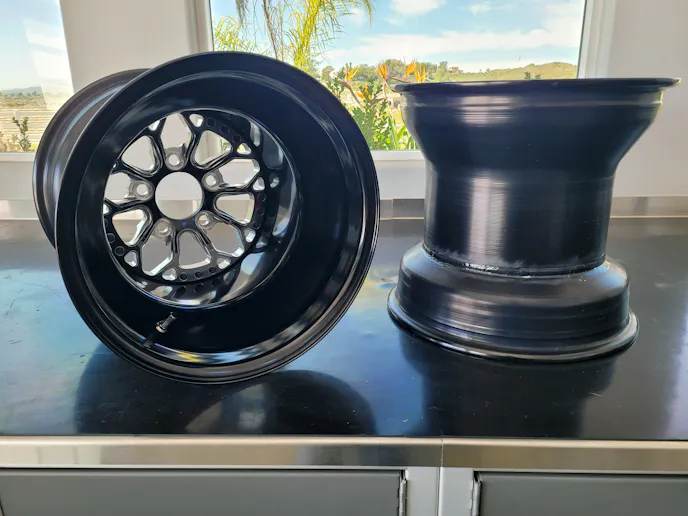
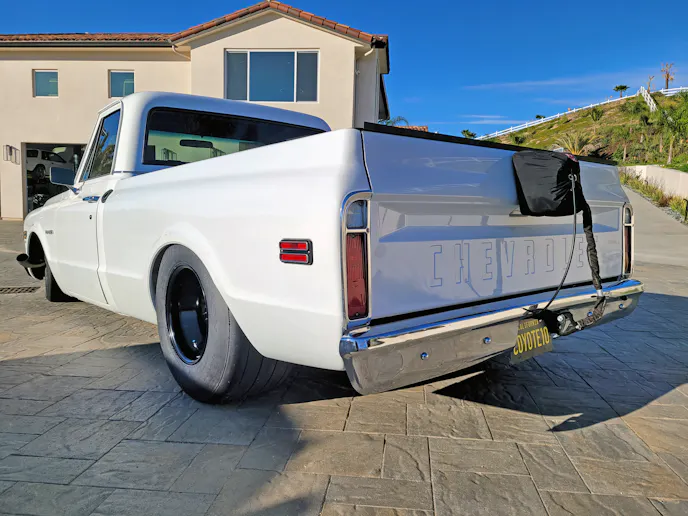
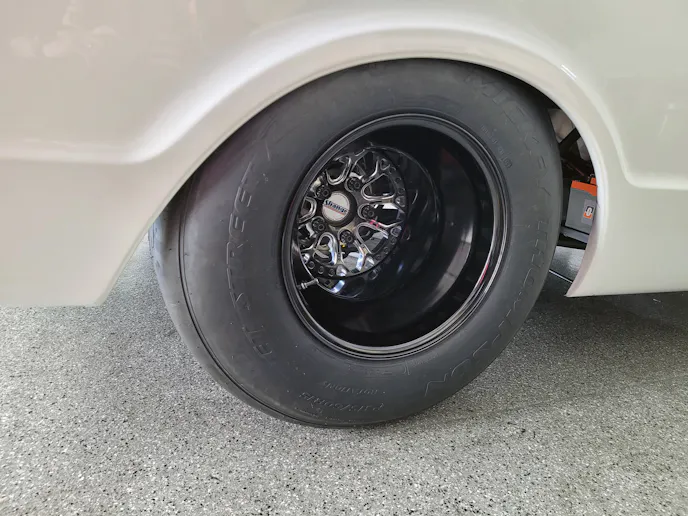
We have a few races on the West Coast planned, but in the meantime, we will be street cruising this bad boy. We called RC Components for a matching set of rear wheels, so that we weren’t driving around on the 275 Pros with double beadlocks. RC sent us the Impulse (non-beadlock) rear wheels in 15×14 with 3 inches of backspacing. We selected 5×4.75-inch Chevy bolt pattern with the Eclipse Prism design center and solid black outer rim. The Impulse wheels are still a forged center, machined out of 6061-T6 aluminum with SFI 15.2 certification. It’s a strong wheel that can hold up to some street potholes here and there. In the interest of still having some grip with over 1,400 horsepower on tap, we stuck with Mickey Thompson ET Street R tires. They are a DOT-legal drag radial, fit for California sunshine driving only, and came in a meaty 315/60/15 size to fill up the wheel wells.
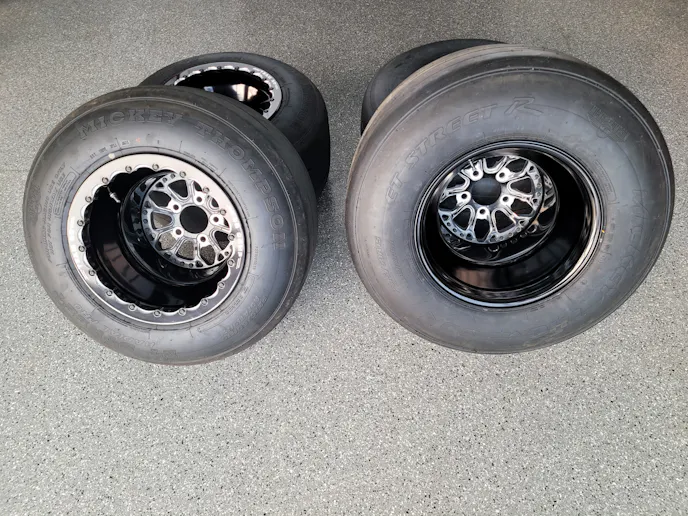
Now that we’ve got a killer street setup to go with our race wheel setup, what events should we hit? We have a few on the calendar in Southern California, but we’d love to hear from you. I wonder what kind of reaction it would get at Fabulous Fords Forever.
You might also like
Inside Racing Fasteners: Why Strength, Stretch, And Threads Matter
Fasteners play a critical role in high-performance engines. Here's a look at what makes a high quality fastener work.