When Season 4 of Horsepower Wars was first conceived, LS vs Coyote 3 and the C10 Shootout were going to be two completely separate series. But then we got the brilliant idea to link the two series, and use the engines from the build-off in the trucks. And we had every intention of putting the engines directly into the trucks, cruise to Summit Racing, and then to the track for our shootout. In fact, we had them shipped directly from Westech to the builders. But, the more we started talking to HPT Turbo and the builders, the more we realized that wasn’t the best idea if we wanted to show up in Ohio with two running and driving C10 trucks.
From the start, we knew the turbo systems used on the dyno would not fit in the trucks. There wasn’t enough time to ship the engines to the builders before the engine dyno, so those systems were fabricated only to clear the dyno cart and hook up to the dyno. However, after the dyno test, we also realized that the custom HPT 7680 turbos were not up to the task of keeping up with engines that rev to over 9,000rpm. The turbines hit maximum velocity early in the dyno pull (meaning they spooled up very quickly), physics was not on their side, and the exhaust gases started to back up through the turbo system and into the heads (aka back pressure). Ideally, the turbine wheel needed to be bigger, but even the housing was a limitation.
Under (Back) Pressure
“We had 93 pounds of back pressure and 28 pounds of manifold pressure on some of our bad pulls,” stated Coyote tuner Tom VanVugt. “That’s a 3:1 pressure ratio. The engines peaked extremely low due to such high back pressure. If the engines see the load the trucks would put on them, we will definitely be hurting the engines.”
Knowing that the engines could not go into the trucks with the 7680s, we called HPT, who offered to build us a custom 76103 for each truck. The new turbos were essentially like HPT’s off-the-shelf 80103, but with the compressor cut down to the same specs as the previous turbo. If we were not building these trucks for the competition, that would have been our choice of turbo. However, cutting down the compressor minimized the difference between how the engines were tested on LS vs Coyote 3 versus the C10 Shootout. But, the larger housing and much larger turbine would offer quite a bit of performance gain. We expected 100-200 horsepower more, and probably 5 to 10 pounds of boost.
This created two unfortunate side effects: any turbo system built off the previous turbo would not work (thankfully a non-issue), and based on the way the engines were built for the competition, they may not be able to handle the additional power or boost. We also realized that between any pulls made prior to Westech and then the 20-40 pulls made at Westech with the undersized turbine, the engines may not be in the best shape. So the HPW staff made the call to send both engines back for a check-up, and give each a chance to replace any broken parts or wear items like gaskets, as well as lower the compression ratio for the increased power and boost, rather than risk showing up to Ohio with two broken engines.
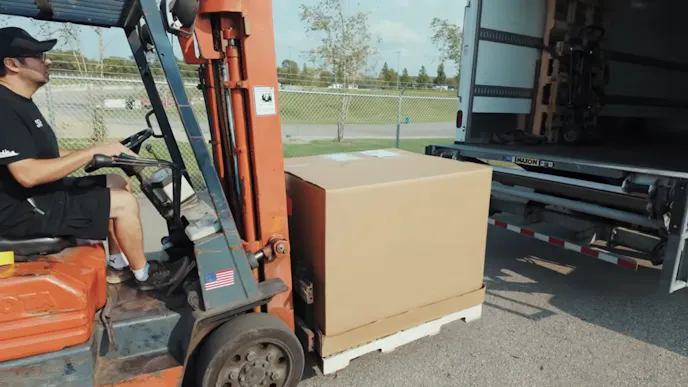
For the avoidance of doubt, both engines were given the same turbo upgrade, and both engines were sent back to each builder. FFRE gave the Coyote a clean bill of health and sent it on its way to Customs by Bigun. LME, however, believed that at potentially 1,600 horsepower (or more), the cast aluminum L83 block was on borrowed time. And if the engine saw any detonation, the main webbing on the block would exit the chat. The solution was to lower the compression with a new set of pistons from Diamond to increase the tuning window at the track. Lowering the compression would not help the LT make more power, in fact less (hence Bob Hess’s comment as he loaded it on the fork lift), but it would give it the best shot of living. Instead of a half degree of timing being the difference between a happy engine and detonation, for example, it could have maybe three degrees difference (that’s what I mean by “tuning window”).
What You Need to Know About Turbos
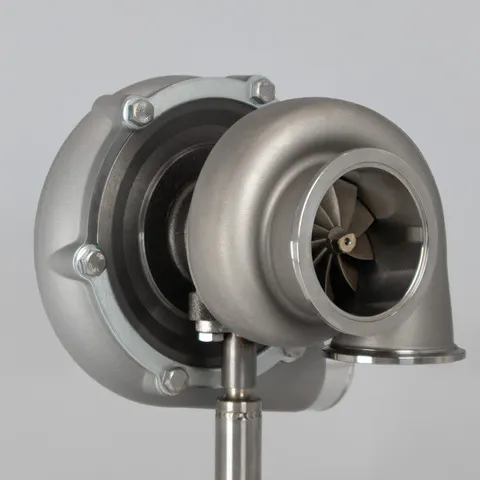
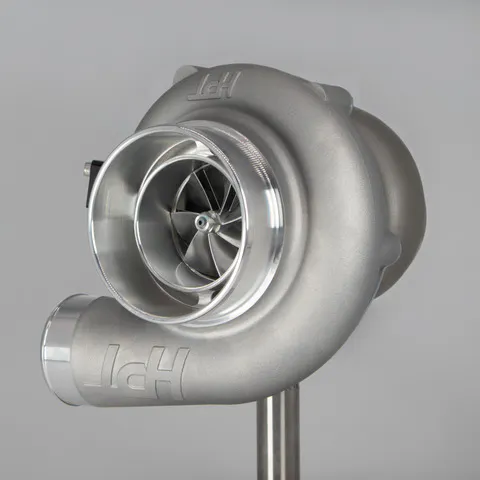
Turbine housing – A turbine housing gathers exhaust gases from the engine and channels them through a spiral-shaped volute that spins the turbocharger’s turbine wheel and shaft assembly. Because it is constantly exposed to extreme exhaust heat, the turbine housing is commonly known as the “hot side” of the turbo. To withstand these conditions, turbine housings are built from high-temperature materials capable of handling exhaust temperatures of up to 1,050°C (1,922°F). Different-sized housings can have different outlets and inlets. For example, in switching turbos, we went from a 3.625-inch outlet to a massive 5.75 inches.
Volute – A volute is the internal passage within the turbine housing that routes exhaust gases from the inlet to the outlet. As the passage tapers in size, exhaust gas velocity increases, helping drive the turbine wheel more efficiently. Volutes are available in different sizes and are defined by their A/R (Area over Radius) ratio—higher A/R numbers indicate a larger passage for a given turbine wheel size.
A/R Ratio – The A/R ratio is the turbine inlet cross-sectional area divided by the distance from the turbo centerline to the center of that area. A smaller A/R increases exhaust gas velocity for quicker spool and stronger low-RPM response, but limits flow, raising backpressure and reducing high-RPM power. A larger A/R flows more efficiently at high engine speeds with lower backpressure, but delays boost response. Choosing the right A/R depends on where you want the engine to make its power.
Turbine size – Like the compressor, the turbine is measured in exducer and inducer diameter. However, when we refer to the turbine size, typically we are speaking of the exducer diameter, the inlet where exhaust gas enters and drives the wheel.
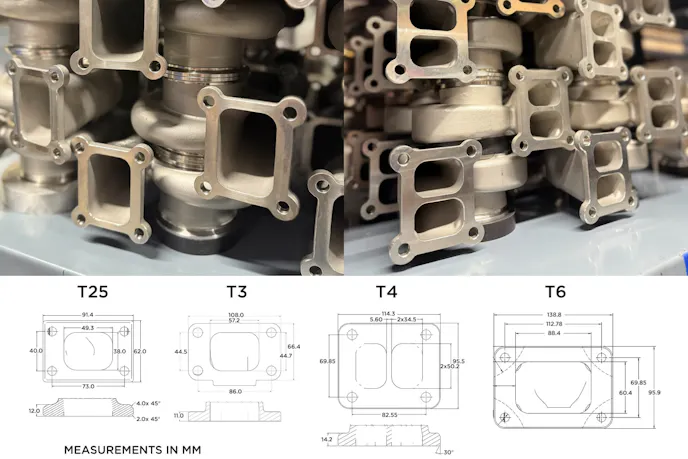
Turbo housing inlet flange – Turbo exhaust flanges typically come in five different variations: T25, T3, T4, T6, and V-band. HPT offers a V-band for most (if not all) turbos, but the square flanges give the best indication of size. The prior turbo used was a T4, which is a universal-sized flange that measures 114.3mm by 95.5mm, while the T6 on the new turbo is 138.8mm by 95.9mm. This flange is where the exhaust gas enters the turbo, so it affects the turbo spool and, to some degree, back pressure. The outlet plays a larger role in back pressure, as does the turbine size.
For more information on turbo sizing in general and specific to the competition, check out this handy article from EngineLabs.com. Also, don’t miss the final episode of the C10 Shootout! Coming soon!
Horsepower Wars C10 Shootout would like to thanks its sponsors for making this possible including Summit Racing, Holley (Holley EFI, Simpson, etc), Manley Performance, Diamond Racing Pistons, COMP Cams, Moroso Performance Products, Total Seal, Automotive Racing Products (ARP), Cometic Gaskets, AMSOIL,Vibrant Performance, HPT Turbochargers, ICT Billet, ATI Performance, Meziere Enterprises, AFCO Racing, Optima Batteries, Old World Industries/Peak, Strange Engineering, SPAL, ETS Racing Fuels, Auto Metal Direct, and Wiles Driveshaft.
You might also like
Beyond Electrical Tape: How DEI Fire Tape Protects Wiring And Plumbing
DEI Fire Tape uses self-fusing silicone to protect race car wiring, seal hose sleeves, resist heat, and provide temporary leak repairs.