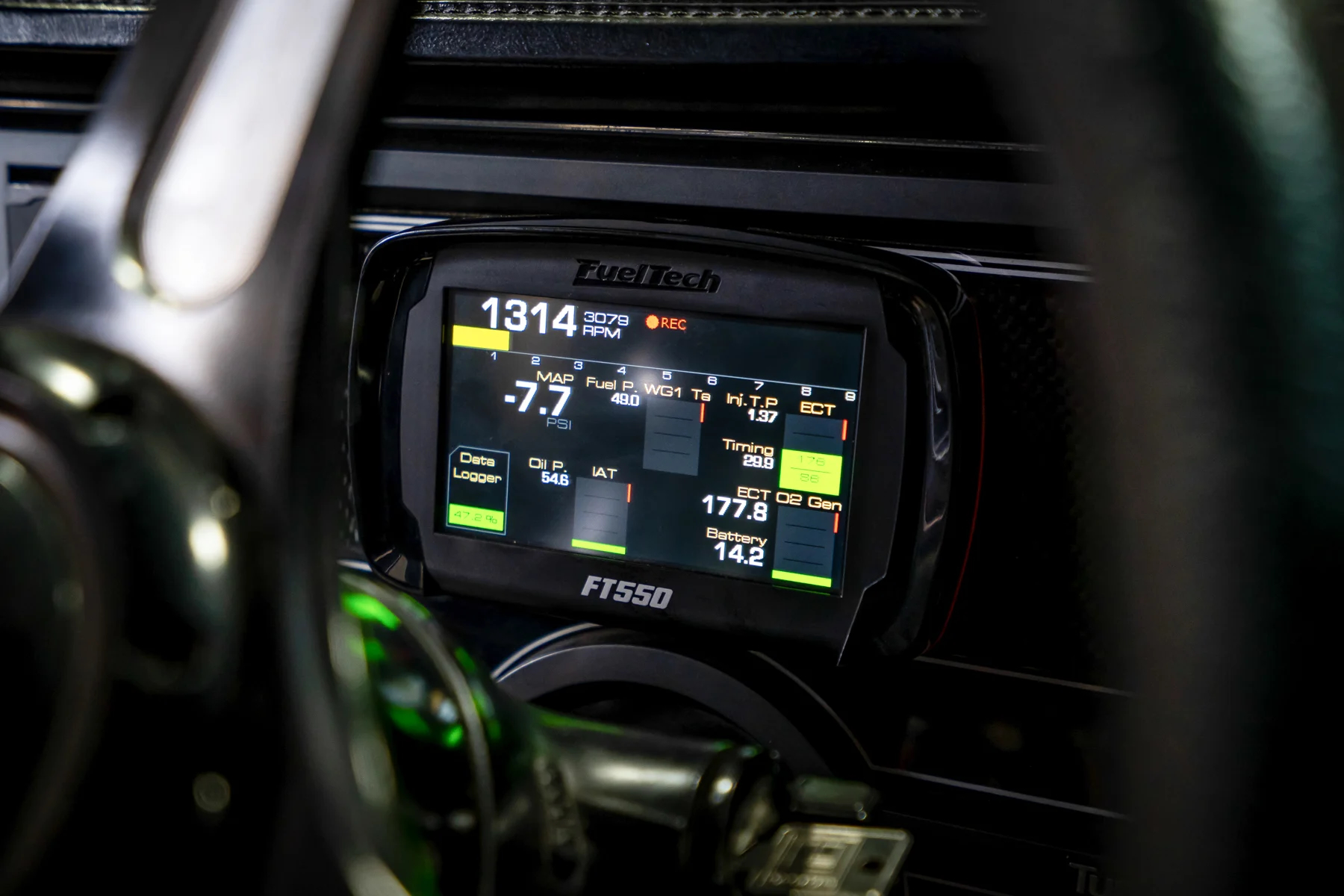
In modern EFI tuning, the data tells the story—you just have to know where to look. Closed-loop fuel correction, fuel consumption, and the shape of your fuel map can work together to reveal not just tuning issues, but real mechanical limits in your engine like a potential valvetrain issue.
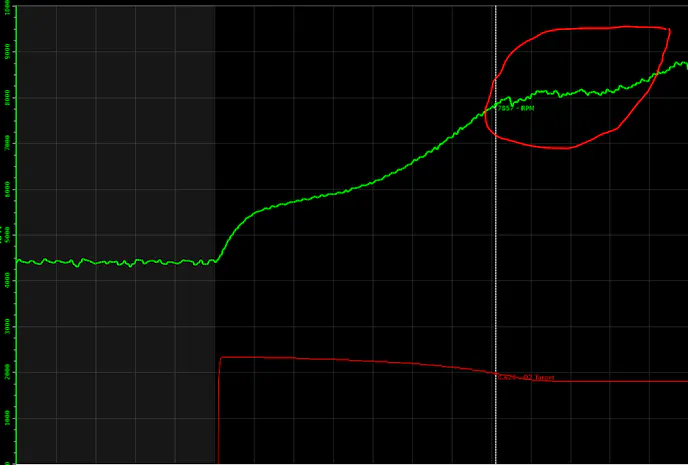
When the ECU is consistently adding fuel in a specific RPM range at wide-open throttle in closed-loop, it’s often a sign that airflow is increasing faster than expected. If that correction spike coincides with a drop in acceleration or power on the dyno, it can indicate the engine is struggling to keep the valves open long enough to feed that airflow. At this point, the tune may be chasing a mechanical bottleneck rather than a calibration problem.
Fuel consumption adds another layer. A sudden flattening—or worse, a drop—in fuel flow at higher RPM is a red flag. If injector duty cycle, fuel pressure, and air-fuel targets are stable, yet fuel demand stops rising, the engine may have reached its effective volumetric efficiency ceiling. That’s often where restrictive cam profiles or valvetrain instability begin to show up.
You can also look at the fuel map itself. When higher RPM cells require disproportionately more fuel for diminishing power gains, you’re likely compensating for airflow inefficiency. The engine is working harder but not making more power.
When all three line up—rising closed-loop correction, stagnant fuel consumption, and an inefficient fuel map—it’s a strong indicator the tune is no longer the limiting factor. That’s usually the point where a camshaft or valvetrain upgrade becomes a performance necessity, not just a power add.
But Wait, There’s More
We reached out to Cameron Lohrmann at FuelTech to get his take and he revealed some other signs your valvetrain may be having problems. Lohrmann is the Dyno, Training & Project Manager at FuelTech’s hub dyno in Ball Ground, Georgia – seeing 3,000 to 4,000 horsepower on the daily.
“The most common symptom I run across that is directly related to valve control is what I would call a ‘phantom rev limiter’ situation where the engine just seems to blubber against what would sound and look like a rev limiter, but the data shows no ignition cut or any sort of power limiting situation happening,” stated Lohrmann.
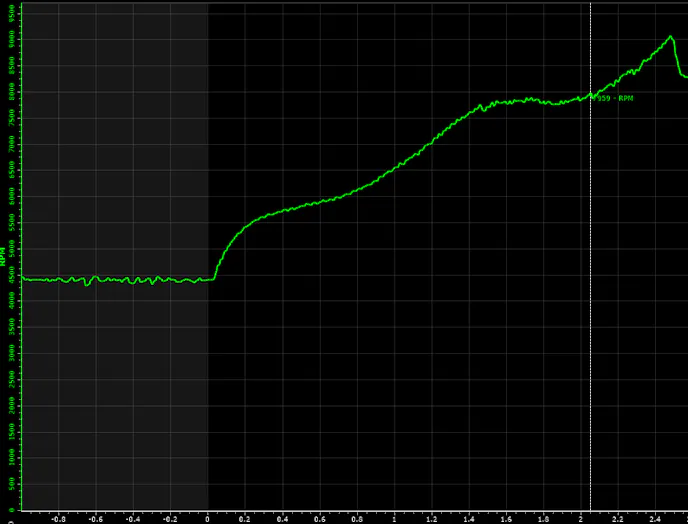
“Other common symptoms are just power dropping like a rock, however, this can also be a limit in the induction system like not enough cylinder head or something like that. Most of your well-established engine builders have a pretty good grip on how much cross-sectional area and port volume, size, etc to put on an engine for the RPM range they intend on it being used for – also the valvetrain is usually pretty figured out as well. But that does not stop the end user from pushing the limit in hopes for that last little bit of advantage. That is where we can run into some of the issues stated above.
“Also let’s not forget the other catastrophic things that can happen like damaging the engine due to dropping a valve, breaking retainers and springs, etc. There is no free lunch when pushing the limits of what your engine and its parts can mechanically handle. Parts can fail, and performance can suffer when exploring outside the range it was built for. This is where knowing how to look at your data and determine if it’s a tune issue or a mechanical limitation is paramount.”
Bottom line: data is your friend. You paid for that fancy EFI system, so you might as well use it to your advantage by looking at the data when you have a problem and simply to maximize your combination.
You might also like
JEGS Launches New E-Commerce Website To Simplify Performance Parts Shopping
JEGS has launched a redesigned website. It features vehicle-aware search, improved fitment data, real-time inventory, and much more.