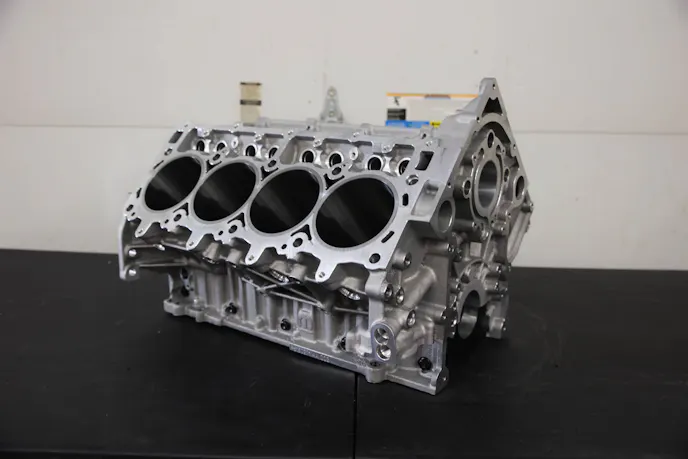
What does building a house and building an engine have in common? They both need a solid foundation, and when you’re building a high-horsepower engine, the block is that foundation. We’ve got some big goals for the Gen III HEMI that’s going to power our 1952 Dodge Business Coupe, known as “Project Hustler,” so we’re going to use one of Callies Performance Products’ stout Hellephant blocks as the base for the mill.
The OEM Gen III HEMI blocks that Dodge installed in its performance cars, trucks, and SUVs are strong units. These blocks feature robust bottom ends that use a deep-skirt design with cross-bolted mains. The castings are thick, the head bolt arrangement is solid, and that creates a block that can take a beating.
Most high-horsepower Gen III HEMI builds use a Big Gas Engine (BGE) block. This cast-iron block, found in some trucks as well as Hellcat and Redeye cars, has proven it can support upwards of 1,500 horsepower. Naturally, there are trade-offs when building a strong cast-iron block, and the biggest is weight. BGE blocks weigh upwards of 220 pounds. When you’re building a vehicle focused on track use, that’s a lot of extra weight to carry on the nose. That’s what makes the Hellephant block special, it’s both lighter and stronger than the BGE block, but we’ll get into that more later.
Breaking Down the Hellephant Block
The Hellephant block isn’t just a copy-and-paste version of an OEM Dodge engine block, cast in aluminum. MOPAR and Callies engineers worked together to create an optimized version of the Gen III HEMI. You can think of the Hellephant as a slightly less aggressive version of the MOPAR Drag Pak Gen III HEMI block that doesn’t require special lifters or camshaft; your standard Gen III HEMI parts will slide right into this block.
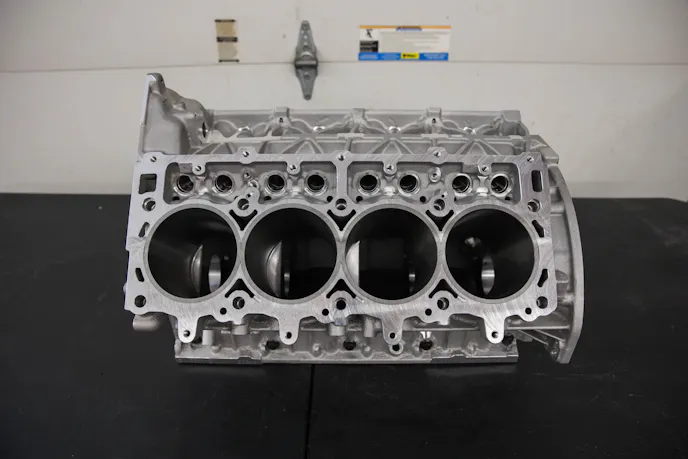
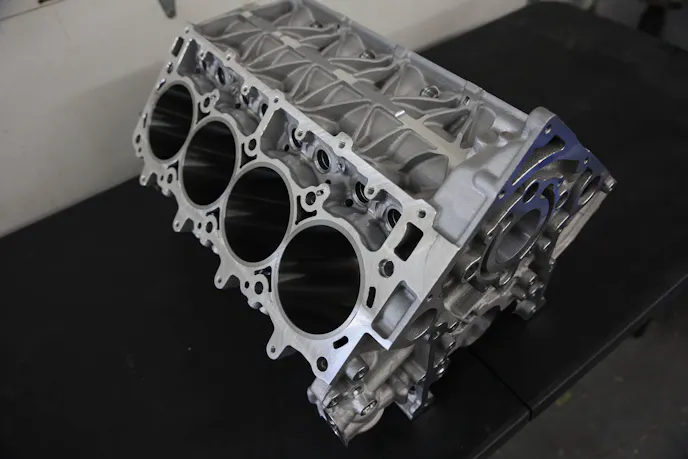
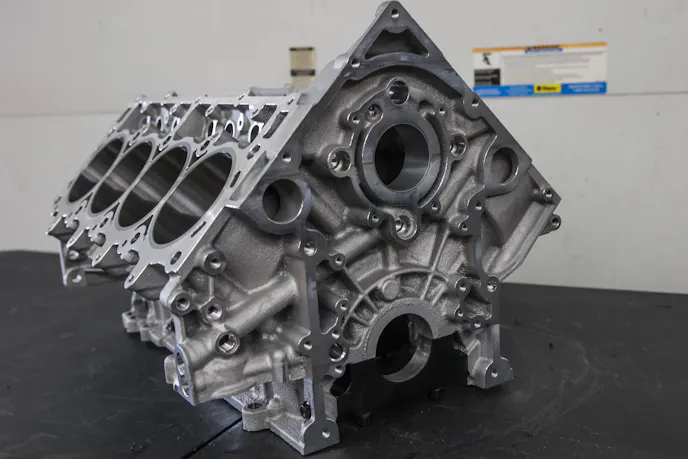
Each Hellephant block is made from high-quality T6 aluminum and features a 9.250-inch deck height. The block is compatible with standard 6.2/6.4-liter Gen III HEMI timing drives and VCT solenoids. Each block comes with billet 4140 steel main caps, along with a four-bolt main structure for the number one and five mains, and a six-bolt structure for mains two through four. M12 head studs are available for the block. The block is delivered with 4.120-inch bores and requires finish honing to 4.125 inches.
The biggest differences between the Hellephant block and the Drag Pak block are found in the valvetrain area. The Hellephant uses a standard lifter pattern with .842-inch lifter bores. The Drag Pak block uses .937 keyway lifter bushings and requires finish honing. The Hellephant also features a standard cam bore with bearings already installed, whereas the Drag Pak block uses a 60mm cam bore and does not come with bearings.
Saving Weight, Staying Strong, and Improving Performance
When Dodge and MOPAR decided to go all-in with the Drag Pak Challenger, they knew lighter components would be required. They partnered with Callies to develop an all-aluminum Drag Pak block.
This block addressed the shortcomings of earlier Gen III HEMI aluminum blocks that struggled in high-horsepower applications, but it came with trade-offs. These blocks required specialized components, including unique lifter geometry and valvetrain setups, and they were expensive.
While they solved the weight issue, they weren’t ideal for applications outside of high-level drag racing.
While they solved the weight issue, the Drag Pak blocks weren’t ideal for applications outside of high-level drag racing.
According to Geoff Turk at Blackbird Performance, Callies saw a need, and that’s how the Hellephant block came to be.
“Callies took that Drag Pak foundation and refined it. They improved the design and made it more usable by offering versions with standard lifter bores, so it works with more conventional components.”
The weight savings is where the Hellephant block really shines. While the OEM BGE block tips the scales at around 220 pounds, the Hellephant block weighs just 125 pounds. That difference is critical in a high-performance application. To overcome that weight difference with power alone, you would need an additional 60 to 80 horsepower, an expensive solution compared to reducing weight at the source.
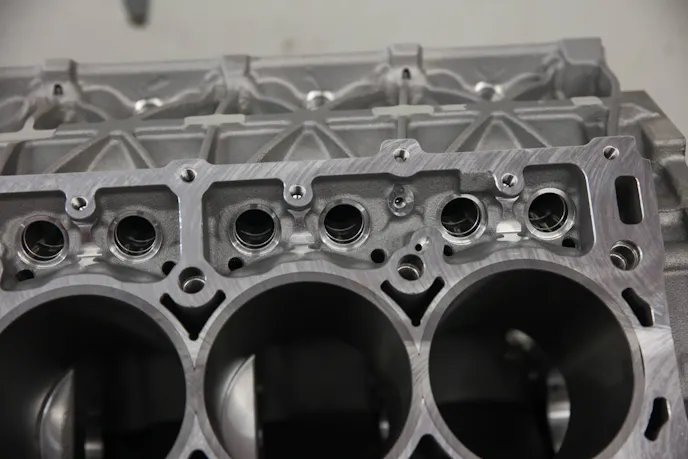
Saving weight is important, but block strength is ultimately what matters when you’re trying to make serious horsepower. The Hellephant block is an absolute beast on the bottom end. Callies invested significant effort into ensuring the block could support 2,000-plus horsepower without issue.
“This is a very rigid block. It’s a deep-skirted design that ties in the main webs and main caps. It has thick sections throughout that do a great job supporting the loads created in high-horsepower or high-boost applications,” Turk explains.
Callies strengthened the Hellephant block’s bottom end through its main cap architecture. The OEM four-bolt main caps have been upgraded to six-bolt configurations for several of the mains. Additionally, the main caps themselves have been upgraded to billet units, allowing the block to handle more cylinder pressure, boost, and ultimately more horsepower.
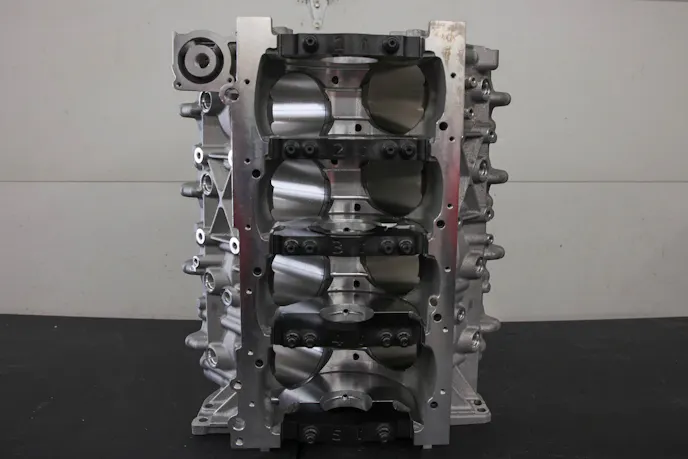
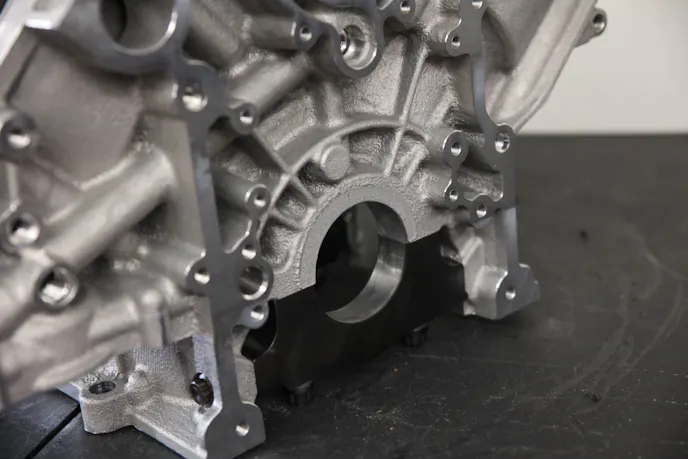
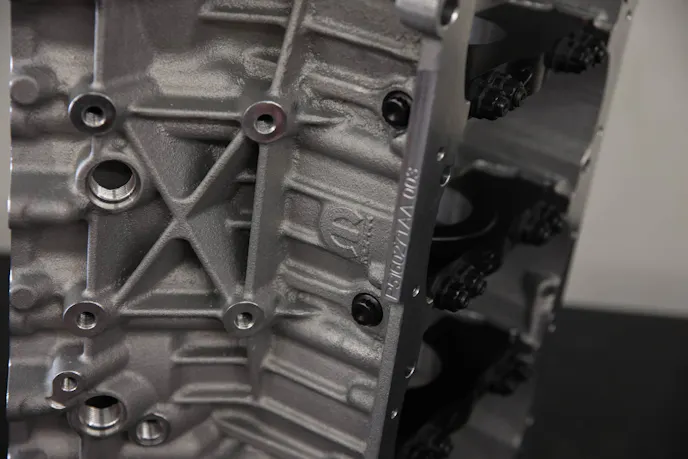
Jimmy Graham from Callies explains why these upgrades are critical.
“The key improvement is really in the six-bolt mains on mains two through four. That helps maintain crankshaft joint integrity under high firing pressures because you’ve got more clamping force from the additional vertical bolts.”
The Hellephant block also excels in head clamping force thanks to its robust head bolt configuration. There are four large head bolts per cylinder, along with additional fasteners on the cylinder head similar to the BGE block. This allows the Hellephant to handle elevated cylinder pressures and maintain proper sealing between the cylinder head and block.
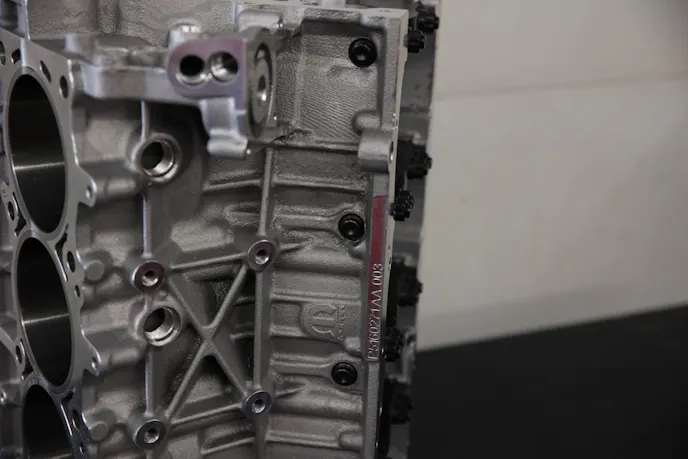
Callies also found ways to improve efficiency in the Hellephant’s design, particularly in the cam tunnel.
“The cam tunnel in this block has a more enclosed structure. That helps reduce power loss by limiting oil being thrown onto the crankshaft and reducing windage,” Graham explains.
When you start stacking up all the benefits the Hellephant block provides, it becomes clear why it’s such a strong choice for a high-performance engine build. While the cast iron BGE block is a capable option, the aluminum Hellephant block offers clear advantages when optimizing horsepower and overall performance.
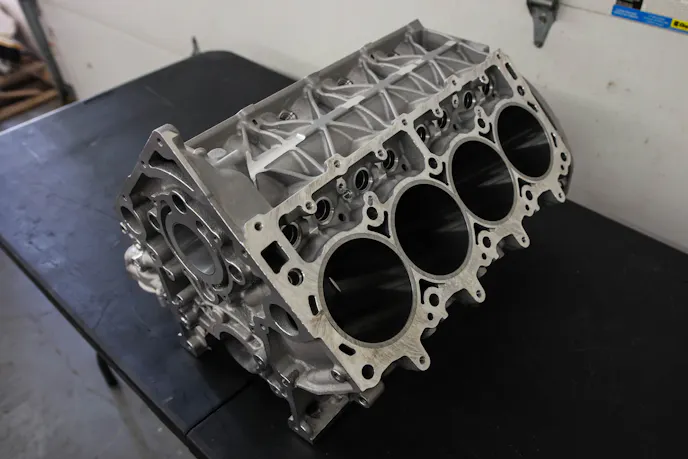
When we began designing our Gen III HEMI build with Blackbird Performance, we weren’t completely sure an aluminum block would be necessary. However, Geoff Turk explains perfectly why it was the right fit.
“With this Hellephant block, you get a lighter, stronger, more capable foundation that supports significantly more power, while improving performance through weight reduction. Compared to cast iron, you’re saving weight, reducing stress on components, and ultimately building a more efficient and competitive race car.”
Now that we have the foundation for our house of horsepower, it’s time to start filling it with the right parts. In our next article, we’ll take a closer look at the crankshaft and connecting rods that will go inside our Callies Hellephant block.
You might also like
NHRA Texas FallNationals Delivers Records, Upsets, And Championship Drama
The NHRA Texas FallNationals was one of the best events of the 2026 season. Brown, Todd, Glenn, and Smith all scored huge Countdown wins.