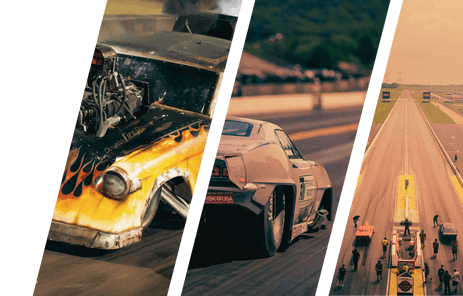
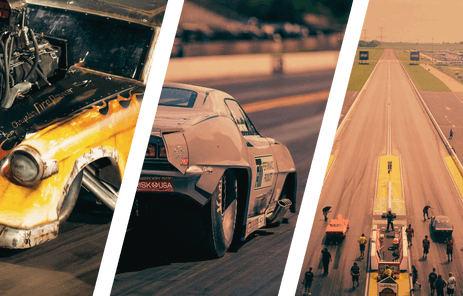
General Motors’ engineers probably had no idea how much the LS engine would change the face of modern performance cars after they turned in the final design. The engine has been stuffed into just about any vehicle you can think of, put into boats, and even installed in a few airplanes.
Nicolas Feliciano, owner of Nicolas Performance, pushed the platform even further when his ACE Racing Engines-powered 2018 Corvette reset the LS engine record with a 3.725 run at 202 mph. This eclipsed Dave Adkins’ 3.754 rip at 199 mph and etched Nicolas’ name into the LS racing record books.
The decision to build a Corvette wasn’t an accident. Nicolas owns several Corvettes, and it just so happened he needed something with a longer wheelbase for his next build. The Corvette slid right into the need-and-want category perfectly.

“I have an RX-7 that makes about 3,000 horsepower, but it just didn’t have a long enough wheelbase to use the power. We knew we needed a longer car, but I didn’t want to build a Camaro. So, it made sense to build a C7 since I like them and it was long enough,” Nicolas says.
Todd Dawson built the chassis for Nicolas’ stunning Stingray. To power the car, Nicolas turned to Stefan Rossi at ACE Racing Engines to build the ultimate LS-based bullet.
The engine is based on a Noonan billet LS block. Inside the block, you’ll find a Winberg crank swinging a set of MGP rods and Ross pistons. A set of CID LS-CR heads were worked over by Rossi before the Manton rocker arms were bolted on. A Cam Motion camshaft, RCD gear drive, and Jesel keyway lifters round out the valvetrain.

On top of the 461-cubic-inch mill, you’ll find Shaun’s Custom Alloy valve covers and a billet intake. An APEXTURBO 122mm turbo stuffs the boost inside the engine, and a FuelTech FT600 controls it. A Neil’s Racing Transmission TH400 and Cameron’s Torque Converter Services torque converter rest behind the LS.
Resetting the LS record was always something that Nicolas wanted to do. When he first brought the Corvette out, it was running no-time events. After the car showed some serious potential, Nicolas knew it was time to light the boards.
“It only took us three passes with the car to run a 3.85, so I knew we could reset the record. We thought the car could run in the bottom 3.70s after some more work at the track. When we got to No Mercy and saw how good the car was running, I thought we could run in the 3.60s. I had a 3.60 tune loaded in the car Friday, but it broke the third member. I backed it off a bit, and that’s when we ran the 3.72,” Nicolas explains.

So, what started out as a no-time car has turned into a competitive single-turbo Pro 275 car. Nicolas says the car is heavy for Pro 275 and still has more left in it.
“When we set the record, we were only pushing 56 pounds of boost into the engine. We should be able to push this combination to 70 pounds of boost. Based on the data, running a 3.63 or 3.64 isn’t out of the question. We’ve put about 40 passes on this engine and it is holding up great. I haven’t had to touch anything, just normal maintenance,” Nicolas states.
It’s wild to see the level of performance that Nicolas Feliciano has been able to extract out of his ACE Racing Engines LS-based mill. In a world of nasty HEMIs, there’s a good chance we might see an LS-based engine make a run at the Pro 275 record.
You might also like
ProCharger’s New F-4X-140-2 Sets Records With Monster Power
ProCharger's new monster F-4X-140-2 ProMod supercharger not only makes record-setting power, but already has a championship under its belt.