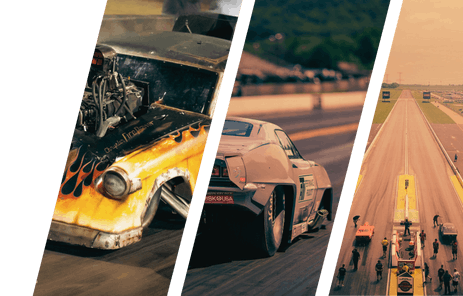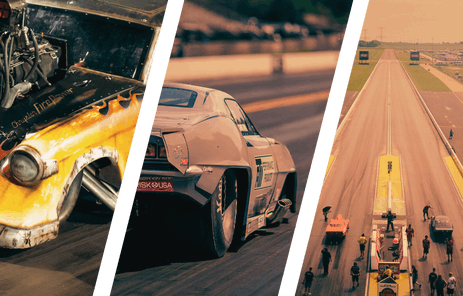
Mechanically speaking, the sport of drag racing has never been better than it is today. Three hundred and forty mile-per-hour nitro cars. Five-second drag radial cars. Pro Mods tickling the 4-second zone at 300 mph. Stock-body cars going sub 4-seconds in 660 feet. Technology has brought us to places we could never have dreamt — not 50 years ago or even 10. For the traditional gearhead, though, progress has arguably come at a cost of one of the things that made the “good old days” so magical.
The limitless ingenuity that defined the sport in its most formative of years — the period often viewed as drag racing’s golden age in the 1950s and ‘60s, when hot rodding morphed into organized competition with a wild-west of ever-evolving mechanical mousetraps — has largely been lost to technological refinement. It of course sounds a bit disingenuous to suggest that if progress exists, that ingenuity does not — after all, it’s fresh, new ideas that breed the engineering and performance advancements that have brought our sport where it is mechanically today. But we’re not talking simple refinements here — instead, the kind of scrappy, off-the-wall, back-yard creativity on a budget that can hardly be differentiated between a great idea and a terrible one without first giving it a shot.
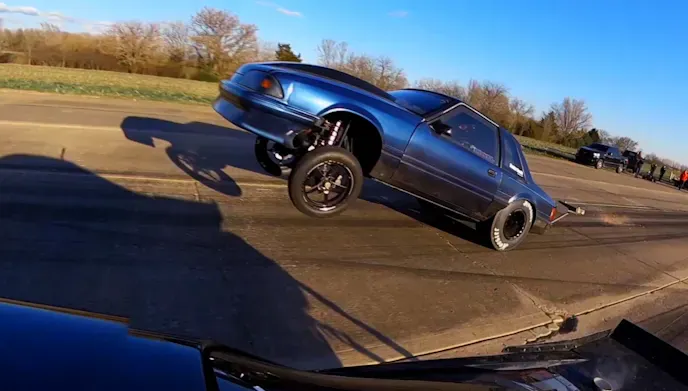
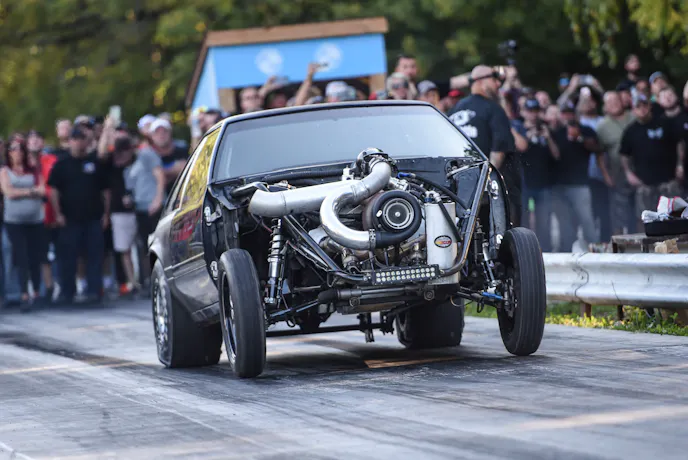
No prep drag racing — which the genre itself is a bit of a misnomer when you consider there was no such thing as formal traction compounds prior to the early 1970s, so the entire “golden age” of drag racing was no-prep — hit the scene in the last couple of decades, taking the age-old street racing format and you-get-whatever-is-there surface treatment and plunking it down on a closed race course. As it had all those years ago before it was its own discipline, no-prep racing had a unique problem that required a crafty solution. Except the solution wasn’t defined, and in this case, there were little to no regulations to limit how racers would solve it.
The problem: little tires, escalating horsepower potential, chassis not far removed from their showroom state, and inconsistent surfaces with little in the way of traction.
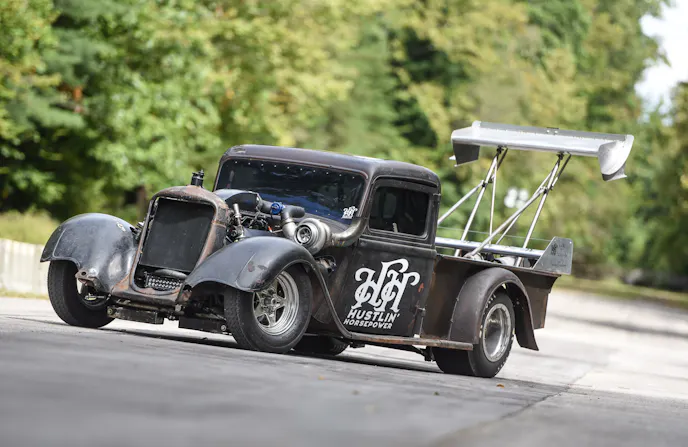
The answer for this group of largely blue-collar guys and gals, whether intentional or not, has been to pull a range of concepts right out of the pages of history books — improvising with modern takes on many of the rudimentary concepts that our forefathers experimented with decades ago in the try-anything era of drag racing. Chassis undergoing the nuclear option to reposition the engine and driver for better weight transfer, ala the early A/FX’ers and Funny Cars. Wings of ballooning dimensions, like so many experimented with in the olden days. Turbos mounted on — not in — the trunk and piped over the roof to reposition weight. Weight bars hung feet off the bumper (that one didn’t last long). Four drive tires, as we saw at Cleetus McFarland’s recent no prep AWD versus RWD Shootout — a throwback to the many attempts at such with early slingshot dragsters. And long-travel shocks designed to hike the nose and shift weight — today’s ode to the timeless Gasser.

But all of it has been done in the name of necessary experimentation to find a competitive edge in ways that would make “Big Daddy,” Hayden Profitt, Jack Chrisman, TV Tommy, Mickey Thompson, Jim Dunn, Joe Reath, and so many other creative pioneers proud.
For all that our sport has accomplished — improbable speeds and e.t.’s, EFI, traction control, data acquisition, all of it — there’s still an appetite out there for the craftiness that took place in that era. Maybe you lived through it and long for one more taste in this lifetime of the limitless tomfoolery that you witnessed. Or perhaps you’ve only read about it but would love to see what our sport can produce when it’s unchained.
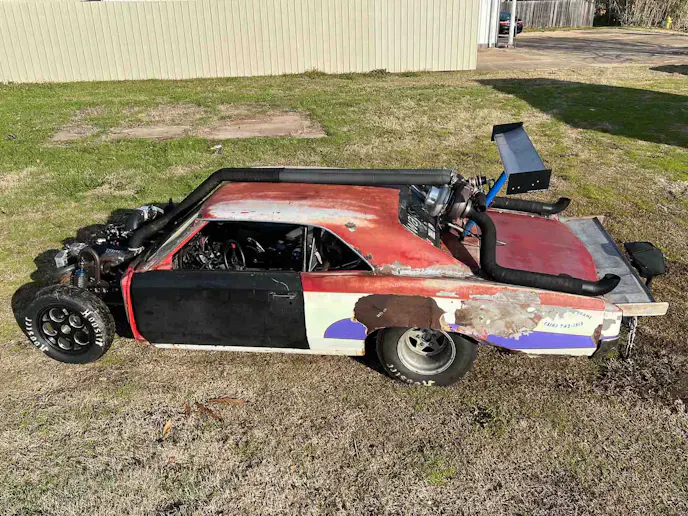
For all the shade that’s been thrown no-prep drag racing’s way, the arena has taken the sport for an unexpected trip down memory lane. A lane where, within reason, anything goes. It’s arguably produced the closest living, breathing, actual competitive example of the mid twentieth-century that we’ve seen since. Eventually, like everything else, racers will refine and perfect the creativity out of the process; maybe promoters will rule all of the shenanigans out of it before they get there. No matter what, we’re witnessing is something special. These are everyday racers doing what our heroes did on the same track surfaces they did all those years ago, craftily utilizing the resources at their disposal to will their way to an edge over other mousetraps and bigger budgets.
We should appreciate it while it’s here, because history is unlikely to repeat itself a third time.
You might also like
Beyond Electrical Tape: How DEI Fire Tape Protects Wiring And Plumbing
DEI Fire Tape uses self-fusing silicone to protect race car wiring, seal hose sleeves, resist heat, and provide temporary leak repairs.